Category: UIAA

REMEBERING PROFESSOR UGRINOVSKI

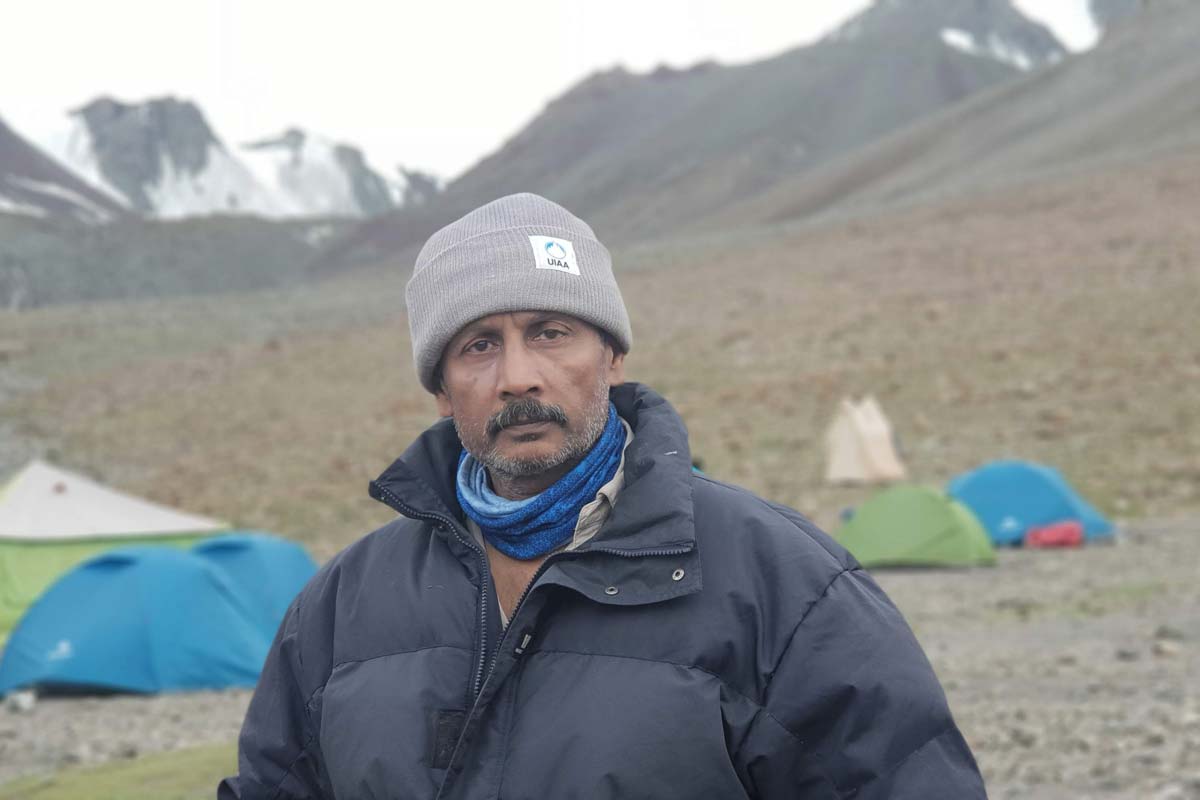
The UIAA is saddened to hear about the recent passing of Professor Jovica Ugrinovski.

Professor Ugrinovski was the longstanding President of the Mountaineering Federation of North Macedonia (FPSM). His tenure ran from 2001 and concluded earlier this year, coinciding with the UIAA Spring Meetings in Skopje, expertly hosted by the FPSM.

In his home country, Professor Ugrinovski was a renowned neurosurgeon. He had also practised in Montpellier, Manchester and Bratislava and was the author of more than 140 scientific papers and books. He was the founder and chairman of the Management Board of the Neuromedica clinic in Skopje.

Away from his noted medical work, he was a passionate mountaineer, visiting the Himalayas on three occasions and also climbing in Antarctica.

He had a rare ability to bring mountaineers together. He helped conceive the Balkan Mountaineering Union (BMU), becoming its first President in 2009. The BMU brings together 11 member federations (Albania, Bosnia and Herzegovina, Bulgaria, Croatia, Czech Republic, Greece, Montenegro, North Macedonia, Serbia, Slovenia and Turkey)

Professor Ugrinovski was also one of the initiators for establishing EUMA (European Union of Mountaineering Associations) and was named as its Honorary member.

The UIAA passes on its regards to Professor Ugrinovski’s friends and family and everyone at the Mountaineering Federation of North Macedonia.

Photo courtesy of FPSM.

Background: UIAA and the UNFCCC sports for climate action framework

In September 2022, the UIAA signed a pledge as part of its engagement in the United Nations Framework Convention on Climate Change (UNFCCC) Sports for Climate Action (S4CA) Framework, of which it has been a signatory since 2019. The pledge, known as the Sports for Climate Action Commitment, invites signatories to the S4CA to adopt targets and requirements to limit and reduce greenhouse gas emissions associated with core activities, and track this progress over time.

On the occasion of International Mountain Day (IMD) 2022, the UIAA is consolidating information on what it has achieved so far and the challenges which lie ahead.

Signing the S4CA Framework back in 2019 meant a commitment to adhering to a set of five principles and incorporate them into strategies, policies and procedures. These are:

(1) Undertake systematic efforts to promote greater environmental responsibility;
(2) Reduce overall climate impact;
(3) Educate for climate action;
(4) Promote sustainable and responsible consumption; and
(5) Advocate for climate action through communication.

Regarding (1), this has been an inherent concern of the UIAA since its foundation in 1932; a priority that also been demonstrated by the founding of the UIAA’s own Mountain Protection Commission in 1969 to support this work. Concerning (2), the UIAA commenced tracking its carbon footprint in 2018 and each year has increased the level and accuracy of this reporting. With this baseline the UIAA is now looking into ways to further reduce its impact. Regarding point (3), the UIAA has pledged to lead on this, on behalf of its members associations and wider mountaineering community. This has recently been solidified in the creation of a UIAA-wide Climate Change Taskforce. Points (4) and (5) will be a key deliverable for this Taskforce.

As further context, in 2015 at the COP21, the UNFCCC, the UIAA together with experts and partners, proposed a ‘Declaration on Mountain Change for COP21, ensuring the vulnerability of mountains be recognised in the final Paris Accord’. The goal was to raise awareness about the impact of climate change in the mountains.

Under the S4CA Framework, the UNFCCC asked signatories to pledge their commitment towards a concrete goal. The UIAA signed the commitment letter following its Management Committee meeting in August 2022. All levels of the UIAA agreed to highlight the need in protecting our vulnerable mountains through immediate climate action.

By signing the commitment letter and to ensure a consistent process and to incentivise action, all S4CA signatories are requested to adhere to the following process:

  1. PLEDGE. The Sports for Climate Action Commitment requires a pledge by the head of the organisation. Commitments to adopt the targets will also require a pledge at the head-of-organization level to reach (net)-zero by 2040.
    UIAA Action: As per August 2022, the UIAA committed to a mid-term target of reducing its footprint by 50% by 2030 and reaching (net)zero by 2040.
  1. PLAN. To help facilitate action towards emission reductions targets, participants of the Framework must issue plans on how they are aiming to achieve interim targets.
    As soon as possible but within 12 months of joining signatories will be expected to submit plans to UN Climate Change, explaining what actions will be taken toward achieving their climate pledges, especially in the short term (2030 target). These plans will often be iterative, especially when signatories first embark on their net zero transformation. For example, smaller entities or those facing resource and capacity constraints may require additional time to prepare a first GHG inventory.
    UIAA Action: This is a key priority for the UIAA Climate Change Taskforce in 2023
  2. PROCEED WITH ACTION. All signatories are requested to take immediate action toward their climate goals, reflecting the urgency of rapid emissions reductions. Each organisation can choose how they will approach their emission reductions audit, it is well understood that not all signatories begin from the same starting line.
    UIAA Action: Initial ideas were gathered throughout 2022 and during the UIAA Climate Change Summit held as part of the federation’s annual General Assembly. Report to be published on 9 December.
  3. REPORT. For credibility of commitments and to maintain signatory status, all signatories are to submit annual public reporting from 2021 onwards.
    UIAA Action: The UIAA submitted its first public report to the UNFCCC Secretariat in 2022, with the technical assistance of the UIAA Mountain Protection Commission President. The report draws on the UIAA’s carbon footprint reporting, which the UIAA has implemented since 2018 (first Carbon Footprint Report)

By adopting the targets detailed above, sport associations will officially join Race to Zero, a global campaign to rally leadership and support from businesses, cities, regions, investors for a healthy, resilient, zero carbon recovery that prevents future threats, creates decent jobs, and unlocks inclusive, sustainable growth.

For more about the UIAA Mountain Protection Commission click here.

Main photo: Stock library

UIAA TO UPDATE ENVIRONMENTAL OBJECTIVES AND GUIDELINES

The year 2022 was declared the International Year of Sustainable Mountain Development (IYM2022) by the UN General Assembly. This was twenty years on from the first UN declared International Year of the Mountains, in 2002. On that occasion the UIAA released its seminal paper, Environmental Objectives and Guidelines.

Twenty years on, and as a contribution from the UIAA to the observance of the IYM2022, the UIAA GA endorsed kickstarting the UIAA Mountain Protection Commission (MPC) project to update these important guidelines. Developments over the past twenty years need to be reflected in the document, for example the greater access to data and information on the threat of climate change and its impact on climbing and mountaineering and, conversely, reflecting on mountaineering’s own impact on the mountain environment through waste, biodiversity loss, and carbon footprint. The intention is for the new paper to be released on International Mountain Day, 11 December, in 2023.

The original document opened with a message which remains pertinent today:

If mountaineers adopt the highest standards of environmental care they will protect the mountain environment, bring benefit to mountain people and help to secure the freedom to practice mountaineering in years to come. Politicians, policy makers, local communities and commercial interests all influence what happens to the mountains and mountaineers must engage in dialogue with the different interests. By promoting these objectives and guidelines we can demonstrate a responsible attitude towards our own activities and stake.

Throughout the past twenty years, the UIAA, and led by its Mountain Protection Commission, has been at the forefront of discussions and policy on sustainability in the mountains. On the occasion of this year’s IMD alone, the UIAA will publish a review of its first ever Climate Change Summit (held during its recent 2022 General Assembly), information on its signing of a commitment letter as part of the Sport4Climate action framework and continued support for projects showcased as part of its flagship sustainability project, the Mountain Protection Award. Furthermore, the UIAA has also contributed to the IYM2022 policy brief dedicated to waste issues in mountain regions.

In terms of the update to the Environmental Guidelines and Objectives, the following considerations have been taken:

  • The existing document will serve as a basis for the update.
  • A member survey conducted jointly by the UIAA MPC and IFMGA Environmental Committee on needs and practices was distributed in 2018; findings presented in 2019 will be given consideration and eventual integration.
  • Content will be considering key pillars of action that address the “triple planetary crisis” as defined by UN Environment Programme: climate change, biodiversity loss, and pollution. This will be complemented with a collection of best practice case studies.
  • The content will be structured so that recommendations and actions take account of diverse audiences in their various key roles within our mountaineering community, such as the UIAA at the organisational level, its member federations, and individual climbers.
  • Deliverables are to be defined but would likely be in the form of a digital document/brochure; “peer-to-peer” workshops for member for member federations who have requested assistance from the MPC in translating these principles into more specific operational guidelines for implementation; and possibly a dedicated communications and outreach campaign that includes a video release in the style of the recent projects from the UIAA Safety and Medical Commissions.

UIAA Mountain Protection Commission President Dr Carolina Adler:

The project has been an idea and priority for some time, and with the proclamation by the UN General Assembly of 2022 as the International Year for Sustainable Mountain Development, the impetus and opportunity to kickstart this process are now here. I am grateful to the UIAA leadership and member federations for their support, and to our delegates in the MPC and external partners for their commitment and expertise. As MPC, we look forward to making a fruitful contribution that we hope will encourage and empower our members and broader mountaineering community to live by mountain protection values and lead by example as we put them into practice”.

Benefit for UIAA Members on the updating of the Environmental Guidelines and Objectives:

  • A relevant and up-to-date framework on principles that support mountain protection.
  • Implementation support for UIAA member federations through facilitation and guidance from the MPC.
  • Using a video and other communication outreach materials addressing key UIAA sustainability priorities in the mountains (with option to subtitle in different languages).

In terms of the UIAA Strategic Plan 2021-2024, the project addresses the following goals:

(#1) provide guidance on critical and emerging mountaineering issues and;
(#2) encouraging safe, environmentally and culturally responsible open access for climbing and mountaineering;
(#3) assisting and supporting national federations and their members.
(#8) reinforce the role of the UIAA as a recognized advocate and key player at international level and among members concerning environmental issues in the mountains
(#11) be at the service of UIAA member associations
(#16) increase the added value and relevance of the UIAA for its members, partners and sponsors

The UIAA will continue to provide updates on the project ahead of its scheduled publication on 11 December, 2023.

A year on: Giroparchi Nature Trail reflects on progress

Almost a year on from winning the 2020-21 UIAA Mountain Protection Award, the organisers of the Giroparchi Nature Trail project by Fondation Grand Paradis, have reflected on the progress their project has made since winning the award.

This year marked a significant anniversary both for the project and the mountain environment in which it is active. Giroparchi celebrated its tenth anniversary while the Gran Paradiso National Park, located between the Aosta Valley and Piedmont in the Italian Alps, marked its centenary.

Giroparchi Nature Trail is a nature trekking activity project and open to teenagers between the ages of 11 and 14 from both the local Aosta Valley region and all over Italy. In parallel with its trekking component, teenagers acquire tools to communicate about the potential of national parks, improve their vocabulary, learn English expressions and stimulate curiosity in natural resources.

As Luisa Vuillermoz, Director of Fondation Grand Paradis, explains winning the Award enabled the project to mark 2022’s milestones in style. “Thanks to the UIAA Mountain Protection Award we were able to organise a special edition of the Giroparchi Nature Trail with a three-week programme welcoming three different groups of teenagers.”

The course took place in Valsavarenche, located in the heart of the Gran Paradiso National Park, where the focus was not only spent on developing participants’ language skills but also instilling a greater appreciation of the natural environment including guidance on how to protect flora and fauna.

A specific focus of this year’s course was on the preservation of the Alpine ibex, an animal which has recently been reintegrated into the park from Slovenia.

The 2022 winner of the UIAA Mountain Protection Award was announced at the UIAA General Assembly at the end of October. For the first time the Award recipient came from South America.

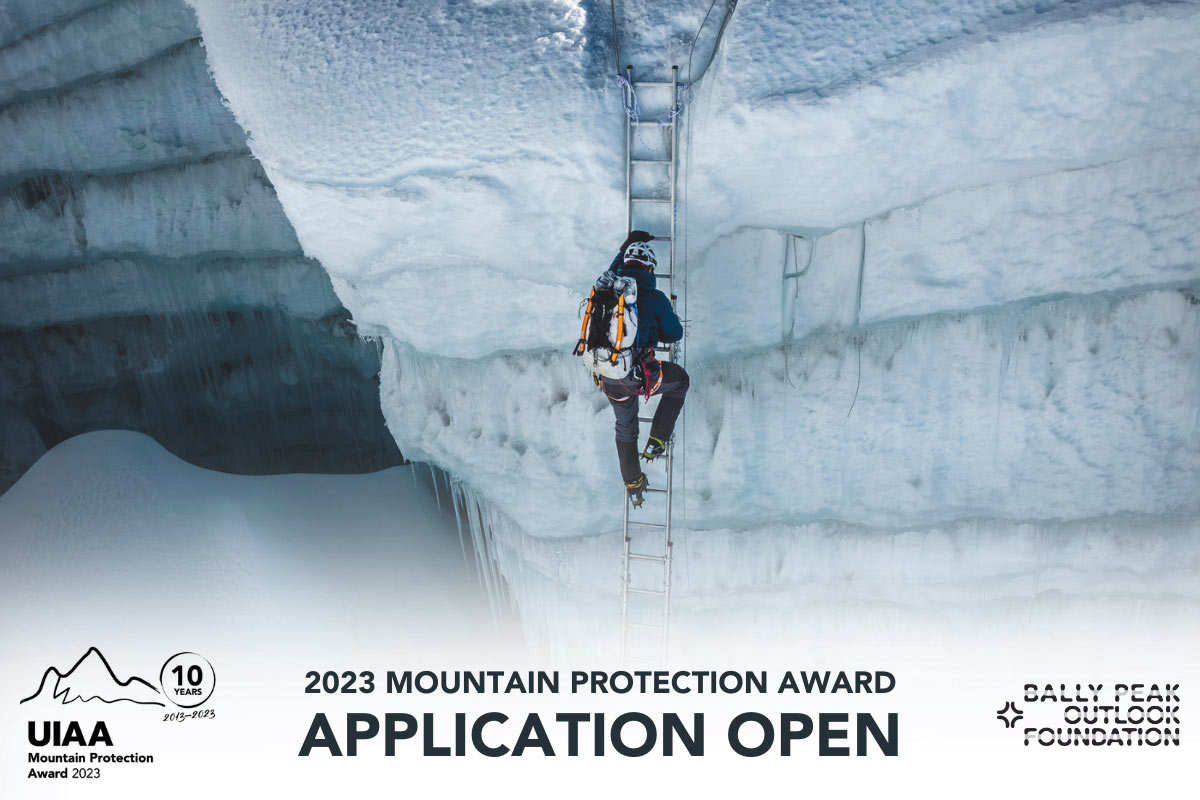
Application for the 2023 MPA, partnered by Bally Peak Outlook Foundation, will open in March.

To discover more about Giroparchi Nature Trail click here.


SUPPORT THE POLISH MOUNTAINEERING ASSOCIATION’S CLIMBERS FROM UKRAINE CAMPAIGN

Promoting and encouraging solidarity between its member associations has always been a core principle of the UIAA.  A recent example has been the support that the Polish Mountaineering Association (PZA) has offered Ukrainian climbers ever since the Russian invasion of Ukraine.

Earlier this year, the PZA created a PZA4UA project which offered the following:

  • Accommodation for more than 30 climbers from Ukraine.
  • Surveys to gather information on the needs of Ukrainian climbers.
  • Professional training and coaching support and the opportunity to train on local climbing walls.
  • Funding of participation in international competitions as well as in Polish national competitions.
  • Emergency assistance for climbers. Basic medical assistance, equipment and emergency relief.

In doing so the PZA has helped raise awareness about its project through a dedicated website (translated into English), across social media and through fundraising initiatives.

The project is based on the following objectives:

  • Raising funds to help real people – young climbers from Ukraine.
  • Supporting a number of minors staying in Poland without family or relatives.
  • Thanks to its initiatives, climbers can win medals for their country.
  • Thanks to the campaign, climbers can continue training despite leaving their home country and prepare for the Olympics.
Piotr Pustelnik, President of the Polish Mountaineering Association, presents details about his federation’s project at the 2022 GA. Photo: UIAA/Amy Liu
What can UIAA member associations do to support?

Financial support for climbers. It is currently funded by the Polish Mountaineering Association’s limited resources.
Support crowdfunding campaign. Every donation is a chance for these young climbers to go to the next international competition.
Promotion of the action. Help promote the crowdfunding campaign to reach a wider audience.
Information to clubs belonging to member federations. Spreading the word about the campaign. UIAA members and climbing websites can share it on their channels.

Share the PZA4UA crowdfunding campaign using the following QR code:

Further reading. Download the PZA’s information guide to its project here.

Piotr Pustelnik, President of the PZA, speaking at the GA, explained:

“This project has been done with the goodwill of many people. These young Ukrainian climbers are living in Poland and have been able to train and compete in a number of competitions. They have achieved many sporting successes. These brave children have a substitute to normality although in reality it is a long way to normal. We will continue to help as our moral obligation and in face of human tragedies. We ask UIAA member associations to support us in efforts to help our young friends from Ukraine.”

His full speech can be viewed here (14:41 – 17:32)

Website
Facebook
Instagram


UIAA VOLUNTEER SERIES: GERGO SANTHA

Over 250 volunteers support the UIAA whether as part of its Executive Board, Management Committee or Commissions. Gergo Santha (MHSSZ, Hungary) has served the UIAA for the past year supporting aspects of the federation’s work in training. He also currently acts as Head of Training within the Hungarian Mountaineering and Sport Climbing Federation.

Gergo Santha’s relationship with the UIAA began in his home city of Budapest, when he was introduced to Training Panel members at a UIAA Mountaineering Commission meeting in 2018.

Having made a presentation about the federation’s future goals within Training, he was invited to join the Mountaineering Commission by Pavlos Georgiades (Vice President of the Mountaineering Commission and President of the Youth Commission).

Prior to volunteering, Gergo was familiar with much of the UIAA’s work, especially its internationally renowned Training Panel (as of October 2022, a Commission).


With a professional background in chemical engineering and currently employed within the IT industry, Gergo also has an extensive climbing background which provided him with knowledge of both the UIAA Safety Label, as well as the fundamental values and principles of mountain sports as outlined in the Tyrol Declaration.

Gergo has been an active climber for over 30 years. Preferring the more adventurous aspects of climbing, he is an active alpine and winter climber, having climbed extensively in the Bernese Oberland, Scotland, as well opening two new routes on the Eiger.

This background, and his thirst for keeping up with the latest techniques and method, along with a particular interest in experiments and tests, have helped him lend his expertise to the Commission.

His early years within the UIAA saw him support up the work of the Mountaineering Commission and now the Training Commission, and in 2022 he conducted an inspection visit to Denmark on behalf of the latter. As part of his role within the Hungarian Federation, Gergo is currently involved in the implementation of a modular training scheme.

Gergo’s passion for the work of the UIAA means he commits as much time as is needed to whatever project he is involved with.

He views the work of the Commission as essential given the ever-changing nature of climbing. With a myriad of information – often misleading – readily available on the internet, Gergo believes the role of the UIAA is more important than ever.

“Climbing techniques and methods are in constant change,” he says. “What was true in the past is not necessarily true in the present. By checking sources such as Instagram and Facebook can lead to confusion as to which technique is correct, which is why the Training Commission (and UIAA Safety Commission), with its great expertise is able to help answer these questions.”

Main photo: Gergo at the Eiger North Face

OTHER ARTICLES IN SERIES

#1 – Klara Dvorakova (Czech Republic)
#2 – Lionel Kiener (Switzerland)
#3 – Pierre Humblet (Belgium)
#4 – Nikolay Primerov (Russia/Switzerland)
#5 – Buddha Basynat (Nepal)
#6 – Harshwanti Bisht (India)
#7 – Juan Jesús Ibañez Martin (Spain)
#8 – Mrika Nikҫi (Kosovo/Albania)
#9 – Greg Moseley (South Africa)
#10 – Stephen Gladieux (United States)
#11 – Joop Spijker (Netherlands)
#12 – Marija Andjelkovic (Serbia)

UIAA SAFECOM ANSWERS YOUR QUESTIONS: STATIC ROPE SAFETY

The UIAA – International Climbing and Mountaineering Federation – regularly receives questions related to safety topics. The UIAA Safety Commission, with support of other UIAA Commissions and experts, has published a series of articles answering common questions with the objective of making them available to the wider climbing community.

The latest question is:

Being a reseller of EN 1891 ropes, predominately for canyoning in New Zealand, I have some major concerns of where rope manufacturing is heading. With an influx of totally static ropes, the rise of other resellers (non-certified) from both North America and Europe means we lost some control of standards. My strong concerns are for safety of the users of static rope (less than 1% in some cases) in sports where slipping or getting washed off a rock is a real ‘risk’ or potential hazard. Shock load on the human pelvis even with a FF1 or even a FF2 will no doubt cause or perhaps has already caused severe damage. Does the UIAA have a stance on this new push for non-certified canyoning rope that I see before me? Much of this rope has only the say of the manufacturer/reseller that it is of a usable and of consistent quality.  I also hear talk of new certifications for such rope with the UIAA being part of the consultation.

UIAA Safety Commission:

We understand your concern. However, the focus of your question is predicated on the misuse by the end user of the ropes in question. Manufacturers have very clear recommendations about how to use a specific rope. For instance, a rope with <1% stretch is never advocated by the UIAA or the manufacturer to be used in a lead climbing situation, ever! Therefore, one should never experience a FF1 or FF2 since it should not be used in a lead climbing configuration. The UIAA does not oversee how a rope is used in the field. It is up to the end user(s) to be well educated on a rope’s intended application in order to mitigate risk.   

If there is any question, the UIAA recommends seeking education from a certified guide or a credible institution or entity for further insight and instruction. The UIAA is very clear about the standards for the types of ropes that are currently certified by the UIAA Safety Commission. 

A list of certified UIAA Safety Labels can be found on the UIAA website. The UIAA Safety Commission suggests using a rope produced from one of the manufacturers whose ropes bear the UIAA Safety Label. 

Additional information: The UIAA Safety Commission is currently discussing a possible future standard for ropes with very low elongation. But until now, it has not identified enough reasonable usages that deserve publishing such standard, since the benefit-risk ratio is not favourable. Therefore the Commission is quite reluctant to do it and it would probably be only for very specific uses. 

ASK UIAA SAFECOM

To submit a question to be addressed by the UIAA Safety Commission please click here.

Previous questions

Suncream and climbing gear
Rope testing
Half ropes
Bolts near edges
Figure-eight knots
Disinfecting climbing equipment
Static and semi-static ropes
Retiring carabiners
Types of knot

UIAA SafeCom answers your questions: List of Knots

The UIAA – International Climbing and Mountaineering Federation – regularly receives questions related to safety topics. The UIAA Safety Commission, with support of other UIAA Commissions and experts, has published a series of articles answering common questions with the objective of making them available to the wider climbing community.

The latest question is:

Much is said about knots for ropes in the mountains, and as the UIAA is the world authority on the subject, my query is the following: What are the knots endorsed by the UIAA for rope work in the mountains? 

UIAA Safety Commission
There is no definitive list of knots and the UIAA has never defined or endorsed such a list.

Having said that, you can find a climbing application for every knot ever invented. Some knots are stronger, some knots easier to remember, some knots are easier to adjust, some knots are very specialised, and some knots are easier to get wrong!  Be careful – all knots can be misused or mis-tied. For sure, a rope with no knots is stronger than a rope with knot(s) …. But it’s not a lot of use!

In hiking and climbing the main function of the rope is to attach people to each other or the mountain – or both.

To choose what knots to teach in climbing is mostly an aspect of pedagogy and methodology, and to some extent culture.

The UIAA does address the most common knots and their main purpose in the Alpine Handbook: Summer Skills, produced in partnership with The Petzl Foundation. For further information click here.

Some extracts from the book, including articles which address questions related to ropes, are available here.

ASK UIAA SAFECOM

To submit a question to be addressed by the UIAA Safety Commission please click here.

Previous questions

Suncream and climbing gear
Rope testing
Half ropes
Bolts near edges
Figure-eight knots
Disinfecting climbing equipment
Static and semi-static ropes
Retiring carabiners

Review: UIAA General Assembly 2022

The 2022 UIAA – International Climbing and Mountaineering Federation – General Assembly (GA) was held in Banff, Canada on Saturday 29 October and hosted by the Alpine Club of Canada (ACC). It marked the UIAA’s 82nd GA and the third in Banff following events in 1988 and 2006.

A recap of the key decisions are covered below. A more comprehensive review, including information from panel discussions and the climate change summit, will be made available in the next UIAA monthly newsletter.


PLENARY SESSION

Over a hundred delegates from 40 different countries and as many different international climbing organisations attended the first in-person UIAA GA since 2019.

Among the invited guests were: former UIAA President Frits Vrijlandt; Marco Scolaris, President of the International Federation of Sport Climbing (IFSC); Jan Bloudek representing the European Union of Mountaineering Associations (EUMA); Stéphane Lozach’meur from The Petzl Foundation; Pier Giorgio Oliveti, representing the Club Alpino Italiano (CAI), and François Masse from Parks Canada. The UIAA also received a message from International Olympic Committee (IOC) President Thomas Bach:

“The UIAA has been at the forefront to promote responsible mountaineering practises. From protecting the precious alpine environments, to advancing sustainable mountaineering sports like ice climbing, to raising young people with a respect for nature, you have led the way to demonstrate how the sporting community can contribute to promote the Olympic values.”

Peter Muir, able to lead in his first in-person GA as President, opened the Plenary Session.  Muir detailed the progress of the UIAA Strategic Plan, noting the closer collaboration between the UIAA Management Committee and Commissions and confirmed the recent decision to create two new UIAA Commissions – Legal Affairs and Training. Muir also highlighted the UIAA’s ambition to diversify its membership (further details below).

In a special vote, Club Alpino Italiano, a founding member of the UIAA, was re-elected as a full member. Its membership will take immediate effect on completion of the submission of its membership requirements. Once this process is complete, it will mark a significant development which sees one of the world’s most preeminent Alpine clubs return to the UIAA family.

There were no Executive Board (EB) elections meaning the composition of the seven-strong UIAA EB remains the same.

In terms of the UIAA Management Committee elections:

Josef Klenner (DAV, Germany) was re-elected as a Largest Federation Representative
Young Hoon Oh (KAF, Korea) was elected as Continental Representative for Asia, replacing Christine Pae (KAF) whose term came to an end.
Joachim Driessen (NKBV, Netherlands) was re-elected as a General Representative

In addition to the return of CAI, the UIAA welcomed three new member federations. This included the election of two new full members from South America:
Ecuador: Federacion Ecuatoriana de Andinismo y Escalada
Peru: Federación Deportiva Peruana de Escalada

A new associate member from India was also elected:
India: Atal Bihari Vajpayee Institute of Mountaineering and Allied Sports (ABVIMAS)

From 1 January, 2023, the UIAA will represent 94 member organisations from 69 countries on six continents. They are comprised of 69 full members, one unit member, 18 associate members and six international observer members.

The election of the two full new members is particularly significant, extending the UIAA’s presence in Central and South America to seven countries.

Both the UIAA budget results for 2022 and forecast for 2023 were approved. The GA also agreed to waive the 2022 membership fee for the Ukrainian Mountaineering and Climbing Federation. Piotr Pustelnik, President of the Polish Mountaineering Association, also detailed the initiatives his federation has set up to support Ukrainian youth climbers. Further details, including on how to support this project, will be provided soon.

Three panel discussions addressed principally the progress the UIAA Commissions are making in view of the federation’s main projects and alignment with current Strategic Plan, a topic further addressed by UIAA General Secretary Lode Beckers. During the GA, the UIAA also presented the new edition of the Alpine Summer Skills Handbook, produced in partnership with The Petzl Foundation.

Further details on the focus of each Commission and Strategic Plan progress will be provided in the extended GA review.

CLIMATE CHANGE WORKSHOP

The UIAA is committed to helping combat the impact of climate change. Earlier this year the UIAA reinforced this commitment by creating a Climate Change Taskforce. Its brief can be found here. Furthermore the federation recently signed the UNFCCC Sports for Climate Action Declaration Commitment Letter. See letter here.

During the Workshop two climate change case studies were detailed – François Masse presented information on the Abbot Pass Refuge Cabin, the first major mountain site in Canada lost to climate change, and then Graham McDowell from the University of Calgary, gave a presentation titled: ‘The implications of warmer winters for ice climbing guides. A case study from the Mount Washington Valley, USA’. This research is supported by the American Alpine Club (AAC).

The World Café format workshop aimed at providing an opportunity to discuss topics related to sustainability and climate change in an informal format, to learn and to better understand needs and expectations of member federations.

It debated a number of questions including:

  • What is the difference between ‘climate change adaptation’ and ‘climate change mitigation’?
  • Where do the UIAA and member federations see biggest changes/threats in practicing mountaineering activities now and in the future?
  • How has the universe of climbing and mountaineering adapted to climate change?
  • What opportunities are there for mountaineers, if any, through the climate changing?
  • International and national climbing and mountaineering organisations who already calculate or who plan to calculate their carbon footprint, findings, methodology.
  • What is expected from the UIAA and member federations in terms of climate action?
  • Are members supporting UIAA’s commitments to the UNFCCC S4CA Framework?
  • What challenges do the UIAA and member federations face when elaborating a climate action plan?
  • How could member federations specifically avoid and reduce their footprint in regard to mountain huts?
  • Climbing and outdoor recreation involves lots of travel. How can it be avoided and/or reduced in a climber’s role as (a) a mountaineer; (b) an event organiser; (c) a federation delegate; (d) an athlete?
  • Meetings and competitions on international and national level and related travel

Further information on the findings will be released in the extended version of this release.

MOUNTAIN PROTECTION AWARD CEREMONY

During a ceremony held shortly after the General Assembly, Establishment of Self-Managed Climbing Parks project by Asociación 7a Escalada, Peru, was named as the ninth winner of the UIAA Mountain Protection Award (MPA).

Main photo: (l-r), Willy Montenegro – UIAA MC Continental Representative for South America; Carolina Adler, UIAA Mountain Protection Commission President; Mary Sanseverino, UIAA Mountain Protection Commission and MPA Assessment Lead; Kimberly Schwartz from Asociación 7a Escalada. Credit: UIAA/Amy Liu

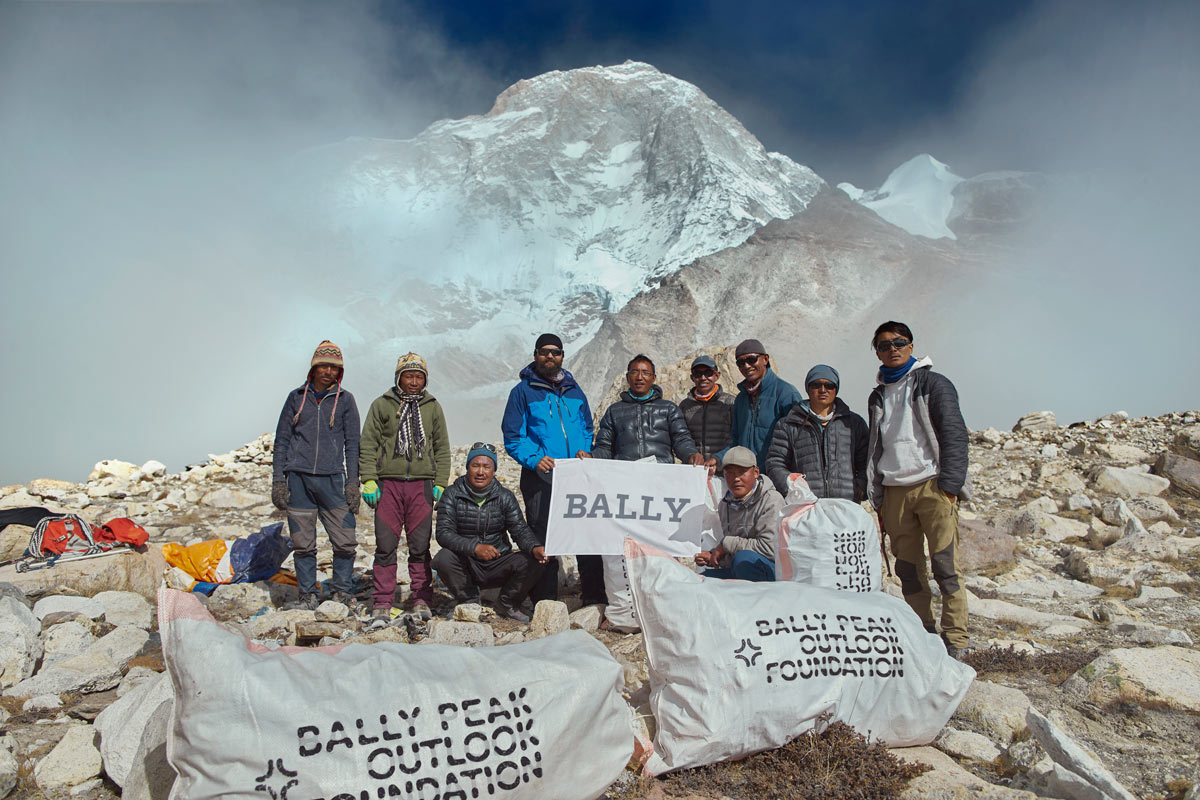
In doing so it became the first project from South America to win the Award. A full press release can be found here. The event was livestreamed and featured contributions from the 2020-21 MPA winner Giroparchi Nature Trail (who detailed progress made since winning last year’s Award), the Alpine Club of Canada (who provided details on their comprehensive State of the Mountains report) and MPA main partner Bally Peak Outlook Foundation (who highlighted the expansion of its Peak Outlook clean-up programmes to areas beyond the Himalaya).

CULTURAL EVENTS

Banff National Park, situated in the heart of Canada’s Rocky Mountains and is the birthplace of the Canadian national park system created in 1887. A number of cultural programmes are being held in parallel with the event, including the famous Banff Mountain Film and Book Festival and a Cultural Programme dedicated to Canada’s indigenous peoples and their role in early mountaineering in the Canadian Rockies.

Much has been written about the “early explorations” of Canada’s Rocky Mountains – and for the most part, this romantic history is dominated by settler cultures: Europeans, Americans, and some early Canadians. Often overlooked is just how much of Canada’s early mountaineering achievements were dependent on local Indigenous knowledge, labour, and participation.

The General Assembly programme provided some opportunities for UIAA delegates to learn and understand more about these issues. This included a special welcome ceremony. Further reading here and to be included in extended GA review.

The GA host was Grant Statham, the recipient of the 2022 Summit of Excellence Award. The Award celebrates long-term contributions, service, and demonstrated impact within the mountain culture community in Canada by an individual or group from across the country.

During the GA, a minute’s silence was held to remember those who lost their lives in the mountains over the past few years. A special tribute was made to Larry Shiu  – Chinese Taipei Mountaineering Association – who died recently in a climbing accident in Taiwan.

GENERAL ASSEMBLY IN 2023

Next year’s UIAA General Assembly will be held in Trabzon, Turkey on Saturday 21 October. It will be hosted by the Turkish Mountaineering Federation (TDF).

The UIAA thanks the ACC, notably Isabelle Daigneault (President), Ken Hewitt (Project Manager, former ACC President) and Carine Salvy (Executive Director), for their hospitality and excellent hosting of the event.

A photo library from the General Assembly can be found here. Photos in this article and in the library courtesy of Amy Liu.

Main photo: Peter Muir, UIAA President and Pier Giorgio Oliveti, representating CAI

Remembering Alex Klenov

The UIAA is saddened to hear about the recent passing of Alex Klenov at the age of 60. Alex volunteered considerable time to the UIAA chiefly as a member of the UIAA Youth Commission.

The following tribute is courtesy of Anne Arran, current UIAA Management Committee member and former UIAA Youth Commission President.

Alex Klenov (Sasha) was renowned as being the “Chief Ideologist of Pure Style in Russia,” making a move away from aid climbing where he could.

Born in the forest-steppe Petropavlovsk of northern Kazakhstan, Alex did not expect that his life would firmly connect him with mountains and rocks. Only Charles Dickens, Jules Verne, Arthur Conan Doyle and others sated his childhood thirst for discovery, distant wanderings and introducing himself to people and cultures around the world.

He transitioned from mainly climbing on rock walls in the 1980s to mid-1990s, taking part in the Russian championships in the Pamirs – and winning – and also spent some time in Chamonix. But his heart was there to give something back and create things. He moved easily from a rock climber having climbed Fr 8b to the high mountains and was well versed in “trad protection”. Climbing in Thailand was a favourite too.

He gained mountaineering prominence on the international stage twice as a nominee of the Piolet d’Or, first in 1999 for the first ascent of High Tension, a new route on the north face of Thalay Sagar with Alexei Bolotov, Mikhail Davy and Mikhail Pershin which was climbed capsule style from a portaledge with some drilled protection and aid. In 2001 he was nominated again for establishing a new route on the Golden (northwest) pillar of Spantik (7,028m), Pakistan with Mikhail Davy over 12 days which was a 2001 nominated ascent.

Not devoid of creativity he has also appeared in or made climbing videos including “Rubicon, People from the other side of the world” directed by Andreî Kim which was a musical ballad of a team of Russian rock climbers establishing a new route on Great Sail Peak, Baffin. The wall is 1,500m long with an average steepness of 85 to 90 degrees. At the end of the ascent, Valeri Rozov jumped off the wall in a wingsuit. A humorous and wacky musical.

Many young climbers found inspiration in his organisation of climbing festivals with the UIAA with the initiative “Rocks for Everyone” and his international rock festivals “On-sight Marathon.”

He formally began his involvement with the UIAA Youth Commission in 2005 and he was always full of enthusiasm and dedicated to the project, carrying an inescapable smile as a strove on as a giver of opportunity. Whether dancing, running over hot coals or setting up meetings he always seemed in his element.

He also organised a festival in Kazakhstan approved by the Russian Mountaineering Federation and with support of the Mountaineering and Sport Climbing Federation of Kazakhstan (MSCFRK) as well as making route setting courses in Mongolia and Nepal. “When he made the festival in Kazakhstan, he did a lot as the leader of this idea and taught our climbers how to do it,” Kazbek Valiyev, former President of the MSCFRK.

Alex had previously spent ten years working in the Ekaterinburg Olympic reserve school and also coached the Kazakhstan team from 2008-2009. He flourished in the Pamirs in the former USSR style climbing events on peaks such as 4810 in the Ak Su valley and he later in Chamonix, where he spent the odd happy month and climbed a new route on the Grand Capucin in 1999 called “Russian winter” with Mikhail Devi.

In 2005 I invited him to join our team to climb Angel Falls main face, which was 50m overhanging, and we had already failed twice with either the wrong team or the wrong equipment. Luckily, he immediately saw the potential for coming on an expedition with us to the “lost world” in Venezuela to climb Rainbow Jambaia and the first free ascent of Angel Falls main cliff with John Arran, Miles Gibson, Ben Heason, Ivan Calderon, Alex, myself and Alfredi Yupi Rangel. It was named after the double rainbow on the wall and the first names of our team. After 12 nights on the wall, we made the summit with a crack lead team that undoubtably benefited from the experience of Alex in the big wall setting who embraced the strong team spirit which made it a success. So what’s more to say? Alex will be missed, I will miss him, not just here, many people will miss him.

A link can be found to Anna Piunova’s article, soon to be translated to English. She is setting up a memorial to him on 10 November in Yekaterinburg.

Photos courtesy of Anne Arran, Miguel Sánchez Cánovas, Valeriya Klenova