A study led by Japanese Professor Emeritus Chiaki Aoyama has investigated why an alarming number of people are getting lost on Japan’s mountain trails every year. As detailed below, this investigation has revealed three major causes.
The number of mountain accidents in Japan increased sharply in 1994, following the “Mountain hiking boom” that began in response to the television broadcast of Japan’s 100 most famous mountains, and tripled from 962 in 1994 to 3,043 in 2015. Since then, the number has continued to increase slightly, reaching 3,357 as of 2024.
The cause of this sudden increase in the number of accidents is “accidents due to getting lost .” The proportion of accidents due to getting lost among all causes of accidents has always exceeded 30%, reaching as high as 45% in some years. The number of accidents due to getting lost has consistently exceeded 1,000 since 2013, and remains at the present level. It has become a serious social problem in Japan.
Photo credit: Chiaki Aoyama
Photo credit: Chiaki Aoyama
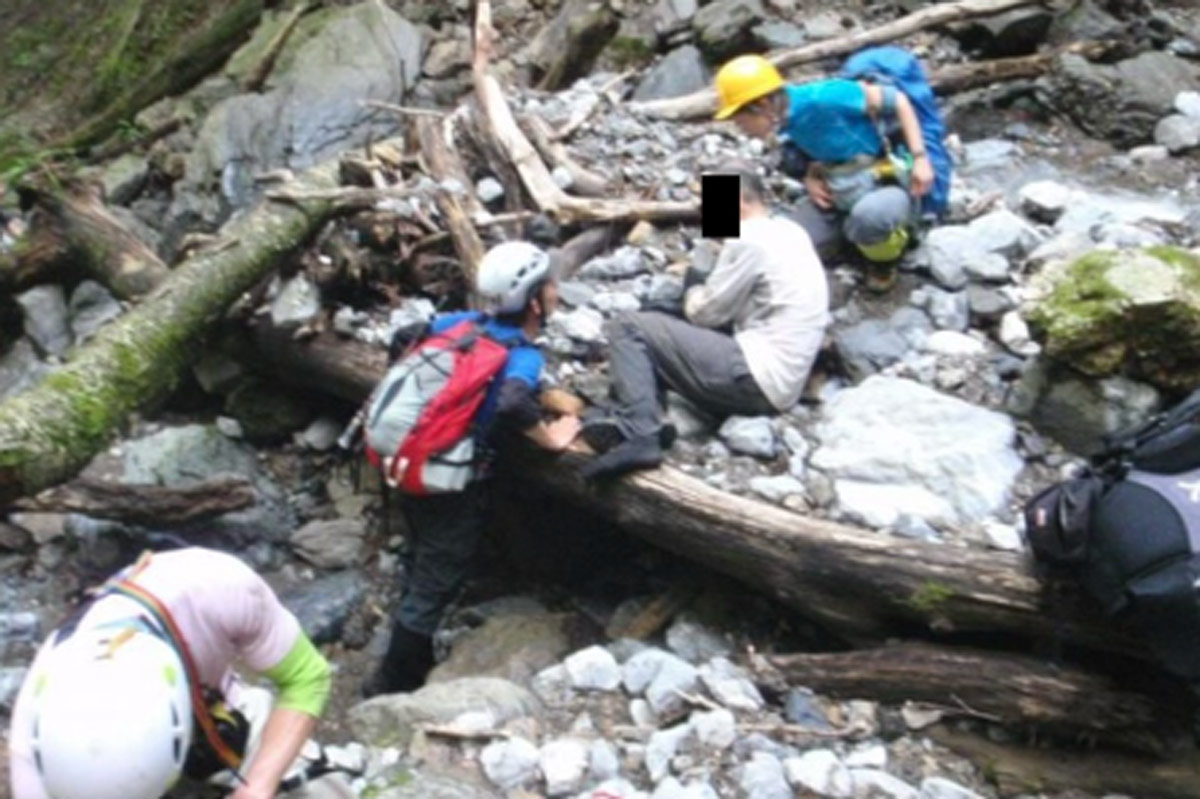
Photo credit: Chiaki Aoyama
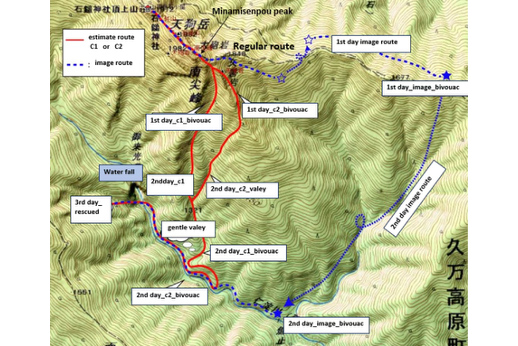
Figure 1: The actual route taken by the lost person (red) compared with the one he imagined himself to be on (blue).
Navigation versus imagination
The causes of these accidents are a combination of human factors, environmental factors, and information factors that interact with each other. Among the human factors, navigation ability proved to be the most critical. So, what kind of navigation ability do people who get lost have? Interviews with 76 persons who had lost their way proved it very difficult to get detailed information, simply because the majority of people who have been rescued after being lost are still confused about where they have been.
To get more information, Professor Aoyama developed a five category checklist for the interviews with the lost persons. After five days of interviews with one person, he obtained the results shown in figure 1 (see above). The route that the hiker had imagined himself taking was completely different from the route he actually walked.
This result was similar to those from previous experiments where subjects imagined being on different trails while walking a real trail. The experiments were conducted between 1997 and 2016, with 612 participants. The question is: What kind of trail do lost people imagine that they are on while walking?
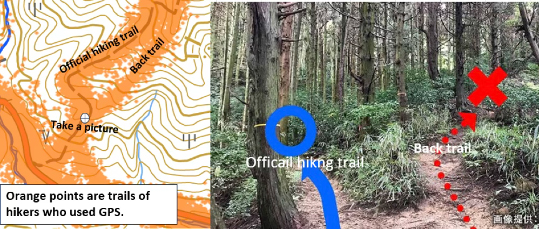
Figure 2: Junctions between official hiking trails and “back trails”
Why do 1,000 people get lost every year in Japan?
Researchers could not find the reason why so many persons were getting lost until a new software company developed a big database of hiker’s GPS-based logging of their walking tracks. The data showed a large number of “back trails” in all of the mountains in Japan (figure 2). “Back trails” are defined as “a trail that is not shown on maps, even if there is a real trail.”
What particularly interested Professor Aoyama was that many getting cases occur on back trails (figure 3). Responding to this result, the police, local governments and mountaineering organisations have launched a campaign to prevent hikers from using back trails. However, their efforts have been hindered by landownership issues.
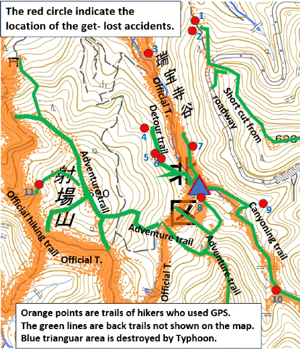
Figure 3: The influence of back trails on accidents
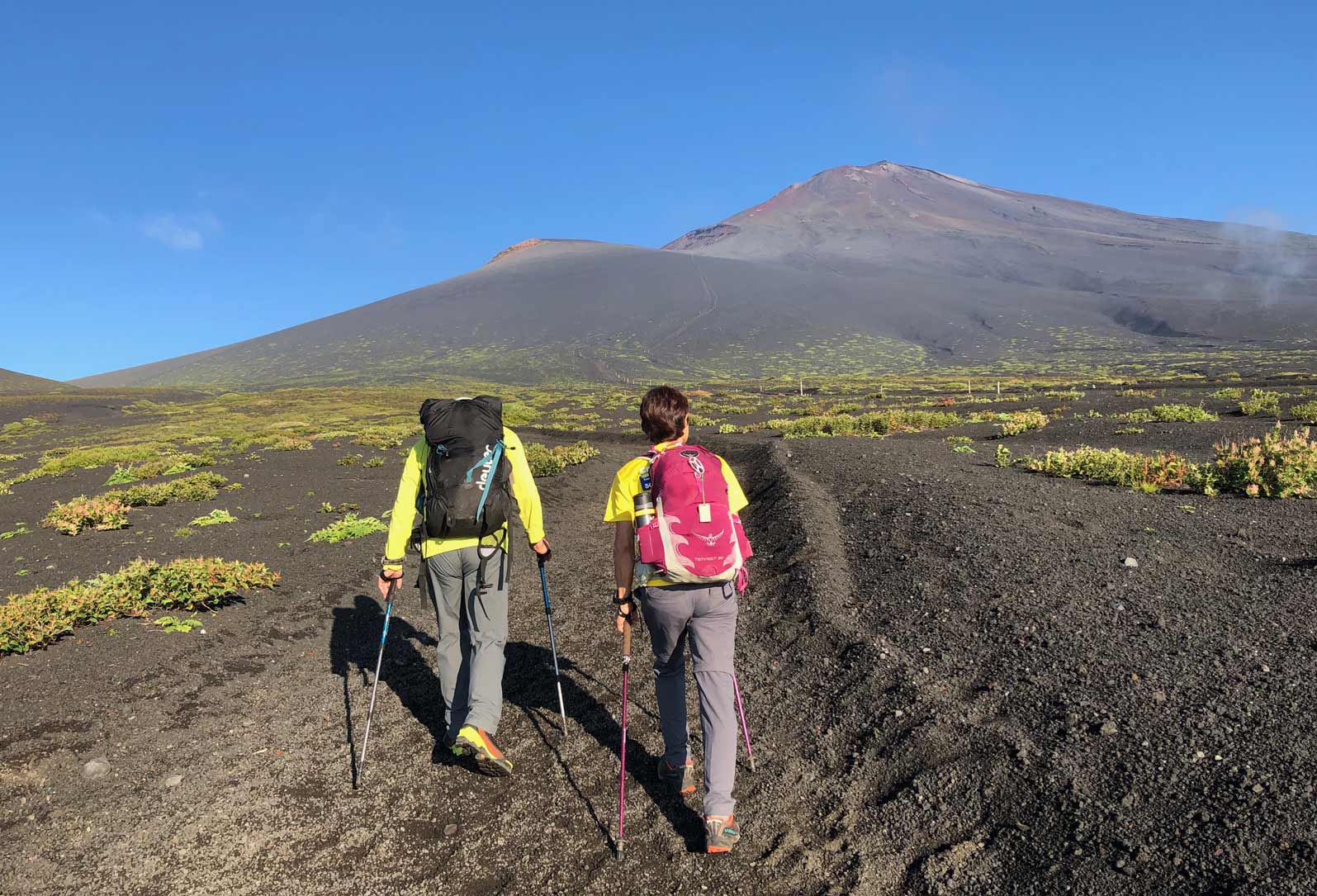
Hiking in Japan, Fuji foothills
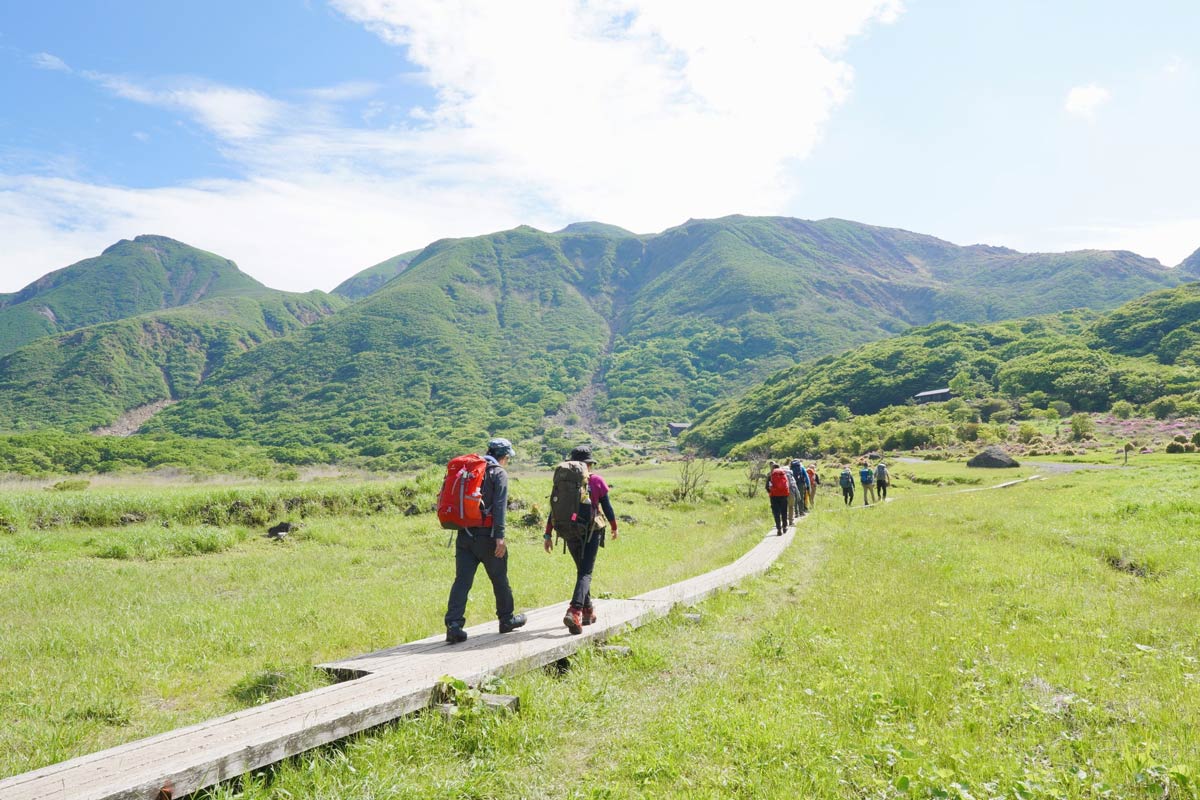
Photo credit: Chiaki Aoyama
The Review Paper
The full results of the investigations are presented in detail in the full research paper titled: “Current state of getting lost accidents and their mechanism in Japan: The impact of getting lost, especially on back roads”. The paper can be downloaded here.
This paper describes:
- The current state of getting lost accidents in Japan’s mountains
- The three major causes of getting lost and how they occur
- Interview surveys with getting lost accident victims
- Getting lost experiments
- The problem of back trails that can cause getting lost
- The difficulty of implementing measures to reduce getting lost accidents.
Statistics
Select statistics from the report:
Total mountain accidents:
962 accidents in 1994
3,043 accidents in 2015
3,357 accidents in 2024
Proportion of accidents due to getting lost
Consistently over 30%
Peaked at 45% in some years
Annual getting lost incidents
Over 1,000 per year since 2013
Wild vegetable picking accidents
Accounted for over 20% of mountain activity before 2010
Declined from 20% (2013) to 8.8% (2024)
Interview research
76 lost individuals interviewed
Navigation experiment
Conducted 1997–2016
612 participants
Back trails
In parts of Mt. Rokko, nearly 30% of trails were unofficial back trails
Accident Reporting
Download
Report

This article forms part of a series of case studies derived from reports submitted to national accident and near miss reporting databases which are included in the UIAA’s international directory of accident data reporting systems. For more information on the different databases, and to view, additional case studies, click here.
—
Professor Aoyama is a member of the UIAA Accident Report Working Group, the Japan Mountaineering & Sport Climbing Association as well the Institute for Mountain Search and Rescue – Japan.