The global climbing community was deeply affected by the tragic accident which occurred in March 2026 on the St. Savvas route in Kalymnos, Greece. The UIAA’s heartfelt condolences go out to the family and friends of Petr “Brumla” Hruban.
The accident brought the challenges of corrosion on Kalymnos to the forefront of discussions within the climbing community.
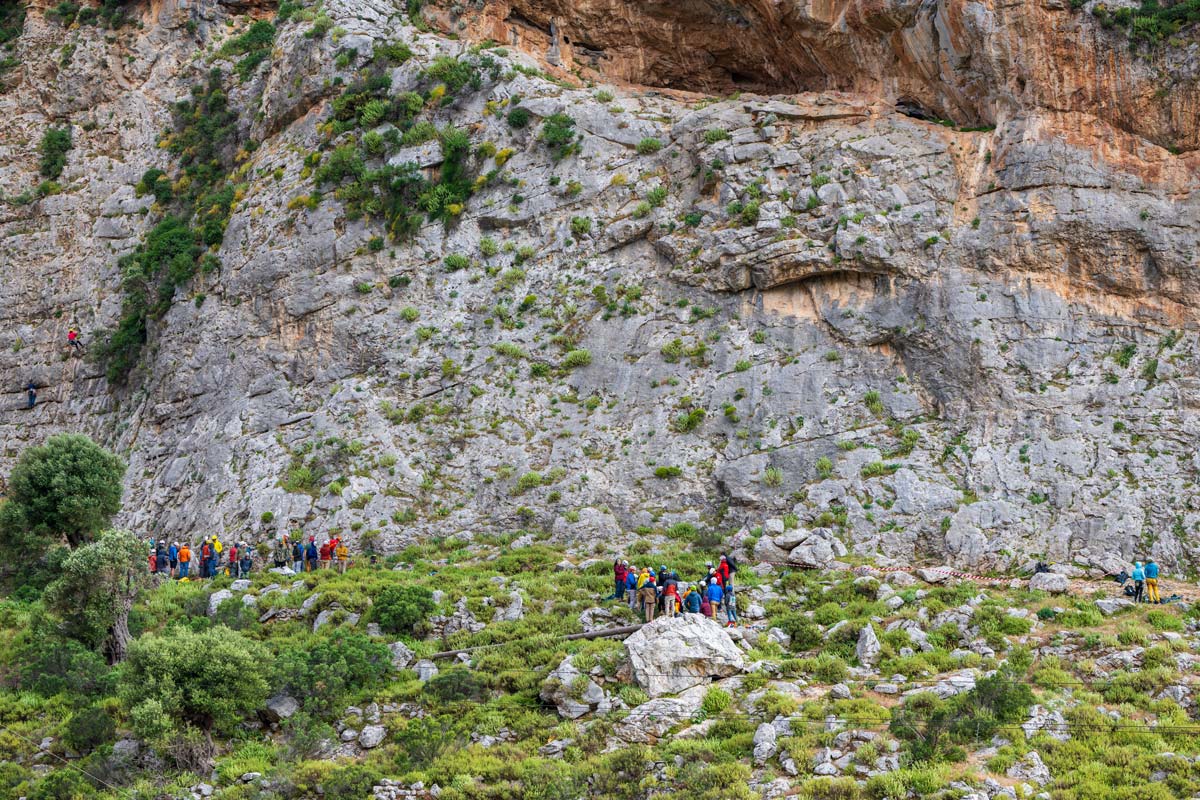
The International Climbing and Mountaineering Federation (UIAA) has been offering advice on corrosion issues on Kalymnos for over 15 years and had committed to hosting a rebolting course on the island (as part of its annual Safety Commission meetings), a year before the accident occurred. The UIAA rebolting event, held in May 2026, dedicated a significant part of its programme to the subject of corrosion in stainless fixed anchors.
Since the event, the UIAA has continued to provide resources and support related to the safety of climbing anchors both in Kalymnos and worldwide.
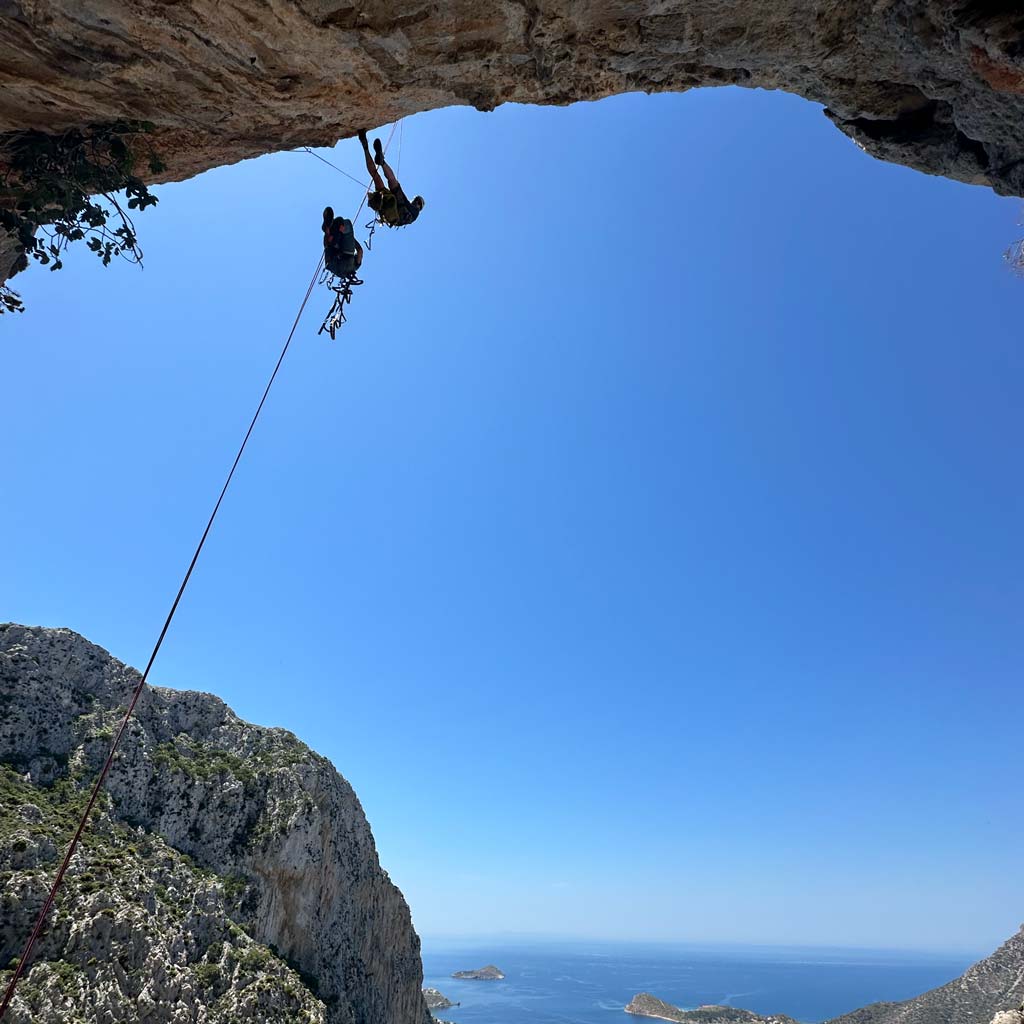
UIAA bolt investigation on St. Savvas (May 2026). Photo credit: UIAA SafeCom
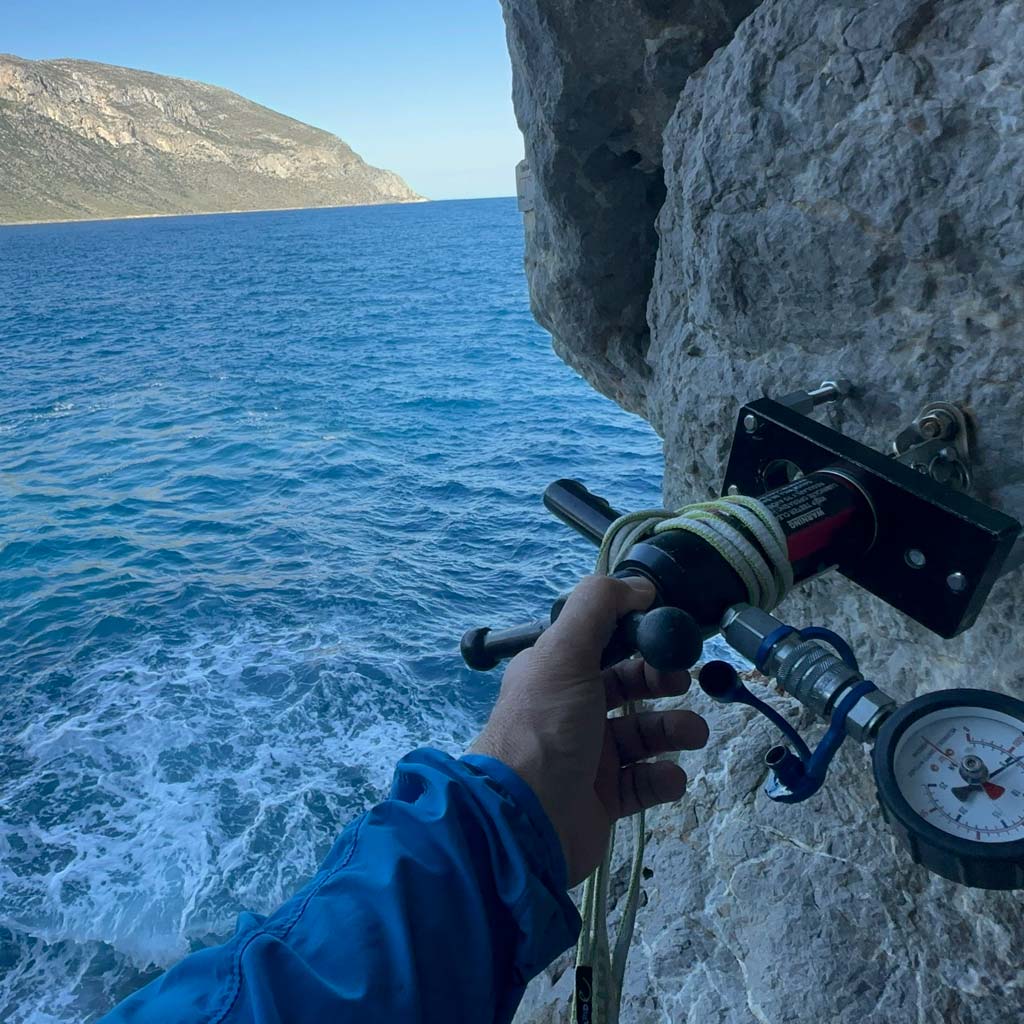
UIAA tests bolts in-situ, among other methods. Photo credit: UIAA SafeCom
Part 1: Understanding the cause
Following the rebolting course and inspection in May 2026, the UIAA has conducted significant scientific research to understand the cause of the anchor failures involved in the accident on St. Savvas. The UIAA Safety Commission’s goal has been to improve understanding of corrosion and fixed-anchor safety on Kalymnos and in similar environments elsewhere.
Many climbers travel from abroad to popular climbing destinations such as Kalymnos, where numerous routes have been equipped by visiting climbers. The international climbing community therefore has a collective responsibility to contribute to climbing safety and help ensure that these remarkable destinations can continue to be enjoyed. Climbing tourism draws people closer together in a unique way – uniting climbers and local communities. The latter can be deeply affected when something unexpected happens in their region. The UIAA remains sensitive to the concerns of those who provide these services for climbers.
Sport climbing is a cornerstone of climbing activity globally. Bolts are one of the mainstays of providing that experience. Ensuring bolts are reliable can be complicated and involves many people and entities, including land managers and government agencies, whose collective aim is to provide a high level of safety. However, climbing inherently brings risks.
By conducting this investigation, the UIAA aims to gain a better understanding of the anchors involved in the Kalymnos accident and contribute to the development of predictive models that can help identify the most suitable anchor materials for different environments, particularly those susceptible to corrosion.
The UIAA also recognises that bolts are exposed to complex and changing environmental conditions, and that the effects of corrosion can be difficult to identify and assess in the field.
Part 2: UIAA Safety Commission testing
In May 2026, UIAA rebolting experts, instructors, mountain guides and metallurgists used core drilling to extract numerous wedge-anchor specimens from St. Savvas and other locations across the island.
The UIAA investigated numerous aspects and elevations of various anchors at different crags/sectors and have identified some important findings worth relaying. Other conclusions remain elusive. These investigations often take more time, money, effort, and energy than expected. The coordination of specimens, laboratories, and deep-dive analysis can prove a lengthy process. However, it is important to be certain of conclusions before communicating to the climbing community and the regions involved. Climbers will make safety decisions based on this information and managers may develop important policies.
The anchors that failed were taken out prior to the UIAA’s arrival in Kalymnos. The UIAA retrieved some bolts, and bolt remnants which were chopped prior to its arrival, from St. Savvas which are assumed to be from the same group as those that failed during the accident. The actual bolts that failed were extracted from the rock and sent to a third party prior to the UIAA’s arrival.
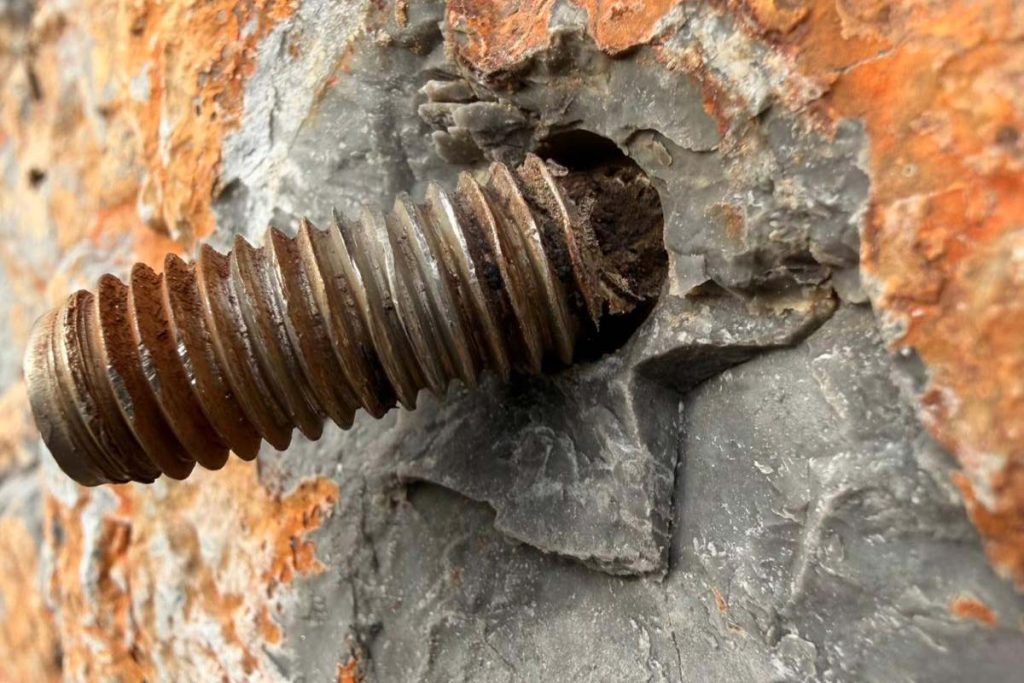
One of the ‘culprit’ bolts from the accident on St. Savvas. This bolt was the last bolt before the belay stance. It was struck with a hammer once by the rebolting team, easily breaking at the rock/bolt interface. Photo credit: Rebolt Kalymnos
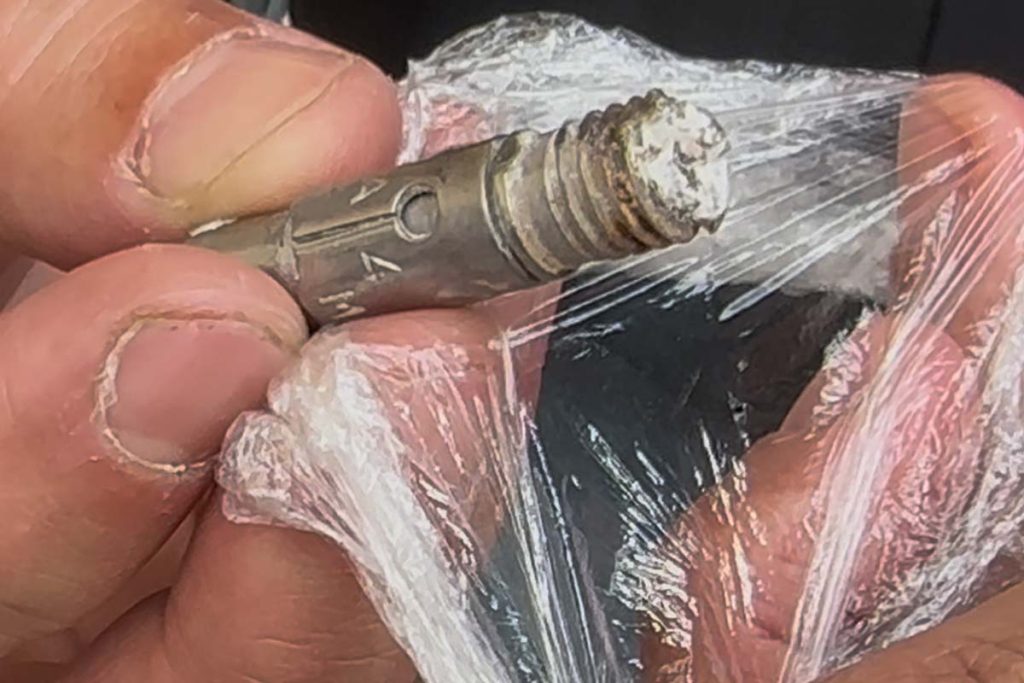
One of the top anchor bolts at the belay station failed in shear from SCC under body weight while the climber was being lowered. Photo credit: UIAA SafeCom
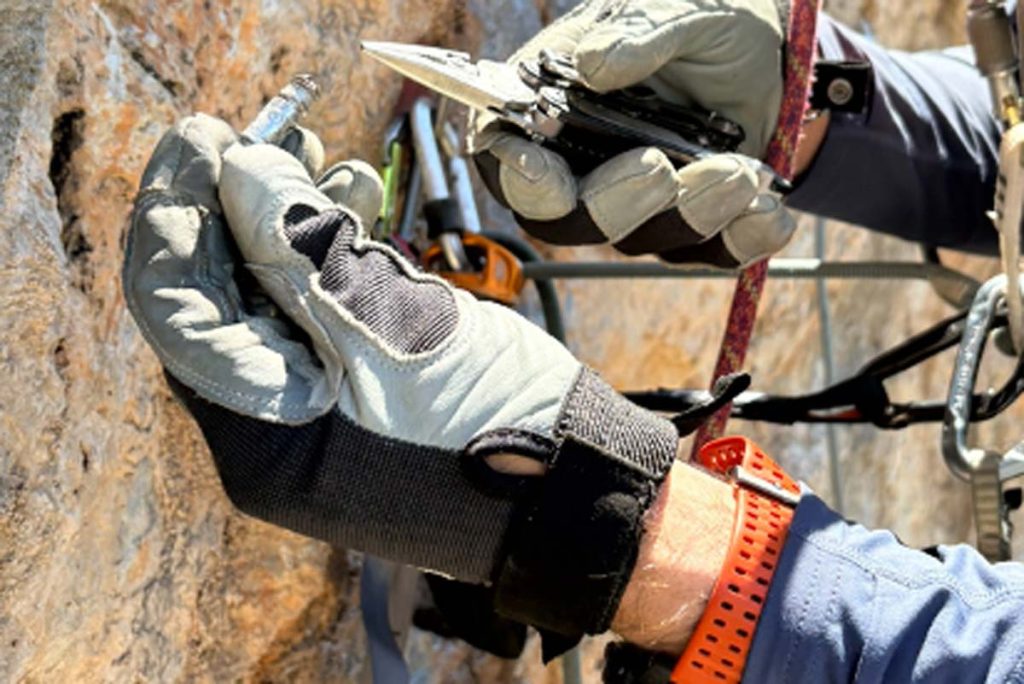
This bolt remnant was retrieved with a core bit on St. Savvas, post accident and post-rebolting by the UIAA SafeCom team. Photo credit: UIAA SafeCom
Part 3: Current findings
The UIAA Safety Commission’s work clearly shows three significant findings thus far:
- Metallurgical testing was performed on the adjacent bolts retrieved by the UIAA. The four anchors removed from St. Savvas all met the specified compositional requirements (AISI-316L); they were, in fact, a more corrosion-resistant version of the stainless alloy class than many anchors currently on the market.
- The failure mechanism is Stress Corrosion Cracking (SCC), confirmed by all investigative parties involved. There are several types of stress cracking which include chloride stress corrosion cracking, sulfur stress cracking, and hydrogen embrittlement. While the exact type or combination of some of these cannot yet be established conclusively, several factors are shared. These include a susceptible material, the presence of stresses in the material or stress from placement, and an aggressive environment. Frequently, all types of stress cracking are addressed with the same solution – a material/process/design that eliminates two of the above factors.
- The UIAA’s research also indicated that the manufacturing process used to make these wedge anchors is typical for threaded bolts. Thread rolling is the most common method for stainless anchors of a small diameter like those used in climbing. This method is currently used by many manufacturers. As of autumn 2026, compositional analysis of the adjacent anchors has revealed no evidence that this production batch differed from those typically manufactured nor was it more or less susceptible to corrosion-related failure than comparable products.
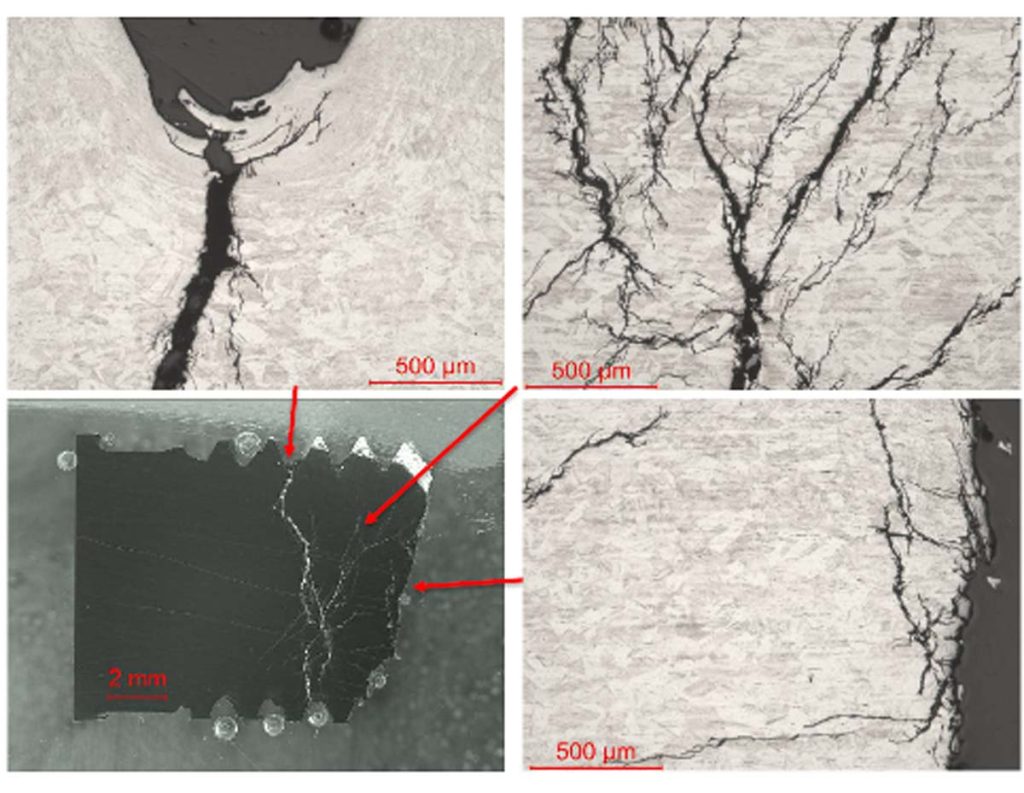
Stress corrosion cracking (SCC) from a bolt sample taken from St. Savvas. Photo credit: UIAA Collection
Part 4: Continuing work and progress
The UIAA is continuing its assessment of these anchors in conjunction with other stakeholders, investigative teams, and the Kalymnos Municipality. Work includes comparing microhardness and material flow between these anchors and new anchors on the market from multiple manufacturers. The UIAA is using Scanning Electron Microscopy (SEM) to take a forensic look at the areas around cracks in the bolts and better understand the local composition and structure of the steel.
This work will allow the UIAA Safety Commission to gain a better understanding of the mechanisms responsible for these failures and to continue to improve guidance in the UIAA 123 Rock Anchor Standard. A detailed report will be shared in the future as more information is obtained.
Part 5: Staying alert
It is important to inspect fixed anchors whenever climbing. This is true throughout the world, but especially in coastal limestone areas where there is severe corrosion. When climbing in Kalymnos, and similar areas, please reference up-to-date information on which routes have been rebolted with UIAA-SCC class anchors. Inspect anchors for corrosion. Red, brown or black corrosion – especially on stainless steel bolts -, nuts, and hangers is a flag for potentially unsafe bolts. In many circumstances, 304/A2 stainless steel is a significantly higher risk than 316L/A4. When in doubt, test or back up suspect bolted anchors.
Please report any issues using the UIAA’s online form. This information contributes to the UIAA’s map of reported climbing anchor corrosion failures. In accordance with local or national legislation (if any) and ethical considerations, inspection and maintenance of routes in such areas are recommended in order to mitigate risks.
Part 6: FAQs
Could other coastal climbing regions be impacted with similar corrosion issues?
Many coastal areas around the world have observed similar bolt safety issues. Pay attention to the bolts you clip and inform yourself of local conditions and rebolting projects before planning a trip. Multiple factors contribute to this type of severe and unpredictable corrosion. Some of the biggest influences are: proximity to coastal areas with salt water; limestone or dolomite, high temperatures, routes shielded from being washed by rainfall or waves, and pronounced wet and dry seasons.
Who can I contact on Kalymnos and/or in other regions should I notice any risks related to the climbing areas?
Please contact the local authorities, local bolters, and the UIAA via the following form.
What should I look out for in guidebooks? What information can help minimise the risk here?
Look for information on when a route was rebolted and what hardware was used. The optimum scenario is a route listed as being rebolted with UIAA 123 class SCC anchors. Otherwise, 316L is still more resistant than 304L to these problems. The non “L” version of these steels are much more likely to be susceptible to these kinds of corrosion so avoid those if possible, and especially standard 304 stainless. The time since the route was rebolted matters less as these problems can develop quickly in the right conditions, but generally more recently equipped routes are a better choice.
How can I support the climbing community, especially contributions to such research and development of greater understanding about rock anchors, bolts and support for rebolting programmes?
Climbers can make donations via the UIAA fundraising platform. Choose ‘Safety Research’ when making a donation. All funds are directly spent on projects run, or endorsed by the UIAA Safety Commission, and for the benefit of the global climbing community.
When will the full report from Kalymnos be available?
The full report will be published on the UIAA website, currently scheduled for the first quarter of 2027.
Recognition
The UIAA Safety Commission thanks the following organisations and individuals for their support in organising the re-bolting workshop, inspection and subsequent testing and reporting:
- Municipality of Kalymnos
- Christos Belogiannis
- Loukas Dourdourekas
- Aris Theodoropoulos and Rebolt Kalymnos
- French National Corrosion Institute
- High Desert Climbers Alliance
Further Information
A wealth of information can be found here:
https://www.theuiaa.org/safety/rockanchors/
Report by
UIAA Safety Commission
October 2026