Author: Communication

Strengthening our global commitment to climate action

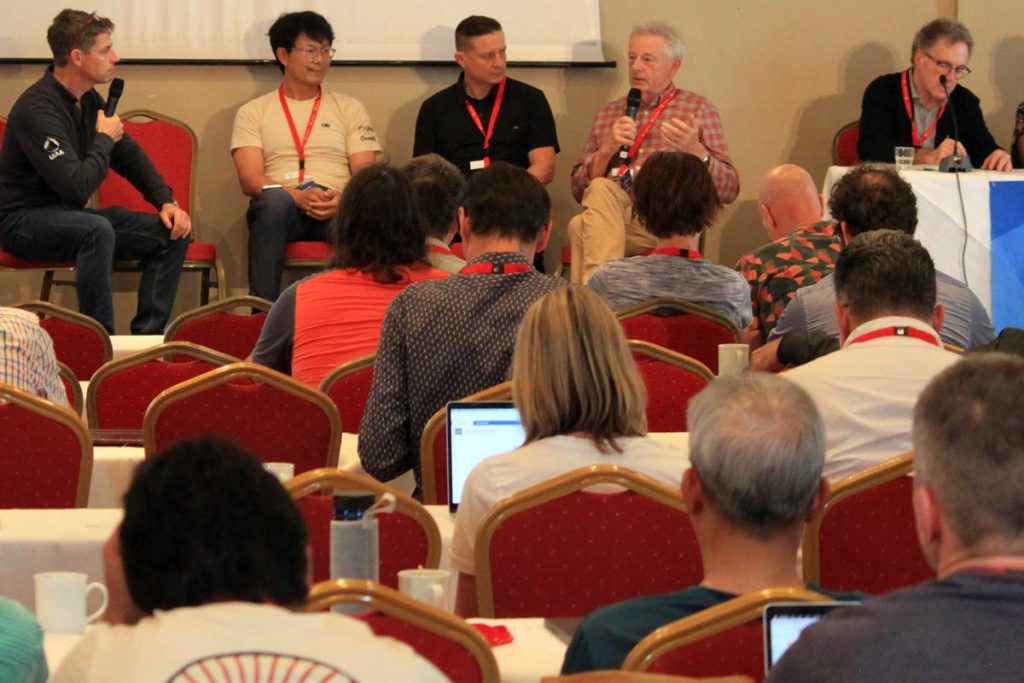
The third edition of the UIAA Climate Change Summit was celebrated under the slogan “UIAA Climate Action: commit, move, together, now!” and held in Malta as part of the 2024 UIAA General Assembly.

In his opening speech, UIAA President Peter Muir shared personal and global examples of how climate change has affected climbing activities – from melting or absence of ice and threats to hut infrastructures, to alternative and sometimes restricted access to favourite mountain areas. He urged members of the UIAA to join forces in climate action to mitigate and adapt to the effects we have all been witnessing.

The Summit, presented by the UIAA’s new sustainability partner Lenovo (further details to follow), focused on engagement on the recently developed “Climate Action Plan for UIAA Member Federations” and specifically revolved around the four defined pillars: commit, mitigate, adapt and educate/advocate.

Attending delegates had the opportunity to dive into two of the four pillars in more detail and exchange on key elements and challenges with fellow member federation representatives. Each of the breakout sessions was facilitated by members of the UIAA Climate Change Taskforce with Mary Sanseverino (Canada, ACC) leading the exchange on the commitment pillar, Jean Miczka (France, FFCAM) on adaptation, Josef Klenner (Germany, DAV) on mitigation and Paul Kwakkenbos (Netherlands, NKBV) leading the exchange on education/advocacy.

During the interactive sessions Climate Change Taskforce members picked up on many ideas, best practices and further needed support from the UIAA membership. The latter will help shape future output from the UIAA to assure we can all move along the climate action journey together. Members were specifically requesting more educational and communication tools, joint social media campaigns, Green House Gas (GHG) measurement and reporting tools, holistic approaches including biodiversity and nature preservation, and a wise use of in-person gatherings to foster interaction and exchange.

As a symbolic gesture and to close of this year’s Climate Change Summit, General Assembly attendees got to sign a banner to highlight their active commitment to climate change action.

UIAA members committed to supporting climate action plans by signing a dedicated banner at the 2024 UIAA General Assembly. Photo: UIAA/Amelie Stettbacher

The 2024 summit, presented by Lenovo, is one of the outputs under the lead of the UIAA Climate Change Taskforce. More on climate action, including guidance for UIAA member federations as well as individual climbers will be published on the dedicate UIAA webpage shortly.

Another fascinating sustainability topic covered during the GA was a PechaKucha presentation given by UIAA Mountain Protection Commission Vice President Mary Sanseverino. Her engaging and visual talk presented the UIAA’s commitment to the UN-declared International Year of Glaciers‘ Preservation, which will be celebrated in 2025, as well as showcasing a number of timelapses and photographs highlighting the impact of climate change on glaciers.

The International Year of Glaciers’ Preservation has been created to:

  • Raise awareness about the role of glaciers in the climate system
  • Address the challenges of climate change and water crisis
  • Encourage governments, corporations, and individuals to take action
  • Develop a cross-sectoral approach
  • Identify practical steps to advance scientific research

The UIAA is committed to a number of initiatives around the event with further details to be provided ahead of 11 December, the annual International Mountain Day.

UIAA Resources

UIAA on climate change and action
UIAA internal climate action plan
UIAA Carbon Footprint Reports
UIAA Sustainability Charter

Case Studies

Climate action case study Germany, DAV
Climate action case study Canada, ACC
Climate action case study Switzerland, SAC


World Ice Climbing Operating Unit created

The creation of World Ice Climbing, a self-governed Operating Unit within the UIAA, was approved at the 2024 UIAA General Assembly in Malta.

“This is a very positive step. The approved new structure of ice climbing is going to enable the people who are experts in this field to work with a greater degree of independence. Personally I don’t think that the previous ‘Commission-type of structure’ worked for ice climbing. This is a specialised project. If you look at other organisations they have very specific structures in place to develop their sports and by experts who are fully focussed on that. This is a major step in allowing the sport to develop.”
Peter Muir, UIAA President

As per the revised UIAA Articles of Association, World Ice Climbing (WIC) is defined as such:

  • The UIAA is the sole and exclusive international body recognized by the International Olympic Committee IOC governing Ice Climbing competitions worldwide.
  • The UIAA General Assembly establishes a competitive Ice Climbing operating unit to be known as World Ice Climbing for the purpose of governing, directing, regulating, promoting, developing and the general furtherance of competitive Ice Climbing (its “Objects”).
  • World Ice Climbing operates on a self-guided and self-governed basis and on behalf of the UIAA as beneficial owner will administer, apply, preserve and develop the competitive Ice Climbing assets and funds of the UIAA.

Shortly after the creation of the Operating Unit, and following an extensive recruitment process, the UIAA Management Board elected the first three officials to the inaugural World Ice Climbing Board. They are:

Joanne Carilli-Stevenson, USA, (AAC) – Chair
Etienne Grillot, France (FFCAM)
Alexandru Paun, Romania (CAR)

The Board is also comprised of athlete representatives, elected by the Athlete’s Committee:

Eimir McSwiggan, IRL (MI)
Willis Morris, GBR (BMC)

The Chair of World Ice Climbing will have an obligation to report regularly on the work of the WIC Board to the UIAA Executive Committee. WIC is also requested to present a quarterly financial update and a risk assessment twice a year to the UIAA Management Board.

One of the first major tasks of World Ice Climbing will be – in collaboration with the UIAA Office and event organizers – the delivery of the 2024-2025 UIAA Ice Climbing World Tour, partnered by Outdoor Research. This includes five World Cups on three continents, a World Youth Championships and six Continental Cups.

Alongside the World Tour, the Board members first task will be the creation of several committees to continue the progression of the sport in the areas of event management, rules and regulations, training of officials, developing the sport for the Olympic Games, and more. These committees will be populated with experts who will continue to push the sport forwards.

Over the past few seasons, a dedicated Governance Group has led the sport. The UIAA thanks all members of the Governance Group for the time and effort they have dedicated to ensuring competition ice climbing has continued to thrive over the past two seasons. This includes UIAA EC member Martin Lascano, UIAA MB members Eimir McSwiggan, Phil Powers and Andy Syme as well as Heeyong Park and Gyuqhyoung Min from the Korean Alpine Federation.

For further information on voting decisions made at the 2024 UIAA General Assembly click here.

For full details on the UIAA Ice Climbing World Tour please visit the dedicated website.

Voting Decisions: 2024 UIAA General Assembly

The 2024 UIAA General Assembly was held from 8-9 November in Malta and hosted by ClimbMT.

A total of 107 delegates from 47 countries attended the event.

Below is a short summary of the voting decisions only. A full review of the GA will be published on Monday 18 November.

Elections

Executive Committee

Peter Muir was re-elected as UIAA President. Muir (ACC, Canada) will serve his second and final term from 2025-2028.

Peter Muir (left), Françoise Jaquet (right). Photo credit: Peter Bourne/UIAA

“Thank you for your confidence in electing me for another four years. I want to thank all member federations for the help they have given me and the Executive Committee. I have really enjoyed being President for four years and I am delighted to carry on for a further four. I look forward to continuing the work we have done including the implementation of the new strategic priorities.”
Peter Muir, UIAA President

Amit Chowdhury (India, IMF) and Martin Lascano (Argentina, FASA) were re-elected to the Executive Committee.

Yolanda de Both (Netherlands, NKBV) and Saray Khumalo (South Africa, MCSA) were also elected to the Executive Committee.

Two Executive Committee positions were vacant following the departure of Lode Beckers (Belgium, CMBEL) and Françoise Jaquet (Switzerland, SAC). The UIAA thanks Françoise and Lode for their incredible commitment to the UIAA through their respective tenures with the Executive Committee.

Management Board

Newly elected to the General Representation of the Management Board were:

Eimir McSwiggan, Ireland, MI
Nima Nuru Sherpa, NMA
Andrew Syme, UK, BMC

Re-elected to the Management Board:

Phil Powers, United States, AAC (North America Representative)
Jean Miczka, France, FFCAM (European Representative)
Stein Tronstad, Norway, NKF (General Representation)

The full composition of the Management Board is available on the UIAA website. Anne Arran (BMC, UK), after considerable and dedicated service, leaves the MB after her final term expired.

World Ice Climbing

A new Operating Unit ‘World Ice Climbing’ was created to govern the sport of competition ice climbing (see below). The following candidates were elected to its first Board:

Joanne Carilli-Stevenson, USA, (AAC)
Etienne Grillot, France (FFCAM)
Alexandru Paun, Romania (CAR)

The Board is also be comprised of athlete representatives:

Eimir McSwiggan, IRL (MI)
Willis Morris, GBR (BMC)

Further details to follow shortly.

New Member Associations

The following applications for new membership of the UIAA were accepted:

New Active (Full) Members

Andorra: Federació Andorrana de Muntanyisme
Georgia: United Federation of Georgian Mountaineers
Honduras: Federacion Hondureña de Deportes de Montaña y Escalada

New Associate Member

Australia: Australian Climbing Instructors’ Association Incorporated

UIAA Declaration

The new UIAA Declaration for climbers, hikers and mountaineers was approved.

The purpose of the new declaration is twofold:

  • To lay out the generally accepted norms for behaviour that the UIAA considers optimal. This includes the ethics and style with which we climb and the environmental and social considerations that we should be aware of.
  • To clarify the best practice for climbers and mountaineers from a mountaineering viewpoint. This particularly refers to the style of rock climbs and ascents of “alpine” peaks.

Further details on the UIAA Declaration will be made available once the document is officially published.

The approval of the UIAA Declaration follows on from the recent publication of the UIAA Sustainability Charter.

Articles of Association

Amendments to the Articles of Association including a new governance model for ice climbing (a self-governed Operating Unit), changes to the annex regarding criteria for honorary membership and raising the number of UIAA Court members were approved.

Strategy

The seven Strategic Priorities of the UIAA for the period 2025-2028 were approved. These are:

  • Wider global representation
  • Rock climbing and hiking
  • Ice climbing
  • Safety Centre of Excellence
  • Training and development
  • Climate change and sustainability
  • Financial development

Further details can be found here.

Future General Assemblies

As voted on in 2023, the 2025 UIAA General Assembly will take place in Kosovo from 23-25 October.

A year later, in 2026, the General Assembly will be held in Denver, the United States (hosted by the AAC). In 2027 the GA will take place in Chile (hosted by FEACH).

Full Report

More extensive details on all topics, including on the panel discussions, World Ice Climbing and the 3rd Climate Change Summit, will be published in due course.

Voluntary Recall: Mammut Barryvox 2 and Barryvox S2

The following communication is provided by UIAA Safety Label holder Mammut

Relates to the new avalanche beacons Barryvox 2 and Barryvox S2 from the Winter 24/25 season

Mammut has always stood for quality, safety, and innovation since 1862. The safety and protection of our athletes and consumers are at the heart of everything we do. Hence, we continuously test and improve our materials and products to uphold our high standards. During this process, we identified a potential issue with the power switch of the new avalanche beacons Mammut Barryvox 2 and Mammut Barryvox S2 in some cases, and we therefore decided to recall all potentially affected products for inspection, and where applicable, repair or exchange. 

The potential malfunction is based on an assembly issue. As a result, the main switch on the affected devices may be misaligned leading to unintentional switching from Send to Search mode with lateral pressure, or possibly even turning the device off completely. This defect can pose a potential safety risk to users and requires rectification.

Upon identifying this issue, we conducted a 100% inspection of our stock, confirming that only Barryvox 2 and Barryvox S2 models may be impacted. The Barryvox and Barryvox S models from previous seasons are not affected by this issue. ​

Fortunately, we were able to identify the root cause of the potential malfunction and immediately started the mitigation process, to ensure the timely inspection or replacement of affected devices. ​

Please return your Barryvox 2 or Barryvox S2 for inspection and replacement.

We have a solution in place for all impacted devices. We, therefore, ask you to:

  • Check if you own a Mammut Barryvox 2 or Barryvox S2. Please refer to the pictures and style numbers provided for identification of the correct models.
  • Go to our return form:
    • Fill in your customer details
    • Select “Avalanche Equipment” as item category
    • Fill in all details for your device (see list below)
    • Mention “Barryvox Recall 2024” as issue description
    • Leave empty “Proof of issue”
    • Submit form online
  • Once your request has been processed you will receive a return label via email to print out.
  • Pack your Barryvox 2 or S2 and send it to Mammut for inspection (address on return label) by following the instructions provided by Customer Service. If you purchased a package with shovel and probe, you’ll only need to return the Barryvox device. ​
  • We will check the products and return or send replacements within 7 business days* after receiving your product. Alternatively, you can drop off your Barryvox 2 or S2 at your nearest Mammut store**. ​
  • The rectification of the defect is free of charge. ​

This process applies no matter where you bought your Barryvox 2 or S2 device. ​

We sincerely apologize for the trouble that this recall will cause. We know many of you are busy preparing your first trips into the snow. We promise to be quick and return your checked device if not impacted by the malfunction or send a replacement for your beloved beacon. ​

The Barryvox 2 and Barryvox S2 remain the leading avalanche beacons on the market, and maintaining the trust you have placed in us is our top priority. ​

Full story and original article.

UIAA publishes its Sustainability Charter

The UIAA is delighted to announce the publication of a major new milestone, its Sustainability Charter.

In 2022, and as a contribution from the UIAA to the observance of the UN-declared International Year of Sustainable Mountain Development, the General Assembly of the UIAA adopted the proposal made by the UIAA Mountain Protection Commission to review and update the UIAA’s ‘Environmental Objectives and Guidelines’, which were first published in 2002 to observe the first International Year of Mountains. Looking back at the original guidelines, they have indeed stood the test of time and have remained highly relevant for the UIAA. However, climbing and mountaineering have undergone considerable changes in the 20 plus years since then, and so have the conditions in which we exercise these activities in the mountains.

The UIAA’s Mountain Protection Commission delegates, as well as other UIAA volunteers, past and present, have contributed to the review and update of these guidelines, which take stock of these changes and the role that climbers and mountaineers need to play in how we respond to the ensuing impacts, and conversely, how we affect these trends.

“My hope is that we as an organisation, our member federations and the many climbers and mountaineers gathered through them, take heed of this advice and reflect them in all aspects of our operations and activities. By acknowledging and adopting these recommendations, we take a concerted step towards operationalizing our own commitments towards sustainability, as per our strategic goals. More generally, by promoting these objectives and guidelines we demonstrate the responsible mindset and stewardship expected of us as climbers; not only towards our own sport and its rightful place in promoting human wellbeing and awe-inspiring connection with nature, but also in engaging in the decisions and policy processes that shape the future of our mountains. As the UIAA reflects on the outcomes of its strategic goals set for the 2020-2024 period, and prepares to define its next strategic objectives for 2025-2028, I trust that these guidelines, and how we implement them, also contribute towards the Five Years of Action for the Development of Mountain Regions in 2023-2027.”
UIAA President Peter Muir

The full document can be downloaded here and from the dedicated website page. The webpage is essentially a shortform version of the document which offers a summary of its cardinal messages for both the UIAA and its members (addressing climate change, reducing impacts to the natural environment, reducing social impacts and promoting positive social change). However, the shortform version should not be viewed independently of the full document.

The protection of the mountain environment has always been a chief priority and concern for the UIAA. Since it was founded in 1969, the UIAA Mountain Protection Commission (MPC) has worked to guide action and be the voice of the UIAA for advocacy on mountain protection – the mountains being key spaces of significance on Earth. The MPC’s goal is to support the UIAA in ensuring the mountains’ unique environment and cultures will still be there for the benefit of future generations of mountaineers and wider humanity. The MPC, led until earlier this year by Carolina Adler and since May 2024 by Paul Kwakkenbos, has spearheaded the essential delivery of these guidelines.

“These guidelines are a compilation of years of deliberations among Commission delegates on how best to update and modernise the UIAA’s 2002 UIAA Environmental Objectives and Guidelines. Not only was this update considered necessary in view of fast-changing environmental and social impacts that affect climbing and mountaineering, but also in view of the impacts that our activities themselves have in mountain regions and beyond. Furthermore, given the observance of the UN-declared International Year of Sustainable Mountain Development in 2022, the timing for such an update was imperative.”
Carolina Adler, UIAA MPC President (2016-2024)

Based on the UIAA’s 2002 guidelines, this update reflects the responses needed from the climbing and mountaineering community in view of issues such as the “triple planetary crisis” faced today on climate change, nature (ecosystems and biodiversity) loss, and pollution, whilst also upholding and responding to the UIAA’s own strategic objectives and priorities on sustainability.

“For these guidelines, sustainability is broadly applied as an overarching principle that guides the responsibilities and actions that the UIAA, its members, and its community of climbers and mountaineers can take when pursuing and promoting climbing and mountaineering, considering the potential environmental, social, and economic impacts that these activities can have on the mountains and beyond. We focus on the expected practical actions that the UIAA can take at the organisational level, plus those of its members, and the broader climbing and mountaineering community in taking collective action. As the MPC we are encouraging the knowledge and practice sharing amongst the UIAA and its member federations.”
Paul Kwakkenbos, UIAA MPC President

Going forward, the UIAA MPC stands committed to offering its expertise, service, and support to the UIAA and its members in accompanying the ongoing practical application of these guidelines through concrete actions. Conversely, the MPC also encourages the active engagement and contributions from the UIAA, its members and their communities in sharing experiences and lessons learned that offer insights for improving these guidelines as part of their ongoing application and review.

Member federations are encouraged to reach out at mountainprotection@theuiaa.org with questions, best practices and to convene on engagement opportunities.

Essential Resources

UIAA Sustainability Charter (website page, short-form)
UIAA Sustainability Charter (direct download of document)
UIAA Climate Change resources
UIAA Carbon Footprint Reports
UIAA Historic Declarations

Main photo: Stock Library

UIAA launches database of accident reporting systems

A number of UIAA member federations and rescue organisations have established systems to collect data about accidents. Their approaches vary, from gathering of individuals stories for publication, through data collection by online reporting forms to general statistics compiled by the rescue services. Some efforts are community-driven, some organised by climbing federations, and some by public services. Altogether a substantial amount of data is being collected and often put to good use for the benefit of climbing safety, but until now there has been no uniform approach. The UIAA, led by a dedicated working group, has brought together data and knowledge from the national systems that exist, and created an international database.

Version 1 of the database is now online providing information on 18 systems from 15 countries. For each reporting system, information detailed in the database includes scope of the platform, its purpose, a summary from the UIAA about the areas of climbing and mountaineering represented as well as links to reporting results. The database will be subject to frequent updates.

“This is something of a soft launch but after over a year of research, analysis and collaboration with owners of the reporting systems we are delighted that the database is now a live tool,” explains Working Group Chair Stein Tronstad (Norwegian Climbing Federation, UIAA Management Board). “Consolidating information on the international reporting systems known to the UIAA is great progress – and part of the federation’s commitment to establishing a Safety Centre of Excellence. However, it is only the first step in the ambitions of the working group.”

These next steps include:

  • Having collected reporting forms from 12 accident reporting systems, an analysis with respect to types of data collected, reporting protocols, and data usage is now being conducted.
  • Developing a UIAA position paper on accident reporting to argue the need for accident data and address certain concerns regarding liabilities, responsibilities and ethics.
  • Work in progress on a comparative analysis of data from USA, Japan, and Norway with respect to factors such as spatial and temporal distribution of accidents, sex and age of the victims, types of accident, and injuries sustained.

Furthermore, the UIAA will publish a series of articles highlighting case studies from the database. This will include a deeper dive into research and stories already provided by bodies such as the Petzl Foundation (Understanding Mountain Sports Accidents) and the American Alpine Club’s highly informative Prescription («Your monthly dose of accidents in North American Climbing»).

Anyone wishing to provide information about a system not currently listed on the UIAA database can do so by contacting the Accidents Working Group.

UIAA Accident Reporting System

Peter Muir: Reflections from the UIAA President

Four years at the UIAA: Challenging, Progressive, Educational, Fun

Peter Muir, Alpine Club of Canada (ACC), became the 14th UIAA President when elected during an online GA in 2020. He stands for re-election at the UIAA General Assembly in Malta for what would be his second and final four-year term. Here Muir reflects on the progress that the UIAA has made under the first era of his tenure, and should he be re-elected, where the focus lies on the road to 2028.

My motivation for re-election

I have really enjoyed being President for four years. I’d like to continue for another four. There’s still work to be done. I’ve come to the conclusion that the current Articles of Association have served the UIAA well but certain revisions are needed to reflect the UIAA of 2024 and beyond. We’ve improved communication between the Management Board and the Commissions about what each expected. Across the next four years, I would like to further develop all levels of communication and ensure that greater standardisation is in place. The latter is core to us being more agile in delivering on our promises and projects.

Where I’d like the UIAA to be in 2028

The Articles of Association should reflect the reality of where the UIAA is now and clearly define levels of responsibility. I would like to expand the resources that are available because one of the limitations of the proposed Strategic Plan and priorities is that they are aspirational. We already do some things very well but we need to ensure that we have the resources to fulfil our potential. This income needs to come from partnerships and sponsorship or through revenue from some of our activities. We can also help ourselves by reducing the tendency to ‘reinvent the wheel’ which is a drain on volunteer time.

The UIAA at 100

Wider global representation is one of the seven goals of the new Strategic Plan (see more below). The UIAA marks its centenary in 2032 and the ambition is for us to have well over 100 members and greater representation in some continents, especially in Africa. We need to have a much higher profile. As an anecdote, I’d like to see every climber in my country – Canada – know what the UIAA is, as opposed to – for some people – just being a curious little tag on a carabiner. What does the UIAA really does stand for? what’s available from it? It’s a big task and it is essential.

What are the benefits for UIAA members?

To a certain extent, I think that we need to continue to remind members about the benefits available. A coming example will be climate change as we invite members to join us in our growing initiatives to demonstrate leadership in recognition and adaption by providing excellent opportunities for members to develop their own sustainability plans which they may not be able to manage themselves because of capacity. Then there’s the many tangible benefits with our services and research in safety, mountain medicine and training.

The UIAA is the global mountain network. It’s most visual manifestation is the General Assembly itself. It is there that if members face an issue or a problem, the chances are they will meet some other national federation who has faced the same problem. Problems are rarely unique and can be solved through collaboration. Bringing like-minded climbing organisations together is one of the main roles of the UIAA. Post GA, we will launch a communication campaign to more clearly address member benefits.

The Executive Committee

One thing I’m particularly pleased with is the collegiality, within the Executive Committee and the Management Board. I’d like to spend a few words on two departing members – Françoise Jaquet and Lode Beckers. Françoise has done a remarkable job as treasurer and in committing her time and expertise to projects like developing standard operating procedures, which were badly needed for the organisation as a whole. Lode, likewise, is a very smart person. He’s dedicated to what he does and has strong, sound opinions. He is someone who has challenged us all to think in different ways.

Up for re-election in Malta are  Martin Lascano and Amit Chowdhury.  Martin  has helped to significantly increase our profile in South America. Martin’s organisation of the spring Management Board meeting in Bariloche, Argentina was a critical and demonstrable effort in this goal and was a tremendous success. Martin has also been the significant link for the Executive Committee for all things ice climbing.

Amit Chowdhury, Vice President, has provided immense guidance and support to our Commissions, both through his initial review of the Management Board Commission interactions and commission projects and through his ongoing work as the primary link of communication to and from the Commissions.

Rock Climbing with the new Strategic Plan

The UIAA already represents a large numbers of rock climbers, who probably far outweigh people who define themselves as mountaineers. Our approach to rock climbing will not be simply about supporting festivals or events. Not everyone is motivated by competitions. We need to support the regular rock climber.  I always emphasise that there is more the one way to climb.

It was quite fascinating watching the UIAA Safety Commission perform a bolting demonstration during the inaugural UIAA Mountain Sports Training Course in Argentina held earlier this year. Rock climbers were very engaged in this critical subject.

If you are going to bolt, then you need to bolt right, because if you bolt wrong, it’s a disaster and an accident waiting to happen. In terms of this research and advice, I don’t see anybody else offering what the UIAA is on a global scale. So that’s a good, good opportunity for us. Of course I will temper it with a little bit of Doug ‘Scottism’ as an ode to our late Honorary Member. Always ask yourself if you really need to bolt a route. The other thing we need to remember is that not everybody wants to climb the hardest routes. Everyone has their own goals and aspirations. A nice ‘moderate’ route can be as a fun as a hard route. We need to represent everyone, and not just the elite climbers.

Safety Centre of Excellence

Our medical and safety commissions have benefitted from extraordinary leadership and impressive dedication from their members. This has made the structure bigger than individuals. In other words, everybody understands what their role is and what the objective of the Commission is. These Commissions are scrupulous in what they undertake. They pick tasks which bring added value and are achievable. And they bring real expertise and excellence to the project. The recent work on bolting and on advice for women in climbing has been impressive.

In turn, they have greatly increased the profile of the UIAA, and they have also greatly increased the safety of people, or their access to knowledge and risk management resources. So the proposed Safety Centre of Excellence needs to be a crystallisation of this – access to knowledge. People, especially when starting out, do not always know the questions to ask. If, for example, you’re a woman who wants to go to Nepal, trekking or climbing , what is it you need to know? Well, the UIAA can provide access to that guidance.

As training is a core and popular service, it is also a component of these strategic priorities, with a focus on refining its structures and standardization for even greater impact and appeal.

Sustainability and Climate Action Plans

The UIAA has just published its Sustainability Charter, the long-awaited update to the  2002 Environmental and Sustainability Guidelines. That together with our climate action plans are not only foundational documents for the UIAA and its members but also living documents. Members can start on their climate journey at whatever point they are at. Not many have the resources of the major eight to ten federations. We represent a large number of smaller members with fewer resources. Our role is to assist them throughout their journey to becoming more sustainable and in being able to prepare for the impacts of climate change. A case in point is the experiences of clubs like the Alpine Club of Canada, German Alpine Club and the Swiss Alpine Club in rebuilding huts or making them more sustainable operations.

From a UIAA position we need to lead from the front. You can’t tell people what to do if you’re not doing it yourself. I just find that intolerable position. So our internal Climate Action Plans are equally important and we need to be transparent on our progress.

Significant changes to competition ice climbing

My hope is that the proposed new structure of ice climbing is going to enable the people who are experts in this field to work with a greater degree of independence. Personally I don’t think that the previous ‘Commission-type of structure’ works for ice climbing. This is a specialised project.

If you look at other organisations, like the IFSC (Sport Climbing) and the ISMF (Ski Mountaineering), they have very specific structures in place to develop their sports and by people who are fully focussed on that. They are experts. I don’t see a sport like ice climbing growing without that same kind of structure. Only then will you enable the sport to develop.

Ice climbing’s Olympic ambition

It’s one thing to try to get to the Olympics. It’s another thing to develop a sport so that it can get to the requisite level of the Olympics. I mean, the base, the feed system that brings people in. There is potential for some progress with France hosting the 2030 Olympic Winter Games. France, and our federation FFCAM, have been long organizers of ice climbing competitions with a highly impressive national team.

Is the Olympics one day a realistic ambition? Yes. Should it be our immediate focus? No. We need to work a lot harder on the base, on the pathways, on national competitions, on further developing a high-quality World Tour, on increasing participation amongst different member federations. Our possibilities of success will increase as we achieve this.

Female representation and participation

The UIAA signed the Brighton Plus Helsinki Declaration in early September. This is a commitment from the UIAA to further promote the participation of women in all aspects of climbing and mountaineering – including in our own governance. One thing we need to ensure is that women are encouraged to follow pathways to key positions both in member federations and at the UIAA and that the nominating procedures dictate this. If, when the time comes my time as UIAA President ends, I would be thrilled if there are number of strong female candidates and a female President.

Representation is important not only in terms of gender but also in ensuring we truly represent different cultures and parts of the world. We’ve taken positive steps towards this on an Executive Committee level.

Engaging with new partners and brands

The UIAA is an attractive proposition to potential brands and partners. We welcome all kinds of opportunities – from supporting specific events to the federation as a whole. The UIAA as the global mountain network can provide great visibility and credibility to a brands. Our work takes us to some of the world’s most extreme and fragile environments ones a lot of brands wish to support or align their messaging to.

Celebrating climbing and mountaineering achievements and awards

Increasing our visibility on a global scale and being even more relevant is important. Our new podcast series Mountain Voices has enabled us to engage on different topics and with influential personalities in the climbing and mountaineering world. One project under discussion is the potential for a UIAA Awards platform which may provide the opportunity to recognise certain people and achievements. However, we need to make sure that this brings added value and that it is not a drain on existing resources. We also need to focus on the return in 2025 of the Mountain Protection Award, which for us is a major project which recognises people and organisations who are changing the mountain world for the better.

What to expect from the General Assembly in Malta?

Firstly we can expect over 120 delegates and a significant representation from over 50 countries. It is likely to be our biggest GA in a number of years in terms of people present and member associations represented. That is a positive sign regarding engagement with what the UIAA is doing. We look forward to being in Malta under the organisation of ClimbMT, led by our own industrious Executive Committee member Simon Alden.

There’s at least two major things on the agenda, quite aside from the elections. The first one is the aforementioned decision on ice climbing which would allow for the creation of a new operating structure to have the flexibility and the ability to self-govern. The other thing is, and I think this is the critical part, is that we are entering into a new Strategic Plan. We have seven implementation areas (wider global representation; rock climbing and hiking; ice climbing; global mountain safety of excellence; training and development; providing climate change and sustainability guidance; financial development), and I’ve addressed each subject with this interview.

We’ve deliberately curated them as strategic priorities as opposed to a strategic plan. A strategic plan to me is like a whole encompassing a plan for change or modification of the organisation. Strategic priorities, on the other hand, can be aligned with an implementation schedule for each area and for them to be more measurable, accountable and adaptable. And by 2028 the goal is to have hit as many of our targets as possible. We look forward to you continuing with us on this journey.

This is a significant election year. Membership in the Executive Committee and Management Board should supplement the direction of the UIAA. Diverse representation is essential not only in terms of gender but also in ensuring we truly represent different cultures and parts of the world. We’ve taken positive steps towards this on an Executive Committee level, and it has been highly effective for Asia with Amit and Martin for South America. Our 2024 candidate slate also presents an opportunity to make valuable initial progress on bringing women into the Executive Committee and Management Board supporting our intent in signing the Brighton Helsinki Declaration. I know that the General Assembly will take all of these considerations into account as it sets up the UIAA for progress for the next four years and beyond.


Slovenian women climb four new routes in Indian Himalayas

The following report is courtesy of the Alpine Association of Slovenia (PZS), a member of the UIAA since 1991.

This is the latest in a series of articles promoting the participation of women in mountaineering to coincide with the UIAA recently signing the Brighton Plus Helsinki Declaration.

Slovenian alpinists Anja Petek, Patricija Verdev, Ana Baumgartner, and Urša Kešar, members of the 2024 Lalung Women’s Expedition, opened four new routes in the remote mountains above the Lalung Valley in the Indian Himalayas. The longest and most complex new line of their expedition is the 2000-meter route Here comes the sun (ED, M6+, AI5+, 5 climbing days), which follows the eastern ridge of the previously unclimbed six-thousand-meter peak Lalung I (6,243m). Here is their story:

Before the expedition, online search results indicated that our objective, the Lalung Valley, was still mostly unexplored. Our sense of its remoteness became even clearer at the Indian Mountaineering Foundation (IMF) in Delhi, where we were the ones telling the staff about the existence of certain peaks in the Lalung Valley. The reality of what this meant for us as climbers became more tangible with each passing day we spent in the valley.

We set off on August 26 together with eighteen local porters from the Pensi La Pass, the entrance to the valley, and quickly realized that even they could not provide much information. Initially, they had told us that our base camp would be at 5,000 meters, but we soon realized that was just a quick answer without any real merit. After just three hours of walking, we found an excellent spot for base camp with clean, running water at 4100 meters. Of course we went to check for other locations higher up, but we found only dirty water and unsuitable terrain.

Patricija Verdev on Lalung I. Photo: Anja Petek

Having the base camp at this location meant we’d have to add an extra day or two to the approaches to Lalung I and the neighboring peaks.

Once our base was set up, our chef Lobzang, his assistant Thuksaj, their “boss” and resident entertainer Lobzang, and officer Freni stayed with us. We developed a very friendly bond with Freni during our stay. But little did we know that our base camp was also home to bears.

The day after our arrival we explored the valley with our officer. Despite unstable weather, we managed to cover 20km of moraine and glacial terrain, which took us an entire day. Cloudy weather prevented us from getting a good look at the faces of the mountains at the far end of the valley, which were our primary objective.

After a day of rest, we continued with our acclimatization, making the most of the patchy good weather. Each team slept at an altitude of least 5,000 meters. Before we moved up to the advanced base camp (ABC) at 4,800 meters, we had our first night-time bear visit, as it sniffed around for food. After the unpleasant encounter, all four of us relocated to ABC, which was bear-free. After arriving at ABC, Lalung I made its first brief appearance, looking truly majestic and boosting the motivation of the Patricija & Anja team even further. The valley is surrounded by other peaks, some of which are still untouched and unnamed (6,274m, 6,048m, 6,197m, 6,067m). Along with Lalung I, there are also Lalung II and III, and the previously climbed Chiling I and II to the far right. We had a close look at the 6,197m peak, which Ana & Urša had been studying on photos from the 2022 expedition, but this year, the conditions weren’t very good as it had only a light dusting of snow.

Due to Urša’s altitude problems, she and Ana retreated back to base camp after two days, where they had to deal with a full-on bear saga with the cooks and officer. After more than ten unwelcome night-time visits, Patricija’s ripped tent, heaps of stolen food, and a knocked-down toilet, they managed to scare off the bears with fire and enjoyed a few peaceful nights. Meanwhile, despite no weather forecasts, Urša and Ana managed to climb two new routes on a nearby granite north face. The climbs weren’t without their challenges; on the first route, promising weather gave way to snowfall, forcing them onto an alternate exit, which eventually turned out to be quite satisfying. On their second route, they followed the planned line to the top of the face and the weather was more favorable.

After reaching ABC, Patricija and I packed our rucksacks for a multi-day adventure and after a full-day approach over a challenging glacier, we finally reached the base of the eastern ridge of Lalung I.

The forecast called for a promising weather window but on the second day on the ridge, we were forced to set up our tent in the middle of the day and huddle inside due to a snow storm, which lasted the entire third day. On the fourth day, we woke up to a sunny morning and climbed all day and late into the night, still not reaching the summit. The fifth day on the ridge required even more determination and willpower. At 1:30 am, we climbed the final mixed pitches and settled in for a rest. In a moment of tired carelessness, the wind blew away our tent poles, but by then we’d grown accustomed to bivying on the wall so sleeping in a bivy sack didn’t upset us too much. The next morning was foggy with diffuse light, making it hard to navigate the unfamiliar terrain leading to the summit of Lalung I. We finally reached the top at 9 am after climbing some easier snow slopes.

We still had the long descent down the western ridge and onto the glacier ahead of us. We descended the snowy ridge and made five rappels down the north face to reach the glacier at 6:30 pm. It took us another eight hours to arrive back at ABC. The next day, we descended to base camp and just before stepping off the moraine, the sight of three silhouettes -Ana, Urša, and Freni – brought smiles to our tired faces. Without knowing about each other’s whereabouts, we met at the perfect spot and were overwhelmed with joy.

After returning to base camp, the bear situation had calmed down, but we all agreed it was best for the animals and for us to leave as soon as possible. Our expedition ended with our departure from base camp on September 17, when we made our way to the village of Tungri. From there, it was a nerve-wracking drive on a half-finished road to Leh, where we spent the last days of the trip resting and relaxing.

Climbers:
Ana Baumgartner (AO PD Ljubljana Matica)
Urša Kešar (AO PD Kranj)
Patricija Verdev (AO PD Celje Matica)
Anja Petek (Zgornjesavinjski AK Rinka)

New routes:
31 August: 5,332m peak; Connection; VI-/V-IV, 1,400m, 15 hrs. (Patricija Verdev and Anja Petek)
10 September: 5,332m peak; BC (Bear camp); V-/IV-III, 800m, 8 hrs. (Ana Baumgartner and Urša Kešar)
13 September: 5,332m peak; Calm before the storm?; V+/IV, 670m, 6 hrs. (Ana Baumgartner and Urša Kešar)
9-14 September: Lalung I (6,243m), Here comes the sun; ED, M6+, AI5+; 2,000m (5 climbing days). (Patricija Verdev (A0) and Anja Petek)

The original article can be found here.


The cost of climate change. The story of the Swiss Alpine Club’s huts

For the first time, the Swiss Alpine Club (SAC) has estimated the costs of adapting its huts owing to the impact climate change: the answer is five to seven million Swiss francs (5.3m-7.5m euros/5.8m-8.1m USD*) have to be invested annually until 2040. This requires a new financing model for the federation in the medium term.

The following content is an adaption of the article published on the SAC website and features additional information supplied following an interview conducted by the UIAA with Ulrich Delang, Head of Huts at the SAC.

This is the latest article in a series of case studies produced by the UIAA and its members highlighting the impact of climate change and how climbing and mountaineering associations are responding. Please refer to links to other case studies at the foot of this article.

SAC Case Study

The Trifthütte (Trift Hut), located at 2520m, was badly damaged by an avalanche in 2021. It has been closed since then. The decline in glaciation above the hut allows for avalanches of greater magnitude, which is why the location is no longer safe. Next year, the Trifthütte will be rebuilt at a more suitable location. The same goes for the Mutthornhütte (Mutthorn Hut), 2901m. It has also been closed since 2021 because of the threat of rockfalls. The cause is global warming, which is causing thawing permafrost and a shrinking glacier. The situation is especially difficult in the Valais, Bernese Oberland and Graubünden (Grisons) regions.

The replacement buildings for these two accommodations are among a total of nine current new construction and renovation projects for SAC huts, for which contributions from the hut fund are to be approved at the Presidents’ Conference in November 2023. “Adaptation to climate change is a component in seven of the nine projects,” says Ulrich Delang, Head of Huts at the SAC. For example, SAC dry toilets must be installed at the Carschina Hut. The project description states: “By improving the water supply and reducing water consumption by installing dry toilets, the hut’s operation will be ensured in the future.”

As Delang explains, SAC huts are already highly sustainable conscious operations: “The vast majority of SAC huts are not connected to the power grid; the energy supply is provided, if possible, exclusively with renewable, local energy sources (usually water, sun, wind, sometimes wood). However, gas is still used for cooking. Most of the buildings are built using the renewable material wood. But we still rely on helicopter transport for the construction and operation of the hut.”

Rothorn old hut. Copyright: Michael Gyger

In the future, adaptation to climate change will probably play a larger or smaller role in every hut construction project. This is why the SAC has now estimated for the first time in a forecast for the years 2024 to 2040 what this will mean financially in the coming decades.

Overall, the project costs for SAC huts amount to 20 to 25 million CHF francs per year (21-26 million euros, 23-29 million USD*). Up to a third of this is for investments that have become necessary due to climate change. In concrete terms, this amounts to five to seven million francs per year. If you extrapolate this amount, you arrive at an expenditure of over 100 million francs by 2040. “We based our calculations on the experience of the last few years and calculated them based on the expected number of construction projects,” says Delang.

Photo: New Rothorn Hut. Copyright: Uli Delang

Almost half of these more than 100 million are due to gravitational processes. Some huts are at risk from rock falls, for example, or the building site is unstable due to thawing permafrost, as in the case of the Rothornhütte, located at 3180m just above the resort of Zermatt. Because in such cases the only option is often to build a replacement building at a more suitable location, the costs are correspondingly high. A replacement building project currently costs between four and five million francs – and the construction costs will very likely rise in the coming years.

The amount per hut for measures to combat water shortages is less. But because the issue affects so many huts, the total costs are still high. Just a few years ago, it was assumed that one in five huts had water supply problems. This problem has become more pronounced, explains Delang. It is almost certain that more huts are affected by it today.

It also becomes expensive when huts are destroyed by avalanches. For example, the Mittelaletschbiwak, 3013m, was swept away by masses of snow in 2019, after which the SAC had a rough assessment of the avalanche risk at all hut locations drawn up. Based on current knowledge, it is assumed that just over a quarter of the huts are in a danger zone. The necessary protective measures must be implemented in construction projects.

If SAC huts owned by the sections are newly built, rebuilt or renovated, the central association contributes 30% to 40% of the costs according to the current hut regulations. It takes the contributions from the hut fund, which is mainly financed by sales expenditure from hut operations and donations. There is also a wastewater fund and a natural hazard fund. The latter was created to cover the costs of avalanche protection measures. It is also financed by donations.

The estimated costs up to 2040 indicate that the current financing model will not be sufficient. “The hut fund is currently set up in such a way that the financing of construction projects is secured for the next few years. If the forecast costs materialise, the hut fund will be in deficit in around five years without adjustment measures,” adds Delang. To prevent this, either income must be increased or expenditure, i.e. contributions to construction and maintenance measures, must be reduced. A combination of both measures or support from third parties is also conceivable. For now the SAC, has not had to make cuts from other projects “but such a situation cannot be ruled out,” explains Delang.

An important step in this direction was the referral of a postulate by the National Council this summer. The Valais National Councilor Benjamin Roduit submitted the petition. It instructs the Federal Council to “draw up a catalogue of incentives or even financial aid so that alpine huts like those of the Swiss Alpine Club can continue to exist.” The request met with broad approval in the National Council: parliamentarians in practically all parliamentary groups supported it. However, this is only the beginning of a process to gain national and federal backing.

In other Alpine countries, the situation is even more dramatic. The Association of Alpine Clubs in Austria launched a petition and a campaign this spring. According to a statement, a rescue package worth 95 million euros is needed to preserve the huts and hiking trails in Austria. One reason for the precarious situation is the increasing number of extreme weather events as a result of climate change.

(*) indicates approximately exchange rate in October 2024.

Additional Case Studies:

How to create engaging reports on climate change by the Alpine Club of Canada
Setting standards in climate change by the German Alpine Club

Celebrating 150 years of organised mountaineering in Croatia

In 2024 the Croatian Mountaineering Association (CMA) is celebrating the 150th anniversary of organised mountaineering in Croatia.

The origins of organised mountaineering in Croatia were conceived in 1874, when the Croatian Mountain Club (Hrvatsko planinsko društvo) was founded in Zagreb. The Croatian Mountain Club has from its beginning had the character of a national mountaineering association, and as such has been developing mountaineering in all parts of Croatia. In the beginning, the mountaineering association was mainly composed of naturalists and other researchers, many of whom were also the founders of the Croatian Academy of Sciences and Arts, the University of Zagreb, and initiators of many scientific, cultural and social events. In 1898 the journal the Croatian mountaineer (Hrvatski planinar) was first published, thus being one of the oldest journals in Croatia as well as one of the oldest mountaineering journals in the world still in print.

The CMA has a rich heritage. It was founded in 1874 and celebrates its 150th anniversary in 2024

Croatian climbers have climbed the biggest and hardest rock faces in the world. They have made dozens of demanding expeditions to the world’s highest mountains, from the first Croatian expedition which climbed the new route on Ingosfjeld on Greenland in 1971 to the summit of the world’s highest mountain, Mount Everest, in 1979. They were the first to climb some of the hardest rock faces in the Himalayas, they have made numerous expedition ascents to peaks over 8000m, and even skied down some of them, while members of the Croatian female expedition raised the Croatian flag on top of Mount Everest in 2009. Croatian speleologists have descended into the deepest pits in Croatia and the world and brought to light numerous findings, many of which have scientific relevance. In 1950 the Croatian Mountaineering Association founded the Croatian Mountain Rescue Service, which developed strongly and became a recognisable public rescue service in all non-urban areas where special rescue knowledge, skills and equipment are required.

Renowned alpinist Branko Šeparović made a ski descent from the summit of Cho Oyu in 1995

Today the Croatian Mountaineering Association (CMA) unites 292 mountaineering clubs, 10 regional mountaineering associations, 12 mountain guide stations, Croatian mountain rescue service and their 25 stations. The Croatian Mountaineering Association is one of the largest sport associations in Croatia and the largest non-governmental organisation committed to nature protection. Croatian mountaineers actively maintain more than 6,000 kilometres of marked hiking trails, 114 mountain huts and 47 shelters in Croatia. Of special interest to the mountaineering community is a number of mountaineering trails, the most popular being the Croatian Mountain Trail (Hrvatska planinarska obilaznica), connecting the most attractive peaks in all Croatian mountains with 158 checkpoints and six levels of acknowledgment. According to the CMA programs, more than a hundred mountaineering schools of different kinds are held every year. Mountaineering trips, tours and hikes in mountaineering clubs are led by voluntary mountain leaders and guides who were trained at the CMA according to UIAA standards. The CMA is also very active in publishing various textbooks, manuals, guidebooks, notebooks and other publications.

Croatian female expedition to Everest in 2009

With the celebration of the 150th anniversary of organised mountaineering in Croatia in 2024, the Croatian Mountaineering Association presents the rich tradition and numerous achievements of Croatian mountaineering to the whole mountaineering community as well as the general public. In January and February a climbing expedition to Patagonia was organised. In May 2024 the CMA hosted the General Assembly of the European Union of Mountaineering Associations (EUMA) in the Paklenica National Park on Velebit Mountain. Mountaineering clubs which are members of the CMA take part in the celebration by organising and participating in a series of 150 interesting mountaineering trips to Croatian mountains called “150 hiking trips for 150 years of organised mountaineering in Croatia”. To further mark the anniversary, the Croatian Mountaineering Association opened a new hiking trail on Croatia’s highest mountain, Dinara (1831 m), and on October 15, 2024, celebrated exactly 150 years since the founding of the Croatian Mountaineering Club in Zagreb. On that day, Croatian Post issued a postage stamp dedicated to the 150th anniversary of mountaineering in Croatia.

The UIAA is delighted to share the story of this historic and illustrious mountaineering association. At the upcoming UIAA General Assembly in Malta, a special presentation will be held to mark this milestone. Furthermore, it will be the 32nd year for the current President of the association, Darko Berljak, representing the CMA at the UIAA General Assembly. He has been a representative of the CMA since the UIAA GA in 1992 (Matsumoto) right through until 2024.

Images courtesy of CMA
Article supplied by CMA President Darko Berljak and CMA General Secretary Alan Čaplar