In April, FFCAM (Fédération française des clubs alpins et de montagne (FFCAM), a founder member of the UIAA celebrated its 150th anniversary.
As a pivotal institution in the mountain sports community, FFCAM has played a crucial role in promoting alpinism, climbing, and environmental conservation throughout its 150-year history.
The 150-year celebrations were not just a commemorative event but a pivotal moment for this pre-eminent federation to engage with the mountaineering community, reflect on the past and look towards the future. A series of events were held in Chambery in the French Alps to celebrate the spirit of the alpine club, which remains vibrant and relevant, linking past, present, and future generations of mountaineers.
The UIAA was represented at the celebrations by its Executive Committee member and Treasurer, Françoise Jaquet. The UIAA presented FFCAM with a commemorative certificate and will honour the federation further at its General Assembly in November.
The UIAA tribute read:
“The UIAA recognises the pioneering role of FFCAM as an initiator and founding member of the UIAA, host of the founding assembly of the UIAA on 27 August 1932 in Chamonix, France, as well as for the remarkable achievements and fruitful contributions of the French Federation of Alpine and Mountain Clubsto the development of climbing and mountaineering in France and around the world. In true and sincere friendship and with gratitude and appreciation for FFCAM’s faithful membership in the UIAA since 1932.”
FFCAM has a long and close association with the UIAA. As well as the inaugural GA in Chamonix 1932, it has hosted four annual meetings of the federation as well playing an instrumental role in the delivery of a number of UIAA projects. This is true of the UIAA’s work in safety where FFCAM delegate Jean-Franck Charlet was a long-time member and President overseeing the development of a number of groundbreaking international safety standards. French delegates have also played a close role in the UIAA medical and youth commissions. The most recent delegate from FFCAM on the UIAA Executive Board was Hélène Denis. Today Jean Miczka, Vice President of FFCAM, sits on the UIAA Management Board. In recent years, FFCAM has supported Team France, one of the emerging forces in competition ice climbing with Louna Ladevant becoming the world champion in the men’s lead competition and consistent podium performances coming from a star team of athletes including Louna’s brother Tristan, Nathan Clair, Virgile Devin and Marion Salmon-Thomas.
Photo credit: FFCAM
FFCAM, the federation’s name since 2004, was originally called Club Alpin Francais and its historical contributions include the pioneering introduction of women members, the only major club to do so since its foundation, and its role in developing mountain sports and alpine safety measures. From its early days, the club was instrumental in organising mountain rescue operations, creating guiding standards, and fostering a culture of safety and environmental stewardship.
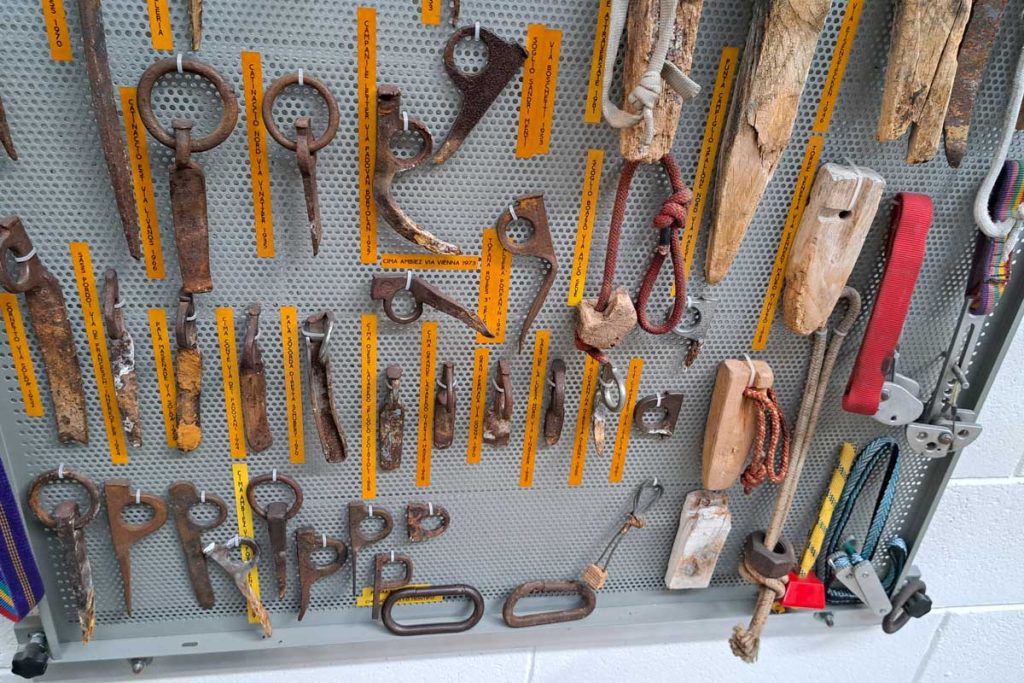
Significant milestones in the FFCAM’s history are outlined in a dedicated timeline produced for the occasion. Achievements highlighted include its role as the technical organiser of the first ever Olympic Winter Games in Chamonix in 1924, its support for the first French expedition to the Himalaya in 1936, its instrumental role in the establishment of national parks and protected areas such as the Parc National de la Vanoise inaugurated in 1963. FFCAM has a long-standing commitment to preserving mountain environments while promoting access and education.
From its humble beginnings with 137 members, the FFCAM has grown significantly and gradually over its 150 years. Today it counts some 110,000 members from 432 different clubs and runs 120 mountain huts. In 2023, a total of 320,000 nights were spent in the huts. FFCAM is also supported by 9,200 volunteers.
Refuge Aigle. Photo credit: Thibault Blais/FFCAM
Recent initiatives from FFCAM include the strategic development plans “L’esprit Club Alpin Horizon 2020” and “Horizon 2024,” which focus on inclusivity, the renovation of mountain refuges, the integration of newer sports like ice climbing as well as projects focused around climate change mitigation and the protection of the environment. These initiatives reflect the FFCAM’s adaptive approach to the changing dynamics of mountain sports and community needs.
The FFCAM places a strong emphasis on education and youth engagement, developing programs that introduce young people to mountain sports and environmental ethics. These programmes are designed to ensure the sustainability of mountain sports and to cultivate a responsible future generation of mountaineers.
To mark its 150th anniversary, the FFCAM has released publications and multimedia content that document its rich history and contributions to mountain sports. This includes a special edition of its magazine La Montagne et Alpinisme.
The 150th anniversary of the FFCAM is an opportune moment to celebrate its historical achievements and also reaffirm its ongoing commitment to the growth of climbing and mountaineering both nationally and internationally.
FFCAM joins other major European federations like the Austrian Alpine Club/OeAV (in 2012), the German Alpine Club/DAV (in 2019), the Italian Alpine Club/CAI (in 2013) and the Swiss Alpine Club/SAC (also in 2013) in reaching its 150th anniversary.
First published in 2022, a video explainer about the UIAA Safety Label is now available in over 20 languages. Full details of the translations can be found below. UIAA member associations and Safety Label Holders are encouraged to share the video on their platforms.
Showcase of the different language videos
The UIAA Safety label or the acronym ‘UIAA’ can be found on climbing and mountaineering gear worldwide. These four letters signify that this piece of climbing equipment has been accredited to meet the UIAA – International Climbing and Mountaineering Federation’s – global safety standards.
The UIAA Safety Commission (SafeCom), responsible for the development of UIAA Safety Standards for over 25 types of climbing gear, has recently produced an animation explaining both the importance of the UIAA Safety Label and how the process of accrediting a piece of equipment actually works.
Climbers can search for certified equipment (gear with the UIAA Safety Label) through the UIAA’s dedicated database (over 2,500 certificates currently granted) and also view a list of accredited Safety Label holders, over 70 manufacturers and brands worldwide. Another database identifies certified equipment which has either been recalled or has a recent safety warning.
Furthermore, purchase of climbing equipment bearing the UIAA Safety Label supports the UIAA and its global mission to support and promote climbing and mountaineering.
The video is available in the following languages: English, Arabic, Bengali, Czech, Dutch, Farsi, French, German, Greek, Italian, Korean, Japanese, Macedonian, Nepalese, Norwegian, Polish, Portuguese, Spanish, Turkish and Ukrainian. Please visit the dedicated YouTube playlist to view the videos.
Discovery more about the UIAA & climber safety here.
The UIAA was saddened to hear about the recent passing of Vittorio Bedogni. Representing Club Alpino Italiano (CAI), Vittorio was a longstanding member of the UIAA Safety Commission.
An engineer by profession, Vittorio’s passion for all things mountains began at a young age. He dedicated significant time and commitment to sharing his knowledge and expertise. This was both in the context of the practise of sport and the safety of practitioners. In Italy, he was a national instructor both for mountaineering and ski alpinism. On both a national and international level, he was a major contributor in the development of knowledge around technical or methodological aspects that could contribute to the safety of climbers and mountaineers. As part of this commitment he joined the UIAA Safety Commission in 2008. Projects he played an instrumental role in delivering were the delivery of standards related to ropes, the dynamic behaviour of belaying systems, snow shovels and avalanche probes.
Vittorio Bedogni, centre, at the UIAA Safety Commission meeting in 2018
As reported in the tribute by CAI, Vittorio received a number of awards, in particular for his work supporting training schools.
Vittorio Bedogni, CAI (Legnano Section)/UIAA Safety Commission
1943-2024
One of the core objectives of the UIAA Climate Change Taskforce is to showcase best practices and learnings from its member associations.
Following a recent insight into the Alpine Club of Canada’s State of the Mountains Report, this latest article looks into the gigantic efforts being made at the German Alpine Club (DAV).
The DAV, the largest national climbing federation worldwide, has shared an overview of its Climate Initiative which can be viewed here. The federation’s stance has been incredibly proactive and thorough, a massive commitment at federal level to offer close support and resources for its 356 clubs and some 1.5 million members.
In recent years, the DAV has witnessed first-hand the impact of climate change on its own infrastructures. This includes issues with access and a lack of water at its New Prague Hut (Neue Prager Hütte) in Austria and mudslides on the access road to the Taschachlaus refuge.
The DAV Process
Photo credit: UIAA/Franz Güntner
In 2019, the DAV committed itself to The Paris Agreement (COP2015) on Climate Change. Its overarching goal was to hold “the increase in the global average temperature to well below 2°C above pre-industrial levels” and pursue efforts “to limit the temperature increase to 1.5°C above pre-industrial levels.”
Following the approval of the federation’s climate resolution 2019, the focus switched to creating a climate strategy and concept which followed in 2021. The first step was to mobilise personnel and create a project group. A diverse team of volunteers and full-time employees from sections, regional associations and the federal association came together and worked towards the development of a climate protection strategy and concept. In 2021, several expert committees were formed from this original group with a division of strategic and advisory responsibilities. There was diversity in terms of the size and the location of the clubs involved. A pilot project was launched that same year to test the impact of findings on emissions.
The DAV’s Climate Strategy committed the federation becoming carbon neutral by 2030. A Climate Budget and a Climate Fund were created, the first administered at a local level and the latter at a federal level with grants available for innovative projects. The income was in part generated from an association-wide fee increase – one Euro per each fully paying member becoming a climate euro. Furthermore the federation offered advice guidelines and financial support. The timeline set in motion plans to use 100% certified renewable energy by the end of 2023 and to reduce emissions by 30% from 2022 to 2026.
The Results to Date
Two thirds of local DAV clubs have already registered a climate protection coordinator who is responsible for climate protection measures and emission counting. This is all done to a standard set by the central DAV. In 2022, a total of 140 local clubs accounted for their annual emissions as well as the federal association and four state associations. The DAV Climate Fund has already funded 37 different projects. The national federation’s Carbon Footprint Report for 2022 can be viewed here.
In terms of 2022, the findings, unsurprisingly, discovered that the biggest share of emissions is caused by transport during courses and tours.
The UIAA has spoken directly with the DAV to discover more specific details about individual areas of their operation. The scope being to offer this information to UIAA members worldwide. Below is specific information on huts, travel and the challenges of implementing change across so many different regional clubs.
Mountain huts: Setting standards and sustainability guidelines
Photo courtesy of DAV/Juergen Gassner
The DAV operates some 325 huts and over 200 climbing centres. In terms of huts, their very existence is threatened by the impact of climate change. Melting permafrost and significant differences in temperatures lead to unstable foundations and structural issues which may both result in significant investment in securing huts and potentially the loss of some huts. Secondly there is the need to make all huts more energy efficient.
Broadly speaking, the DAV reports that:
The framework conditions for huts are very different so that there is not one single measure to reduce emissions that can be applied to all huts.
Many huts have already improved their energy efficiency over recent years by replacing fossil fuels, improving thermal isolation, ensuring installation of photovoltaic systems, and replacing the lighting systems.
Construction works at DAV huts follow strong sustainability guidelines, especially those directly funded by the federation.
The federation ensures that emissions from construction works are balanced, as well as the emissions that are based on consumption and energy use.
There are guidelines in place for making the management of huts more sustainable, such as information on climate friendly catering.
Huts are awarded a certain label (“Umweltgütesiegel”) if they operate environmentally friendly as well as if they offer regional and climate friendly products (“So schmecken die Berge”). This allows the visitor to make an informed choice about where to stay and perhaps prioritise visiting huts who have met certain standards.
Results and analysis on emissions can be used to derive specific targets for e.g. an acceptable average energy consumption at DAV huts. More data is though needed to establish this baseline.
Supporting individual clubs/sectors
As reported above, the DAV has well over 350 local clubs. Coordinating the climate action plan across all entities is a significant task.
Here the DAV reports that the general commitment to sustainability and climate protection is based on high approval rates at the Annual General Meetings for the sustainability strategy (93%), climate protection strategy (87%) and climate protection concept (86%), including mechanisms such as CO₂ fee or emission balancing.
The DAV has implemented the function of climate protection volunteers in its subdivisions. These climate action volunteers are the federation’s main contact persons in terms of climate related questions.
To support these volunteers, the DAV offers a set of formats in order to support their work within the sections. These include:
E-learnings on emission balancing
Guidelines, checklists and best practices in the DAV intranet as main source of information
Newsletters
Microsoft Teams channel for sharing of information
Courses within the DAV-academy on climate related topics (e.g. sustainable mobility)
Monthly “climate info” as a digital exchange format for news and best practices
Organisation of networking events
Weekly “hotline” for questions on emission balancing
Travel: Improving the transport network to make choosing easier
Caption: DAV/Wolfgang Ehn
The DAV, as with most federations of a similar nature, reports that the biggest cause of its carbon emissions is travel, whether for events, competitions and meetings. This also filters down to emissions created by individual climbers and mountaineers.
In terms of this approach the DAV reports that:
Changing habits takes time and is not an easy process.
There are some challenges with the frequency of public transport in rural areas. In some instances, public transport is more expensive than using cars and, very often, takes longer.
Mobility is one of the biggest challenges and major levers for reducing emissions. But making it mandatory for people to use public transport (at least for a certain percentage of attendees of an overall course programme) can both meet resistance and is not always practical. As a countermeasure, some sections have already introduced standards for their course programme in terms of acceptable distance per day or share of public tours within their programmes.
Working with incentive schemes is not always viable. In the case of Germany, the tax law does not allow clubs to pay for individual train or bus tickets.
There are many sections that do not have their own infrastructure such as climbing centres or huts. So their only way of reducing emissions is to change the structure of their course programme.
One of the key messages is: Travel for a longer time but less often so that the relation between travel distance and days is most efficient. This mantra is if often easier for clubs that are located closer to the mountains.
In terms of implementing measures to try and negate the impact of travel, the DAV reports the following:
The federation conducted an evaluation of the DAV-education programme in terms of access by public transport. New course and event locations will be selected based on sustainability criteria.
Some modules within the DAV-education programme have been transferred to a digital format.
Guidelines have been created for planning courses and tours in a climate friendly way.
There is also a guideline for event organisation in place that emphasises accessibility by public transport.
The DAV Summit club has set up a shared ride platform that can be used for DAV courses.
The DAV has introduced a climate friendly travel expense policy that strengthens the use of public transport.
The DAV has also published an online map and information detailing public transport routes to 600 Alpine huts from Germany.
As Dominik Birnbacher, DAV Climate Protection Project Manager reports: “We see that the DAV, in many fields, serves as a role model for other sports organisations in Germany for example in terms of balancing emissions, introducing CO₂ fees or establishing a climate fund. Furthermore, surveys show that many of our new members join the DAV also because of its work for nature and climate protection.”
Birnbacher closes with a remark which will resonate for all UIAA member associations: “Balancing your identity as a sports organisation on the one hand and nature protection organisation on the other hand remains a challenge both now and in the future. We are convinced that mountain sports and nature and climate protection can all work together.”
The UIAA thanks the DAV for its informative presentation and the information provided in this article which will prove useful for members of the UIAA currently devising or implementing their own sustainability strategies.
The UIAA recently communicated a decision to review its annual Award platform which necessities running the next edition of the UIAA Mountain Protection Award in 2025.
Therefore for the year 2024, the MPA will not be run in its regular format. There will be no project showcase, no award and no prize money granted. However the UIAA MPA Assessment Team, comprised of delegates of the UIAA Mountain Protection Commission as well as external experts representing organisations such as UN Environment, GRID-Arendal and ICIMOD, will continue to support projects by offering its review process. This service will primarily focus on offering feedback for the following three categories: Project Impact (especially with regard to how the project fosters sustainability and addresses climate change issues), Financial Viability and Overall Observations. Furthermore, any projects assessed in 2024 may then be in a strong position to apply for the revamped Award in 2025.
The following individuals/organisations can apply for the MPA Assessment Team feedback:
An association and/or alpine club (member of the UIAA);
A not-for-profit/non-governmental organisation or volunteer community group;
A for-profit business (e.g. tour operators, expedition agencies, etc.).
Each project submitted for review should be enhancing sustainable and responsible practices in support of climbing and mountaineering and must be involved in at least one of five of the following UIAA MPA categories:
Conservation of biodiversity and ecosystems, including flora and fauna;
Sustainable resource consumption and management, such as energy or water;
Protection of the environment through culture, local traditions and education.
The submitted projects can either be in concept stage, ongoing or terminated, each benefitting from targeted expert advice, specific to the stage the project is in.
Full details are provided in the supporting guidelines for submitting your project for review and feedback. The form can be found here. For specific questions please contact mountainprotection@theuiaa.org
Main photo: Gear Tips, 2024 UIAA Mountain Protection Award winner. Photo supplied by Gear Tips
Following a significant volume of work, the UIAA Legal Affairs Commission is delighted to announce the launch of its global database of climbing and mountaineering case-laws.
The Legal Affairs arm of the UIAA supports the federation in all areas concerning law, giving the best possible advice through its network of international law experts and collects and shares know-how in relation to mountains and sports. The database project was one of the main objectives of the Commission when it was formed in 2022.
The database includes judgments from courts, tribunals, and authoritative bodies. Users can search for cases based on the key activity, such as winter hiking, outdoor climbing, indoor climbing, the accident location, or type of a proceeding, e.g. civil, criminal, or disciplinary. Each entry includes a comment from the UIAA Legal Affairs Commission and links to the original case-law if available. The intention is for the database to serve as a live tool with regular updates.
“With the database, you can trace not only the facts of accidents that happened in the mountains, but also their legal consequences. Another added value of the database is the comments from the UIAA, which will help you to understand the broader context of the case. While the database has been launched with details of a number of important cases, its future impact is dependent on regular contributions. We welcome guest contributors with relevant case-law knowledge to contact us or to file a new case to the database directly.”
– Klara Dvorakova, Legal Affairs Commission President
The database will serve as a tool to increase knowledge amongst members and the climbing community regarding legal risks and consequences of mountaineering and climbing. Where appropriate, and in the report findings, the UIAA will highlight any important synergies with its other international standards, notably in climber safety and mountain medicine. The database focuses on cases decided by official authorities and doesn’t include every mountaineering accident.
To support the promotion of the database, the UIAA will publish findings from individual cases through a series of articles to feature in its monthly newsletter.
The opening event of a busy calendar of UIAA youth events took place in the Hautes-Alpes, France in February.
Organised by the French national federation (FFCAM) and members of the UIAA Youth Commission, the Ice Climbing Camp in Guillestre has been a staple of the UIAA youth calendar for over a decade.
The camp brought together a number of different entities including a boot camp for inspiring ice climbing instructors, a course for a local adventure school in Toulouse (for 12-17 years olds), a camp for mixed Alpine teams of France’s Occitanie region, a camp for the female Alpinist team of the Pyrenees and the UIAA-specific where 25 young climbers from 11 countries took part.
Credit: Quitterie Casagrande
The camp was supported by expert coaches including Christophe Moulin, the FFCAM national technical director of Alpinism and a professional mountain guide.
Below are some testimonials from the young climbers: “We spent seven days with great people: instructors, guides and international teams, sharing knowledge, experiences, and learning a lot. We came with different levels of knowledge about ice climbing, and we all feel that we enjoyed ourselves and could say that we improved our autonomy in the mountains.” Team Catalonia
“We came to the camp as absolute beginners and by the end we were capable of climbing a multi-pitch icefall on our own. The organisation was perfect, we felt safe the whole time and progressed really quickly. It is a great camp for beginners and more experienced ice climbers.” Team Croatia
“Every day we climbed in a new place, always with the close presence of instructors. Their assistance was really flexible; when they saw we needed support, they were there for us, but when they could see we had enough knowledge/experience, they left us climbing by ourselves (always with supervision). I am thankful for this camp as it has built up my knowledge, has expanded my experiences, has permitted me to meet new people from around the world with my same passion for ice climbing. Thanks to the instructors for organising this camp, for supporting us every single day and to be available and kind to all of us. I would definitely recommend this camp to anyone!” Team Italy
“Despite the suboptimal ice conditions this year, there were still plentiful well-selected ice falls that offered a range of climbing options. These ranged from easy routes on an artificial ice tower to long multi-pitch routes and challenging mixed climbs. Legendary guides and skilled instructors who accompanied climbers made the climbing experience feel safe and shared lots of valuable theoretical and practical knowledge. Thanks to that, I now feel much more confident and secure on the ice falls.” Team Latvia
“We really enjoyed this camp. All of us learned something new, from ice climbing techniques to rope management. We especially liked it from a social point of view. We connected with many different teams from different countries and made new friends. The conditions weren’t always good as it was too warm, but we still climbed some cool lines.” Team Slovenia
The UIAA wishes to state that the Indian Society of Mountain Medicine is currently not a body accredited to hold courses nor award certificates under the syllabus of the UIAA/ISMM/ICAR Diploma of Mountain Medicine.
It has been brought to the attention of the UIAA that the Indian Society of Mountain Medicine is advertising itself as an accredited body for the UIAA/ISMM/ICAR Diploma of Mountain Medicine. The UIAA has also received several requests from individuals concerned about the validity of the course.
Despite repeated requests from the UIAA, the Indian Society of Mountain Medicine has not removed this reference nor sought to accredited itself through the official channels. The UIAA will now review this matter with the relevant authorities in India.
A full list of accredited courses can be found here.
UPDATE – July 2025
Following information received by the UIAA, the warning extends to courses being offered by the Indian Society for Mountain Medicine and Global Institute of Healthcare Management.
The UIAA is saddened to hear about the recent passing of Pit Schubert, UIAA Honorary Member and longstanding member of the UIAA Safety Commission.
Climbing Career
Pit Schubert was born on 2 December 1935 in Breslau (Wrocław). He started climbing at 17 and became one of the first German climbers to scale the three classic big North faces of the Alps: Eiger, Matterhorn and Grand Jorasses.
His climbing career included almost fifty first ascents in the Alps, the 380m, grade VI, SW-Ridge on the Guglia di Brenta in the Dolomites, the 220 m, grade VI+ South Face on the Piz Ciavazes in the Dolomites and in 1975, the 360m, grade VII East Face on the Fleischbank in the Kaisergebirge. He made several first ascents in Greenland and the Himalayas: in 1969 the Roc Noir/ Khangsar Kang (7485m) in the Karakoram and in 1976, the 5000m high South Face of the Annapurna IV (7525 m). He visited the Himalaya over 60 times. In 1976, he lost his toes to frostbite while doing the first ascent of the south face of Annapurna, but this did not curtail his mountaineering career, saying: “I made the finding that toes are not necessary for climbing, mountaineering or skiing and I do all kinds of mountaineering sports as before – I adapted to my age.”
Commitment to Mountain Safety
Schubert began his professional career as an engineer. After completing his mechanical engineering studies in Frankfurt in 1961, he worked for 15 years in the aeronautics and space industries, before finally dedicating himself full-time to mountaineering safety research with the DAV in 1978.
Ten years earlier he founded the DAV Safety Commission and worked as the safety director from its start in 1968 until his retirement in 2000. From 1973 until 2004 he was a member of the UIAA Safety Commission. The last eight years he served as President. Schubert focused primarily on accident research, evaluation and prevention as well as basic research, for example, belaying theory, material testing both in the laboratory and in the field, as well as the standardisation of mountaineering equipment.
By analysing and researching causes of accidents and exhaustive testing of technical material, he succeeded in establishing the UIAA standards for mountaineering equipment. His safety recommendations have been instrumental in preventing innumerable accidents.
“When I started my work on safety for climbers and mountaineers in 1968, it was very easy to make big developments because there was a lot left to do,” Schubert told the UIAA when becoming an Honorary Member in 2008. “At that time man was making the first flight to the moon a reality, but we were still using ice axes with wooden shafts – which could break on the first use on the ice – so a lot of things were waiting to be done. It was very important for me that with any improved technique or piece of equipment the chance of survival for myself while climbing and mountaineering became better and better.”
He is the author of several publications on mountaineering and climbing safety, which have been translated into numerous languages.
Awards
Pit Schubert was a member of the German Alpine Association, the Austrian Alpine Club and the Groupe de Haute Montagne. He was awarded the Order of Merit of the Federal Republic of Germany and received the Dietmar Eibl Prize in Austria, which is awarded to organisations or persons who have rendered outstanding services in mountaineering safety. He was also distinguished with the 1996 King Albert Medal of Merit. He became a UIAA Honorary Member in 2008 and is an honorary President of SafeCom.
UIAA Tribute
Former UIAA Safety Commission President Jean-Franck Charlet, himself an Honorary Member of SafeCom, worked closely with Schubert and shared the following tribute:
English:
Pit Schubert, extreme mountaineer and engineer, was an early advocate of greater safety and better risk management in mountain sports. He is the father of numerous general safety recommendations, particularly on the correct use of equipment. He was behind the creation of the “Sicherheitskreiss” within the German Alpine Club – DAV. This very quickly led him to define the resistance and ergonomy criteria for this equipment, and this is how he first drew up DIN standards for all these products. Then, in the 1990s, he played a key role in standardisation at European and world level, with the development of so many UIAA standards. This tireless tester was chairman of the European standardisation committees and for many years chairman of the UIAA Safety Commission (SafeCom), of which he is honorary president. It was a great honour for me to take over these chairmanships just after him, and I am very grateful to him for being there whenever I asked him to be. My favourite joke was to remind him that he had preceded me by twenty years on the North Face of the Drus, the Grandes Jorasses, the Peuterey ridge of Mont Blanc and as President of the UIAA SafeCom, but that I had preceded him by 10 years in meeting his wife, since by chance I had the pleasure of being the guide of the future Mrs Schubert during an ascent of Mont Blanc! Pit, your contribution to the safety of climbers and mountaineers has been immense and they will be eternally grateful to you.
French:
Pit Schubert, alpiniste extrême et ingénieur s’est très tôt passionné pour plus de sécurité et une meilleure gestion du risque dans les sports de montagne. Il est ainsi le père de très nombreuses recommandations générales de sécurité et notamment sur la bonne utilisation du matériel. Il est à l’origine de la création du « Sicherheitskreiss » au sein du Club Alpin Allemand – DAV. Cela l’a très vite amené à définir les critères de résistance et d’ergonomie de ces matériels et c’est ainsi qu’il a tout d’abord élaboré des normes DIN sur tous ces produits. Puis dans les années 1990 il fut le principal acteur de la normalisation au niveau européen et au niveau mondial avec l’élaboration de tant de normes UIAA. Cet infatigable testeur, fut chairman des commissions européennes de normalisations et pour de nombreuses années président de la commission de sécurité de l’UIAA (Safecom), dont il est president d’honneur. Ce fut un grand honneur pour moi d’assurer ces présidences juste après lui et je lui suis très reconnaissant d’avoir répondu présent à chaque fois que je l’ai alors sollicité. Ma plaisanterie favorite était de lui rappeler qu’il m’avait devancé de vingt ans dans la Face nord des Drus, celle des Grandes Jorasses, de l’arête de Peuterey du mont Blanc et à la présidence de la Safcom UIAA, mais que moi je l’avais précédé de 10 ans dans la rencontre de son épouse, puisque par un hasard de la vie j’avais eu le plaisir d’être le guide de la future Madame Schubert lors d’une ascension au mont Blanc ! Pit, ta contribution pour la sécurité des grimpeurs et des alpinistes a été immense et ceux-ci t’en seront éternellement reconnaissant.
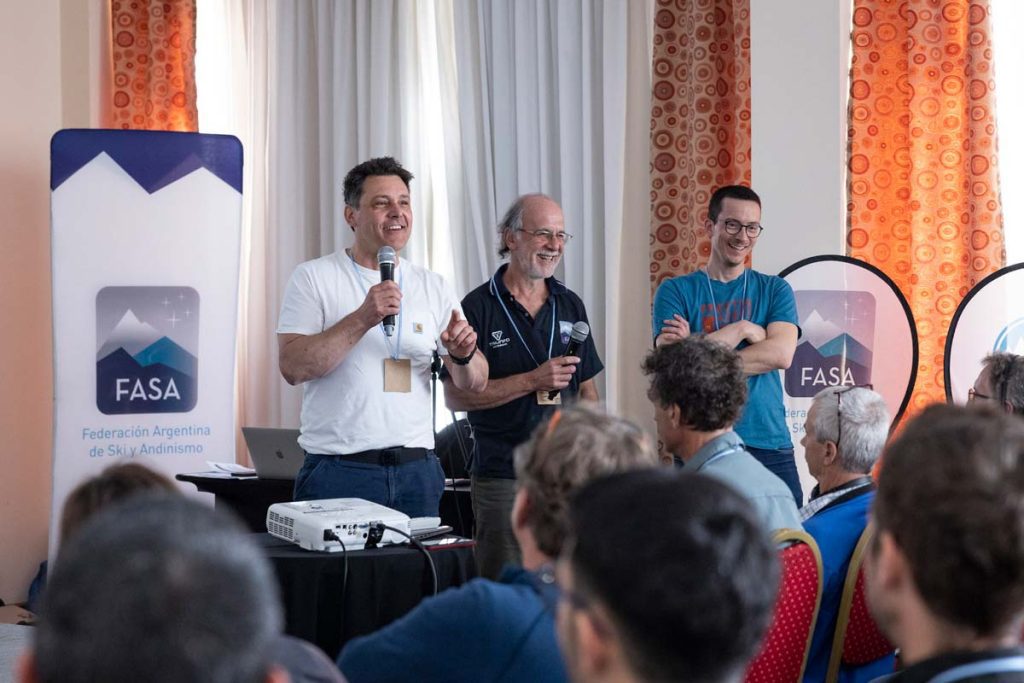
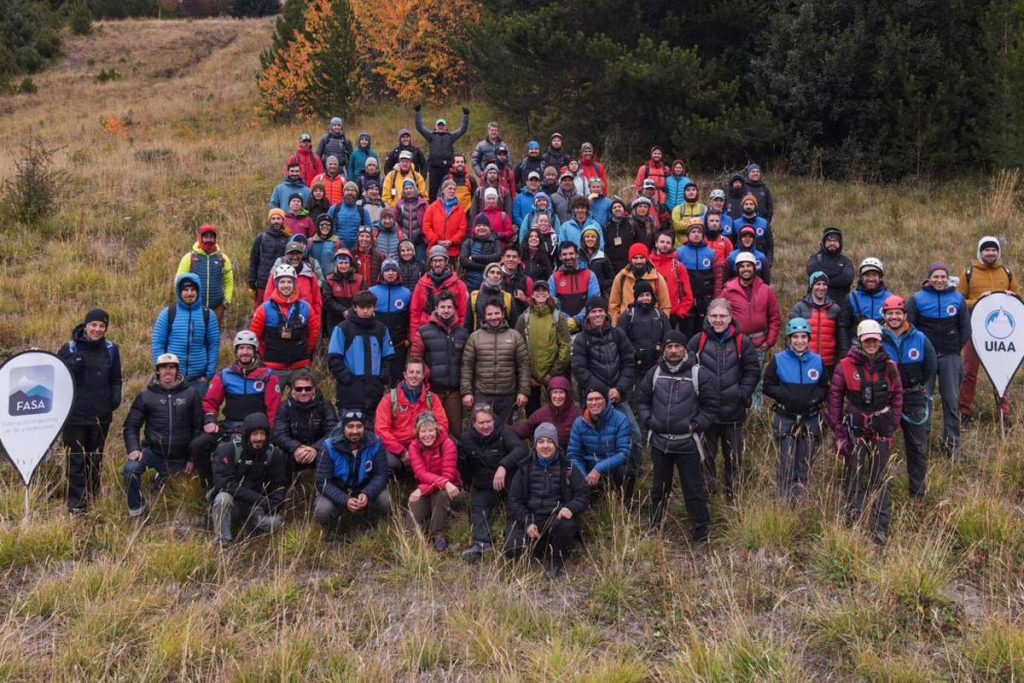
The programme has been finalised, and registration is now open, for the inaugural International Mountain Sports Training Course – Mountain Medicine, Techniques & Safety. The event will take place in Bariloche, Argentina from 19-21 April. The event is jointly organised by the UIAA (International Climbing and Mountaineering Federation), FASA (Federación Argentina de Ski Snowboard y Andinismo) and the ISMM (International Society for Mountain Medicine).
Topics covered during the three-day event include: the environment, climate change, dealing with the cold, altitude & sport climbing, mountaineers, women at altitude and mountain rescue in Argentina. The first half of the programme will be dedicated to talks, the second to a series of practical workshops and a rescue simulation.
Registration is open to anyone interested in the course programme. No professional medical or climbing background is needed. There are reserved quotas for FASA officials, club members and members of UIAA federations from Latin America. These will only be reserved until 22 March.
Image supplied by FASA
Details
Programme: Details on the speakers and topics covered during the three-day programme can be found here. Please note that this programme may be subject to minor changes.
Registration Please follow the pre-registration link
The absolute registration deadline is 10 April. The number of participants is capped at 80. The registration cost is USD 250. FASA member clubs and each Latin American national federation member of the UIAA have one place at a discounted price of USD 200.
Included in that price are the registration fee, course material, beverages/snacks during coffee breaks, lunches on Friday, Saturday and Sunday, as well as the dinner on Saturday night
Please note that a spot on the course is only guaranteed once the payment has been received
In addition to talks and practical sessions from international experts, participants will receive an official UIAA-FASA-ISMM certificate of attendance
Course organising committee
Urs Hefti, UIAA MedCom President (chair); Martin Lascano, UIAA Executive Committee; Mijel Lotfi, UIAA MedCom, FASA representative and IFMGA Mountain Guide; Marcelo Parada, FASA Medical Director
Course venue (theory session) Villa Huinid Pioneros Hotel, Av. de los Pioneros 2649, R8400 San Carlos de Bariloche, Río Negro, Argentina
The journey to and from the above address must be organised and paid for individually. Options of using public transport, official transfers or private taxi/uber/remis.
For those travelling from further away, please consider staying overnight and confirm through your registration whether you would like to stay at the official hotel or prefer to arrange your own accommodation.
Note that the practical session will be at Cerro Catedral, and that transportation will be arranged only for those staying at the official hotel.
All registrants will be contacted in writing, after the submission of their pre-registration, to confirm their spot and participation. There are reserved quotas for FASA club members and members of UIAA federations from Latin America.
To view the Spanish version of this text please click here.