Category: Training

Online climbing gear: are you buying safe equipment?

The British Mountaineering Council (BMC) recently published a guide regarding the potential perils of buying climbing equipment online, notably the abundance of non-certified equipment offered by dubious sellers.

The UIAA endorses the BMC article which advises buying gear ‘which conform(s) to the relevant CEN or UIAA standard, which is usually mentioned in the product description’. The UIAA also invites climbers to read an interview with former UIAA Safety Commission President Dave Custer which addressed the subject of climbing risk management and the challenges faced internationally.  Outside of Europe – where the CEN standard is not mandatory – it is even more important climbers seek equipment which bears the UIAA Safety Label.

One of the cornerstones of the UIAA’s mission is mountain safety which encompasses the federation’s internationally-recognised UIAA Safety Label, supported by 23 different equipment standards, as well as the UIAA’s commitment to providing high-altitude medical advice, mountain medicine diplomas and training qualifications for mountain leaders.

As the BMC article states: ‘It’s becoming common to shop online rather than take time out from our busy lives to physically visit a shop. The convenience, range of choice, and often better prices, make buying online incredibly attractive. But don’t be caught out: there are some nasty surprises awaiting the unwary.’  As the article explores, these nasty surprises could have fatal consequences. It also offers advise about how to detect such equipment: ‘In the past, such products were often unbranded, but the modern trend is for them to have a brand name of some kind. We’ve seen examples of items including ropes, harnesses, and helmets.’

The UIAA is also developing a new Black List database where any equipment illegally advertised with the UIAA Safety Label will be recorded. Databases on certified UIAA Safety Label equipment and product recalls are regularly updated. Links can be found below.

A link to the full BMC article titled ‘Online climbing gear: are you buying safe equipment?’ can be found here. It was first published on 20 September, 2017.

Further Information:

British Mountaineering Council
UIAA Safety Label
UIAA Mountain Medicine
UIAA Training
UIAA Certified Equipment Database
UIAA Recalls Database

Mountain Skills: The most common group dynamics

The latest in our series of extracts from the UIAA Alpine Skills Summer handbook focuses on group dynamics and forms part of a chapter dedicated to ‘Leading a Group’  which tackles the way people behave and relate to others in an exacting environment which can elicit unexpected aspects of people’s personalities.

Groups are their own creatures, and group members with the greatest charisma, authority or self-assurance will set the tone. Some groups are very cautious, while others are quite bold or reckless. Although the trip leader can be influenced like any other group member, he/she needs to quickly gain a sense of the group’s temperament to keep things running smoothly. It is important to recognize and understand the most common types of group behaviour.

False sense of security: The larger the group, the more secure each individual feels. The additional skills and energy of the collective provide an illusion of power/ strength. Responsibility for the group is not as clear in groups of four or more people. The group leader must not let themselves be lulled into a false sense of security; they should also keep in the mind the importance of delegating responsibilities.

Responsibilities are not clearly defined: This frequently occurs when there are several group leaders or when multiple group members possess a similar skill level. Nobody assumes responsibility for decisions—everyone relies on the expertise of others. Decisions are ambiguous or not thoroughly discussed. The group follows the route haphazardly, which creates a situation ripe for accidents.

Group pressure: varies depending on participants’ goals and aspirations. This is difficult to avoid. Understanding each participant’s motivations from the outset allows the leader to recognize the group’s temperament and evaluate possible pressures (“Our friends summited last week,” “We always head out regardless of the weather,” etc.). Before making a decision, recognize group pressure.

Maintaining an ongoing pleasant atmosphere: a group naturally seeks to maintain an amicable atmosphere. However, some decisions may jeopardize this congenial mood. A leader must resist this pressure and be able to make decisions that ensure the group’s safety, even if he/she knows they’ll be unpopular.

This is the second article in our Alpine Summer Skills series. The entire UIAA Alpine Skills Summer handbook is now available to purchase as a digital download. The download also offers access to free upgrades to the guide. To purchase the guide please click here.

About the UIAA Alpine Skills Summer Guide

The UIAA Alpine Skills Summer guide was first published in 2015. Produced in collaboration with the Petzl Foundation, the guide and has been well received worldwide and is currently available in five languages. To mark the launch of a digital version of the publication, the UIAA is running a series of articles from the guide designed to help hikers, climbers and mountaineers develop their skills and knowledge of the mountain environment.

The guide was developed specifically as a reference document for trip leaders and instructors of club and federations within the UIAA – an aide memoire for climbers and mountaineers who attend training courses delivered by instructors and guides who have gained qualifications accredited by the UIAA. Now open to the wider climbing and mountaineering world, the handbook’s four modules focus primarily on summer activities. However, a specific winter guide is currently in production.

The digital edition of Alpine Skills: Summer, a downloadable application which permits free updates to content, can be purchased here.

The English-language version of the Alpine Skills: Summer guide was translated by the Alpine Club of Canada (ACC).

TRAINING & SKILLS PARTNER

Petzl


Mountain Skills: How to navigate in poor visibility

Orienting yourself in the mountains in good weather poses few problems for the attentive navigator. It is, however, quite different with reduced visibility.

  • In a thick fog, even the most seasoned mountaineer has no point of reference.
  • Although you can navigate in bad weather with a solid command of map and compass or your GPS unit, this is a trying scenario that is best avoided.
  • In mountain terrain with bad weather, poor visibility should lead to your abandoning your itinerary, unless you must absolutely continue, to escape an even riskier situation.
  • Navigating in bad weather requires continuous focus and calm.

Anticipating the difficulties will improve your ability to navigate in poor visibility:

  • To the extent possible, before fog enshrouds you, note your exact position on the map using the techniques discussed in the “How to orient yourself when visibility is good” section.
  • If you foresee the arrival of bad weather in time, set out for a reliable landmark (col, distinctive ridge, etc.) off which you’ll base map-and-compass navigation once conditions deteriorate.
  • The challenges and intricacies of this technique are explained in detail in the following sections.

This is the second article in our Alpine Summer Skills series. The entire UIAA Alpine Skills Summer handbook is now available to purchase as a digital download. The download also offers access to free upgrades to the guide. To purchase the guide please click here.

Article 1: Identifying the dangers associated with objective hazards.

About the UIAA Alpine Skills Summer Guide

The UIAA Alpine Skills Summer guide was first published in 2015. Produced in collaboration with the Petzl Foundation, the guide and has been well received worldwide and is currently available in five languages. To mark the launch of a digital version of the publication, the UIAA is running a series of articles from the guide designed to help hikers, climbers and mountaineers develop their skills and knowledge of the mountain environment.

The guide was developed specifically as a reference document for trip leaders and instructors of club and federations within the UIAA – an aide memoire for climbers and mountaineers who attend training courses delivered by instructors and guides who have gained qualifications accredited by the UIAA. Now open to the wider climbing and mountaineering world, the handbook’s four modules focus primarily on summer activities. However, a specific winter guide is currently in production.

The digital edition of Alpine Skills: Summer, a downloadable application which permits free updates to content, can be purchased here.

The English-language version of the Alpine Skills: Summer guide was translated by the Alpine Club of Canada (ACC).

TRAINING & SKILLS PARTNER

Petzl

INTRODUCING THE
UIAA ALPINE SUMMER SKILLS SERIES

The UIAA Alpine Skills Summer guide was first published in 2015. Produced in collaboration with the Petzl Foundation, the guide and has been well received worldwide and is currently available in five languages. To mark the launch of a digital version of the publication, the UIAA is running a series of articles from the guide designed to help hikers, climbers and mountaineers develop their skills and knowledge of the mountain environment.

The guide was developed specifically as a reference document for trip leaders and instructors of club and federations within the UIAA – an aide memoire for climbers and mountaineers who attend training courses delivered by instructors and guides who have gained qualifications accredited by the UIAA. Now open to the wider climbing and mountaineering world, the handbook’s four modules focus primarily on summer activities. However, a specific winter guide is currently in production.

“The UIAA Alpine Handbook has been immensely popular: both the English and French language versions print first editions sold out,” explains Steve Long, Chair of the UIAA Training Panel. “Korean and Turkish versions has now been published. Many trainees will still want to read a paper version, but the digital version will be cheaper to distribute and include hyperlinks to the latest information from UIAA commissions and other leading authorities in order to ensure that we have the best information and advice available for safety, sustainability and sport.For further details on the UIAA’s work in training please click here for our interview with Steve Long.

To mark the launch of a digital edition of the handbook, the UIAA is making specific articles available as part of its Summer Skills series. This first extract concerns ‘Objective Hazards’ and features as part of a chapter dedicated to the natural environment reminding every mountaineer the importance not only of developing their athletic and technical skills, but the importance of reading mountain landscapes.

The digital edition of Alpine Skills: Summer, a downloadable application which permits free updates to content, can be purchased here.

EXTRACT 1:
IDENTIFYING THE DANGERS ASSOCIATED WITH OBJECTIVE HAZARDS

Mountain travel involves several types of hazards. Namely:

  • Dangers related to the incorrect use of equipment, improper technique, or the mountaineer’s lacking the requisite skill level for the desired climb.
  • Dangers inherent to the natural environment, aka objective hazards, over which we have little control.

This extract focuses on the dangers associated with objective hazards. By first learning to recognize these dangers, you can significantly reduce your exposure to them. Then, taking these dangers into account, you can work to reduce the risk level and potential consequences during your itinerary.

Rockfall

Rockfall may occur on walls/faces as well as on low-angle terrain. Falling rocks can threaten mountaineers and climbers as well as hikers. Certain places and certain conditions are more conducive to rockfall.

  • Unstable boulders (moraines) or cliffs and walls composed of brittle or more fractured rock (e.g., weathered limestone).
  • Natural features favouring the channelling of stones (ravines, couloirs, gorges or canyons).
  • Areas of loose or poor-quality rock where the snow cover has recently melted.
  • High temperatures at altitude, causing ice or permafrost to melt.
  • Presence of climbers, hikers and wildlife uphill, higher on the slope.
  • High winds or rain during an intense thunderstorm.

Falling seracs

Seracs can fall at any time, as it’s glacial movement that causes them to calve off and topple. Wherever possible, avoid travelling under seracs. If you must travel under seracs, minimize your exposure by taking the following precautions:

  • Carefully observe the fall line and deposit area. Evaluate possible escape routes that let you evade or turn back from a falling serac.
  • Don the proper gear/equipment before continuing (are crampons or adjustments to your tie-ins needed?).
  • Move quickly and calmly without stopping, and set a sustainable pace.
  • Move one rope team at a time, maintaining distance between teams to limit the number of people exposed to serac fall at any one time.
Image copyright: Steve Long

Cornices

Like seracs, cornices can break off at any time. They can also collapse under a mountaineer’s weight. To reduce the risk:

  • Avoid travelling under the potential trajectory of a falling cornice.
  • Assess the cornice’s size from a safe location off to the side (e.g., a rock summit).
  • When traveling along a corniced ridge, maintain a healthy distance from the edge. Depending on the size of the overhang, cornices can sometimes collapse several meters behind the crest. Do not blindly follow footprints venturing too close to the cornice edge.
  • If necessary, protect yourself using snow anchors and a rope (refer to “Equipment for glacier travel” in the Alpinism Module).

Avalanches

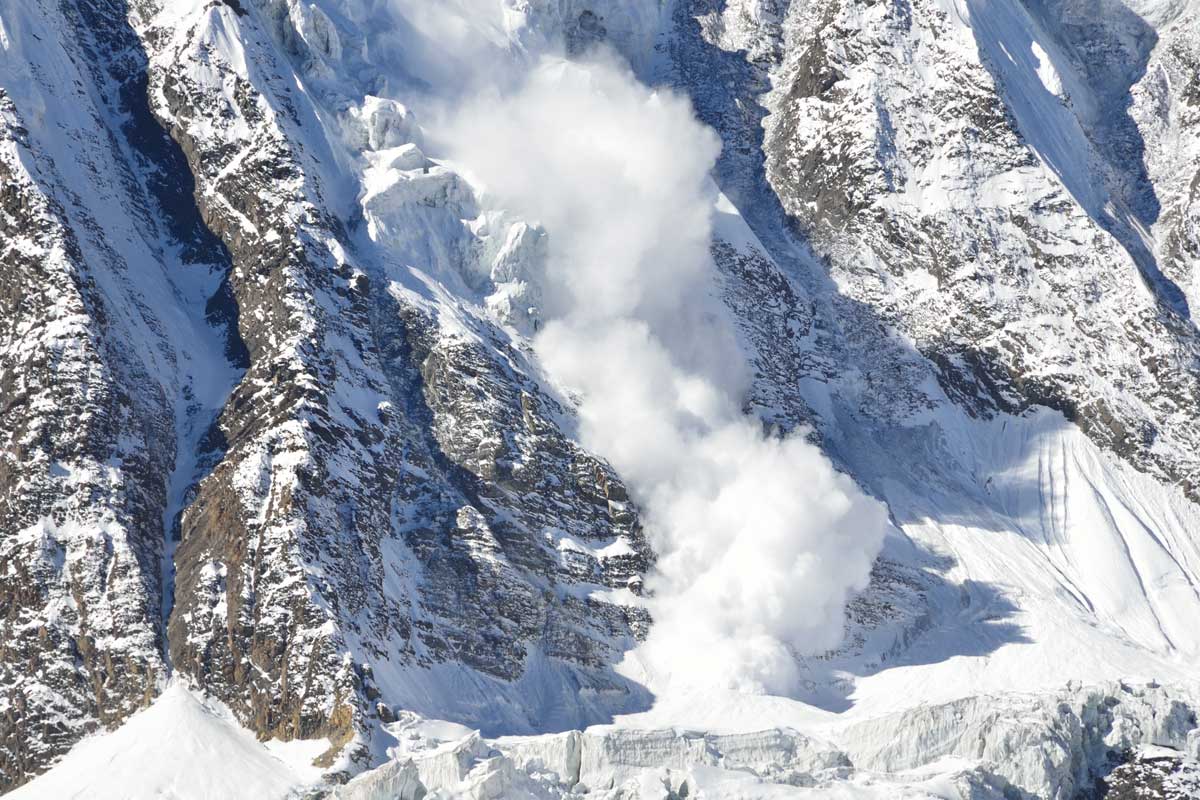
In winter, avalanches are a major concern for mountaineers, climbers and hikers alike. They also remain a considerable risk throughout the summer. High in the mountains—above 3,500 meters in the Alps—winter conditions become common in midsummer after a prolonged period of bad weather. As in winter, a passing mountaineer may trigger an avalanche that causes an accident. Specifically, a small snow slide during the day’s warmest hours may be enough to destabilize a roped party.

Basic precautions include:

  • A night departure when attempting a snow climb. Verify the altitude of the 0° isotherm.
  • Increased vigilance in the high mountains after a period of bad weather. Allow enough time for the snowpack to stabilize — a few warm days should suffice in summer.

Crevasses

Snow can conceal glacial crevasses. Adopt proper rope technique (refer to “Roping up” in the Alpinism Module, chapter 2). In case of a fall, be proficient with crevasse-rescue technique to rescue yourself or a friend (refer to “Glaciers,” earlier in this module; and “Crevasse rescue,” in the Alpinism Module).

Bad Weather

In the mountains, bad weather can have serious consequences. Refer to the “Meteorology,” “Orientation” and “Adapting to the Environment” sections in this module to learn how to avoid or deal with problematic situations relating to the weather.

The English-language version of the Alpine Skills: Summer guide was translated by the Alpine Club of Canada (ACC).


TRAINING & SKILLS PARTNER

Petzl

THE CHADAR TREK: ESSENTIAL SAFETY ADVICE

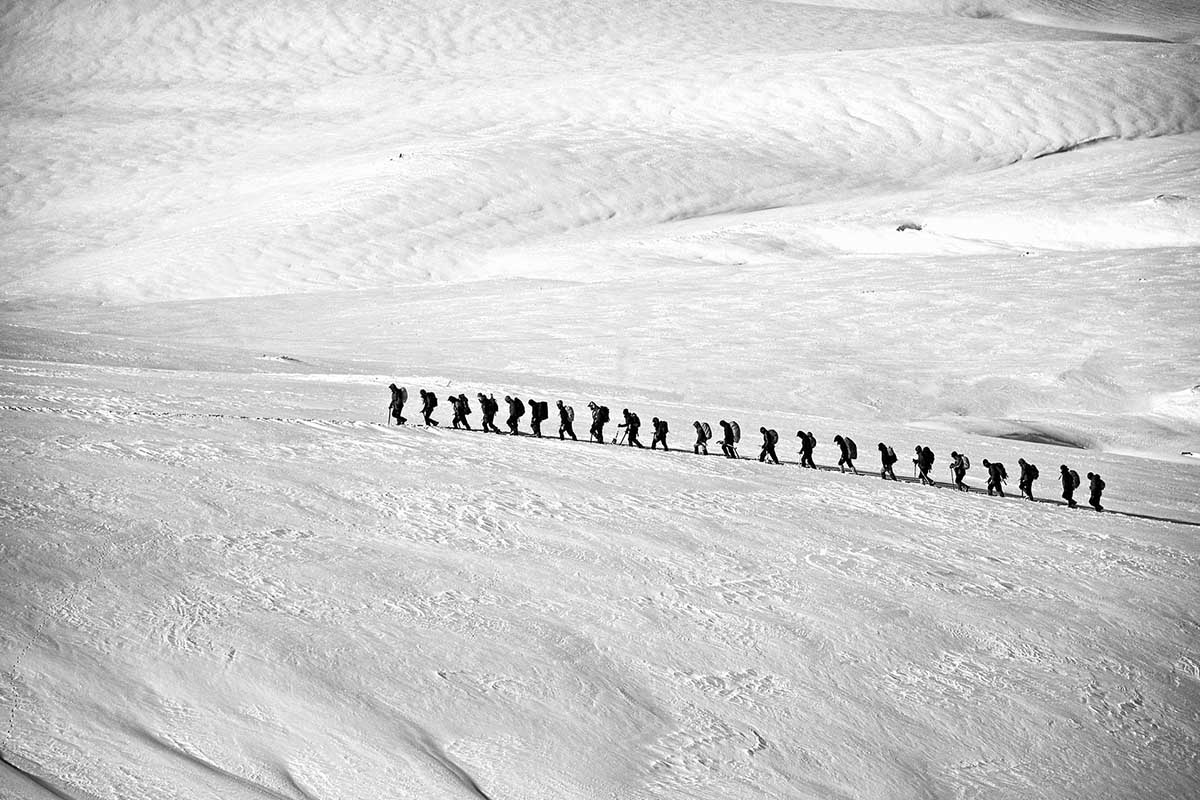
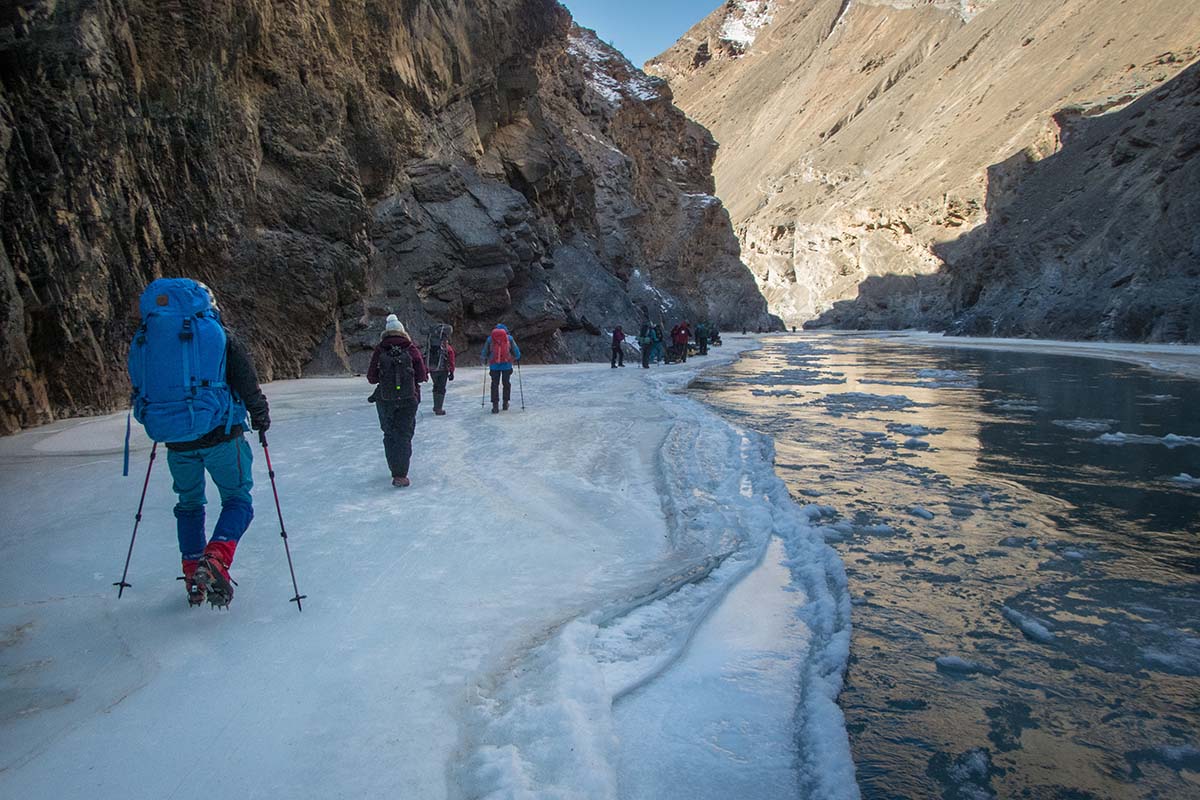
Increasingly popular as a trekking destination among both Indian and international adventurers and tourists, the Chadar Trek, an ice passage across a fast flowing river in the Zanskar region of Ladakh, is also a route which presents a number of safety concerns.

Having conducted a recent training programme in the region, Steve Long, Chair of the UIAA Training Panel, reported on the current situation on The Chadar which is characterised by a lack of clear safety information, a number of tourists travelling unaccompanied – meaning walking several hundred metres away from the next human or group – and un- or under-equipped.

With the aim of providing anyone planning on crossing this magnificent ‘ice highway’ with greater safety information, the UIAA Training Panel, with the support of the Indian Mountaineering Foundation (IMF), has provided the following information related to the prevention of accidents and dealing with unforeseen situations. This advice is also available on the IMF website.

Safety Advice for Chadar Trek

Consequences of an ice collapse are extremely serious. Quick action needs to be taken in the event of a victim being swept under ice following an ice collapse. It is recommended that:-

  • Designated leader should wear crampons or microspikes of a reputed brand/quality and carry an ice axe so that when required they can assist others.
  • One person per 10 should carry a throw-bag on person or outside of backpack.
  • All trekkers must wear at least a small pack, to improve flotation.
  • All ice-bound rescuers should be roped if possible in case of further ice collapse.
  • Party of 10 must have 30 metres of low stretch rope, 2 slings, 4 carabiners and1 spare sleeping bag in case of loss or other damage (eg soaking).
  • Sleeping bag and clothes should be packed in watertight bags
  • Unfastening waist and chest straps is recommended for narrow sections.
  • If in doubt of the stability of ice, use river bank if possible
  • The entire party should be briefed about the seriousness of immersion and action to be taken in such an event. Such briefing should include the following advice.
    • In the event of falling in to water, scream to attract attention. Try to grab the bank and hang on. If swept away, your bag will provide some flotation, but face down. If possible remove it and fix to chest instead. Fight to remain on surface. If unable to reach a bank or shallow, aim for whirlpool or eddy if possible
  • In the event of immersion rescue,
    • Replace wet clothes immediately
    • For hypothermia cases use sleeping bags and hot water bottles to revive casualty.
    • Erect tent and warm interior with stoves for serious cases.
    • Keep close watch of other party members in case of hypothermia.

Further Information:
Indian Mountaineering Foundation (IMF)
UIAA Safety Standards
UIAA MedCom
UIAA Training Qualifications

Main Image: Courtesy of Steve Long

QUALITY CONTROL. ROBUSTNESS. SHARING BEST PRACTICES. THE BENEFITS OF UIAA TRAINING QUALIFICATIONS FOR MEMBER FEDERATIONS.

Training is a fundamental component of the UIAA’s commitment to mountain safety and advancing climbing and mountaineering skills worldwide. In fulfilling this mission, the UIAA has been active in the field of accrediting qualifications (today Mountain Qualification Labels) since 1993, when the original four standards were adopted by the General Assembly in Santiago. The qualifications were developed in order to help harmonise qualification programmes worldwide, to share good practices and to support member federations who do not have an established qualification programmes.

Today there are 60 completed accreditations from 22 UIAA member federations on four continents. Several other qualifications are currently registered and working towards accreditation. In the coming months, some major advancements will be launched in the UIAA’s field of training. This includes a more efficient, effective and powerful database and digital versions for the popular Alpine Handbook.

UIAA Training Panel Chair Steve Long climbing on the fantastic sandstone at Wadi Rum, Jordan. Photo: Calum Muskett

These subjects, and many others, are addressed by Steve Long, Chair of the UIAA Training Panel and experienced mountain guide, as part of an interview discussing the present, and more significantly, the future of the UIAA’s work in this area.

UIAA: What is the role of the UIAA Training Panel and purpose of the UIAA Mountain Qualification Labels (MQLs)?

Steve Long: The UIAA Training Panel is a group of experts within the Mountaineering Commission. Each member of the panel is an expert in their field and is currently, or recently responsible, for their respective federation’s mountaineering and/or canyoning qualifications. The purpose of the MQL is to administer a set of international standards that allow member federations to demonstrate a robust quality assurance system for their mountaineering qualifications. This does not mean that qualification holders can automatically be recognised as qualified in other countries but does form a useful starting point for cross-accreditation by federations that wish to recognise suitable prior training. The process includes an independent field verification of a training or assessment course before accreditation can be approved. The MQL also endorses the professional qualification of International Mountain Guide, which is administered by the IFMGA, an observer member federation of the UIAA. The IFMGA conducts its own accreditation process, with the highest level of quality assurance.

What sort of qualifications are offered?
The UIAA does not itself deliver qualifications, it assists federations to develop their own qualification programmes for leaders and instructors. There are currently eight categories of activity qualifications: summer and winter hill walking, sport climbing, climbing with leader-placed protection, ice climbing, ski mountaineering, canyoning and glacial mountaineering. We do not normally accept glacial mountaineering as a first registration, requiring completion of accreditation for a less hazardous and demanding activity first, since mountaineering includes several other competencies (e.g. hill walking and climbing) as essential modules.

UIAA Training in Langtang, Nepal (Photo: Steve Long)

How does a UIAA member federation go about getting accredited?
The process starts when the federation’s head of training registers on our database (to be relaunched in the coming months). For federations that are new to the system, an induction visit is mandatory in order to discuss needs and aspirations and draw up a provisional time scale and negotiate the level of assistance needed. For well-established qualifications a verification inspection might be negotiated for the first available course, for others a development programme might be required. Once the induction has been completed the federation appears on our world map as an aspirant for that particular qualification.

Why is it important, if a member federation requires an external assessment of instructors and leaders, for them to adopt UIAA guidelines as opposed to other solutions on the market?
There are various other standards in place, for example for tourism. There are also various online “trip advisor” review systems.  All these systems defer on safety to national qualifications delivered by technical experts, i.e. the mountaineering federations. The UIAA and the IFMGA are the only organisations with the resources and representation to deliver a worldwide comparison of qualifications based on internationally agreed criteria for quality control. A UIAA accreditation of any mountaineering qualification is a robust and demanding process.

UIAA training project assisting development of qualifications in Jordan (Photo: Steve Long)

In terms of these other solutions, what are the main problems a national body may face if going down this route?
Most other accreditation systems focus on aspects of travel such as logistics and accommodation. In many cases they are either self-regulated, or the review is delivered by customers, who are generally ill-suited to making judgements about safety and inspecting underlying quality assurance systems. No other systems are inspected by mountaineering experts, so they necessarily defer to the UIAA for comparison of standards for safety in mountaineering activities. This is particularly important in the current expansion of adventure tourism and training in adventure leadership. There are several cases of federations successfully obtaining government funding based on registration or accreditation through our Mountain Qualification Labels.

What are the common challenges UIAA member associations face in getting national leaders assessed? How can the UIAA assist in this?
Setting up a system for training and assessing leaders is complex. Requirements include creating and sustaining a training committee, syllabus and prospectus, teaching materials, and criteria for accrediting trainers and assessors. Once qualified, leaders and instructors need to be kept updated through a robust system of revalidation or compulsory continual profession development. Personal mountaineering experience both for recreation and leadership needs to be logged. All of this needs to be carefully monitored and the information secure and updated. The UIAA can provide assistance and resources for all these requirements, including a system database, an optional logbook for candidates and mentoring by experienced course developers and managers.

How does the assessment phase itself work?

UIAA qualification training in Jordan (Photo: Steve Long)

The verification inspection is the final stage in the accreditation process, following a mentored period – which may range from days to years in length, depending on the existing level of development. The inspection is arranged once the Training Panel is satisfied that the main challenges described above have been successfully met. Although the working language is English, we do not require all material to be translated, and try to provide a mentor with a common language (although naturally this is not always possible). This information includes details such as staff: student ratios, contact hours and types of venue. The purpose of the inspection is to verify that course delivery does indeed match the aspirations of the federation in practical delivery.

Can you provide some recent case study information on how the UIAA Training Panel has helped member federations?
A good example is Nepal. Over the course of several seasons we were able to help the federation bridge an enormous gap between the classroom-based tour leader training and the small association of International Mountain Guides by developing a series of training and assessment courses with compulsory leading experience between modules. The courses are directed by IFMGA members and delivered by a team of trainers who worked their way through the programme. Finally, an independent inspection was arranged. This verified the quality of the system but also required, for sustainability, a ‘train the trainer’ course to be delivered to develop the next generation of trainers. We also field tested early versions of the UIAA Alpine Handbook with students on these courses and worked with several stakeholders in government and NGOs, all coordinated by the Nepal Mountaineering Association.

How, and with what scope, does the UIAA Training Panel work with the Petzl Foundation?
The UIAA Mountaineering Commission has a longstanding relationship with the Petzl Foundation, a charity that realised that it could better deliver its aims by working in partnership with the UIAA. The Petzl Foundation paid travel costs and pocket money for several training projects between 2010 and 2016. The working relationship still exists but future projects need to be proposed using the same application form that any other organisation would use, to be decided on a case-by-case basis. The Petzl Foundation still provides financial and design assistance with the ongoing development of the Alpine Handbook as well as related work such as the statistical project work to learn from near misses and accidents.

Students and trainers using the Alpine Handbook in Langtang, Nepal (Photo: Steve Long)

What is the purpose of the Alpine Handbook?The UIAA Alpine Handbook has been immensely popular: both the English and French language versions first editions sold out. A Korean version has now been published and a Turkish edition should be ready soon. We are now working on a digital app version of the handbook: this will be cross-platform for all computers, smartphones and tablets. Many trainees will still want to read a paper version, but the digital version will be cheaper to distribute and include hyperlinks to the latest information from UIAA commissions and other leading authorities in order to ensure that we have the best information and advice available for safety, sustainability and sport.

The Alpine Summer Skills handbook. For whom is this document aimed at, and how can UIAA member federations use this guide to benefit their members and instructors? When will a Winter version be available?
The development of the Alpine Handbook is a good example of the successful collaboration with the Petzl Foundation: early versions of the book were ring-bound, and tested with students in Ladakh, Jordan and Nepal. The book is intended as an aide-memoire for course attendees; it is not intended as a standalone manual. It should in any case be supplemented with knowledge of national and local environment and culture. The content is an ongoing collaborative process, using design expertise that would otherwise have been prohibitively expensive in order to produce a royalty-free book that is constantly being updated (we have new sections on GPS and summer avalanches almost complete, for example) that any federation is welcome to translate if it wishes. Several IFMGA members were involved in developing the content, and the UIAA Training Panel proof read and gave final approval of content.  As with all UIAA productions, the Handbook provides guidance rather than rules.

All delegates at the UIAA General Assembly in Shiraz will be donated a special commemorative edition of the trekking section of the app. Member federations are invited to use this Handbook as a resource for their instructors: possibly supplementing their own course books – however there is no compulsion to use it: although accreditation inspectors will naturally expect to see some alternative course materials available if the Handbook is not adopted. Work is ongoing for a winter version.

With which UIAA Commissions does the UIAA TP work closely with and how?
We work very closely with other commissions, particularly the Safety and Mountain Protection commissions, since these provide much of the guidance for our cornerstone objectives of safety and sustainability, along with the Medical Commission. Other commissions benefit from the availability of suitably qualified leaders, both voluntary and professional. We will be exploring other ways to work with commissions during a meeting scheduled during the forthcoming General Assembly. We already require qualifications to include knowledge of sustainable practices, and this will be taken to a new level with our proposed Personal Skills training franchises.

UIAA qualification training in Jordan (Photo: Steve Long)

What future developments can we expect from the Training Panel?
We are very excited to be able to announce the completion of our universal training database, the result of many years’ development work. This will enable us to process applications efficiently and simply. However, it is much more powerful than that! We will also be able to offer new services for federations to deliver through their instructors and also through partnerships with Mountain Guides. This initiative will provide an outline syllabus, contact hours and offer details for accredited basic skills training courses. These courses will deliver the UIAA’s three core objectives of its strategic plan; development of safety, sustainability and sport. We believe that these will prove to be particularly popular for federations that do not currently have their own training programmes in place as they will be able to invite federations with accredited programmes to provide instructional courses for their members. We hope that this initiative will also bring other benefits such as access to insurance packages for members at attractive premiums.

For further details please visit our dedicated pages on the Mountain Qualification Label and Training Panel.

UIAA Mountaineering Commission meets in Keswick

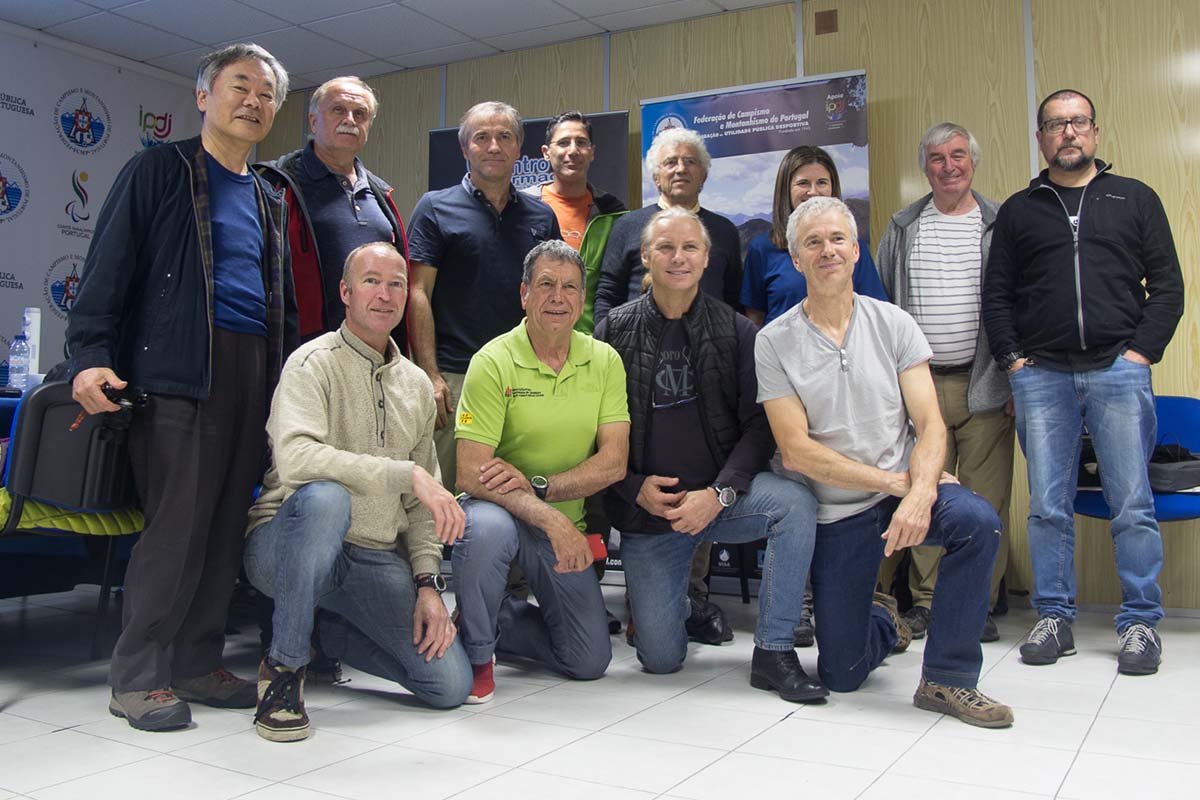
The UIAA Mountaineering Commission met in Keswick, UK, in April 2017. The meeting, which was hosted by the British Mountaineering Council (BMC), was attended by 16 delegates from 14 different countries. Nick Colton (Deputy CEO of the BMC) welcomed everyone and gave a fascinating presentation about climbing and mountaineering, highlighting how ethics have changed and developed in British and alpine climbing in the past 50 years.

WELCOME BY THE NEW MOUNTCOM PRESIDENT

UIAA Mountaineering Commission President Claudio Melchiorri

Having recently become President of the UIAA Mountaineering Commission, Claudio Melchiorri shared his vision to strengthen the Commission’s role in mountain training for both federations and individuals, and to contribute towards increasing safety in mountaineering in terms of risk management, teaching and personal skills development. Claudio is also very keen to increase awareness amongst climbers and federations of ethical issues and sustainability, both in our climbing activities as well as in how we regard and approach the mountains. The Commission will also continue to provide a forum for sharing knowledge and experience of legal issues in terms of access and the legal responsibilities of participants.


UIAA TRAINING & MOUNTAIN QUALIFICATION LABEL

Awareness of UIAA Training continues to grow, with a large number of Federations now applying for membership of the UIAA, primarily for developing training. A UIAA Training seminar is to be held in October in Cyprus for hill-walking instructors and coaches. Delegates spent an afternoon during the meeting on the hills above Keswick discussing and observing challenges faced when running a hill-walking training programme.

Steve Long highlighting some of the difficulties in teaching navigation in different countries.

Following official UIAA inspections of their assessment courses, Cyprus and Nepal have recently been accredited respectively for their rock climbing / hill walking qualifications, and Sweden and France have been accredited for their ice climbing instructor qualifications. An additional standard has now been developed for canyoning qualifications in collaboration with the Spanish Federation, FEDME, which has its own canyoning sub-group and experience in teaching canyoning.

Nepali instructors celebrate accreditation of their hill walking leader qualification.

UIAA Training is currently developing personal skills training. Following approval at the 2016 UIAA General Assembly, the syllabus and resources for personal skills training courses will now be franchised to accredited member organisations, which they will be able to offer through their qualified instructors and guides.

The UIAA Alpine Skills Handbook, which was developed jointly with the Petzl Foundation, and which is already available in French and English, is currently being translated into several additional languages, including Spanish, Turkish and Korean. Work is under way to produce a Winter Skills Handbook, as well as cross-platform digital versions of each manual. This will allow integration of training videos, will reduce distribution costs, and makes it easier for the commissions to update and add new information.

ETHICS

The UIAA document ‘Preservation of Natural Rock for Adventure Climbing’ recognizes the value and benefits of adventure (trad) climbing and the need to ensure that areas of natural rock are preserved.

This document has been well received by a number of Federations, including Norway, France, South Africa, Turkey and Catalonia, and has been translated into several languages. As a result, MountComm has made a series of recommendations, and will connect with groups set up in France, Switzerland and South Africa who are concerned about the steady loss of adventure climbing areas and are encouraging adventure/trad climbing. MountCom is actively looking at ways and means of enabling developing countries to obtain self-protection/trad equipment direct from climbers and climbing organisations in developed countries, as well as from manufacturers. It also aims to connect with climbing festivals in order to highlight and promote the values of adventure climbing.

Concerns have been raised about the increasing number of incidents in which fixed protection has been placed without the consent of the landowner, local climbers/clubs or the national federation. In many instances the perpetrators are visiting climbers from a different country. MountCom is monitoring such activity, and is looking at how the federations and the UIAA can reach out to climbers to inform them of local traditions, local ethics and the processes they should follow if they do wish to place fixed equipment.

The Commission members were introduced to the work of the Mountain Heritage Trust at the Keswick Museum by the President of the Alpine Club, John Porter, who highlighted the importance of mountain heritage, both from a historical perspective, and from its importance in developing ethics and style in climbing and mountaineering.

SAFETY

Delegates learned about a recent avalanche accident in Japan in which eight people, including seven children, lost their lives. MountCom hopes that the continued development of personal, teaching and coaching skills through UIAA Training will help to reduce the number of similar accidents in future years.

Mobile phones and smart watches can reduce the efficiency of avalanche transceivers

It is well known that electronic devices, particularly mobile phones and smart watches, can interfere with avalanche transceiver transmission, in some cases even rendering them useless. MountCom would like to encourage member Federations to educate their members of this danger and to inform them that generally-accepted best practice is to keep all additional electronic devices turned off and a minimum of 20cm from avalanche transceivers.

With special thanks to the British Mountaineering Council, the staff of Derwent Hill Outdoor Education and Training Centre, the Mountain Heritage Trust, The Keswick Museum and Art Gallery and George Fisher UK for supporting this meeting.

Report by: Phil Wickens (BMC Representative), UIAA Mountaineering Commission

Innovative Nepalese mountain training scheme in final stages of development

A group of ten experienced Nepalese trainers attended an advanced week-long assessors’ workshop in Langtang, Nepal conducted by Steve Long, chair of the UIAA Training Standards Panel.

The Nepalese trainers are part of an innovative multi-year UIAA Training Standards program conducted in partnership with theNepal Mountaineering Association and Nepal National Mountain Guides Association to help design, test and implement a qualification for mountain trek leaders.

When the Mountain Trek leader is finally accredited next year, it will provide a template for this much sought-after UIAA service for other UIAA federation members.

The process took on added urgency when snowstorms and avalanches killed 39 trekkers on a remote high mountain trekking route in the Annapurna region late last year.

The Nepalese, Japanese, Israeli, Canadian, Indian, Slovak, Vietnamese and Polish trekkers were trekking through the Thorung La Pass, the high point of the Annapurna circuit, when tragedy struck.

“Following several tragic avalanche and icefall accidents in recent years it has become apparent that a more formal skills training and accreditation process is required in Nepal to bridge the huge gap between generic trek licence training and the International Mountain Guide qualification,” said Long.

A group of ten experienced Nepalese trainers attended an advanced weeklong assessors’ workshop in Langtang, Nepal conducted by Steve Long, chair of the UIAA Training Standards Panel.

The Nepalese trainers are part of an innovative multi-year UIAA Training Standards program conducted in partnership with the Nepal National Mountain Guides Association to help design, test and implement a qualification for mountain trek leaders.

When the Mountain Trek leader is finally accredited next year, it will provide a template for this much sought-after UIAA service for other UIAA federation members.

The process took on added urgency when snowstorms and avalanches killed 39 trekkers on a remote high mountain trekking route in the Annapurna region late last year.

The Nepalese, Japanese, Israeli, Canadian, Indian, Slovak, Vietnamese and Polish trekkers were trekking through the Thorung La Pass, the high point of the Annapurna circuit, when tragedy struck.

“Following several tragic avalanche and icefall accidents in recent years it has become apparent that a more formal skills training and accreditation process is required in Nepal to bridge the huge gap between the college-based licence course (NATHM) and the International Mountain Guide qualification,” said Long.

The UIAA has stepped in to fill this gap, with a hybrid of walking leadership skills and a basic mountaineering course which adds high altitude skills including snow, avalanche, glacier, simple rock and ice climbing which is recommended for trek leaders crossing high mountain passes.

The programme funded with the help of the Petzl Foundation has already trained about 30 trainers in Nepalwho include aspiring trek leaders through to Everest veterans.

“This is a very exciting training and assessment programme that will ensure that qualified leaders will be suitably equipped to make reliable mountaineering judgments about avalanche potential, acclimatization and altitude sickness, landslides and other situations requiring dynamic risk assessment and party management skills,” said Long.

It all came about as a result of an agreement signed at the 2011 UIAA General Assembly in Kathmandu with the Nepal Mountaineering Association to develop a self-sustaining programme that would provide a suitable level of technical and practical knowledge. The scheme was meant to complement the longstanding Basic Mountaineering course developed in partnership with the Alpine Association of Slovenia (PZS).

Long said the agreement with the NMA is important because of the opportunity to develop an international recognized mountain trek leader course that can by NMA to assess leaders trained both though its own training programmes and also in-house training run by trekking agencies.

Following the training workshop in Langtang, Long attended a meeting organised between the UIAA, Executive Officers from the Trekking Agencies Association of Nepal, the Nepal Academy of Tourism & Hotel Management and the NMA.

The goal was to explore the potential for collaboration in extending and endorsing such practical skills training and assessment courses. A draft paper has been submitted to these groups proposing a cost-effective and practical way forward, using the existing infrastructures and ensuring that practical training is delivered by competent and current mountaineers.

About the UIAA Training Standards Panel

The UIAA Training Standards is an internationally recognized accreditation and certification scheme which examines and evaluates the training and assessment programs of our member federations. The process includes an independent assessment of the training and qualifications provided to voluntary leaders and instructors by a UIAA expert, which is then endorsed by an international panel of experts.

The Model Training Standards for Voluntary Leaders and Instructors managed by members of the Training Standards Panel makes it possible for mountaineers from different countries to recognise each other’s qualifications.

Please click here for more information about the UIAA Training Standards Panel and their courses or contact training@theuiaa.org

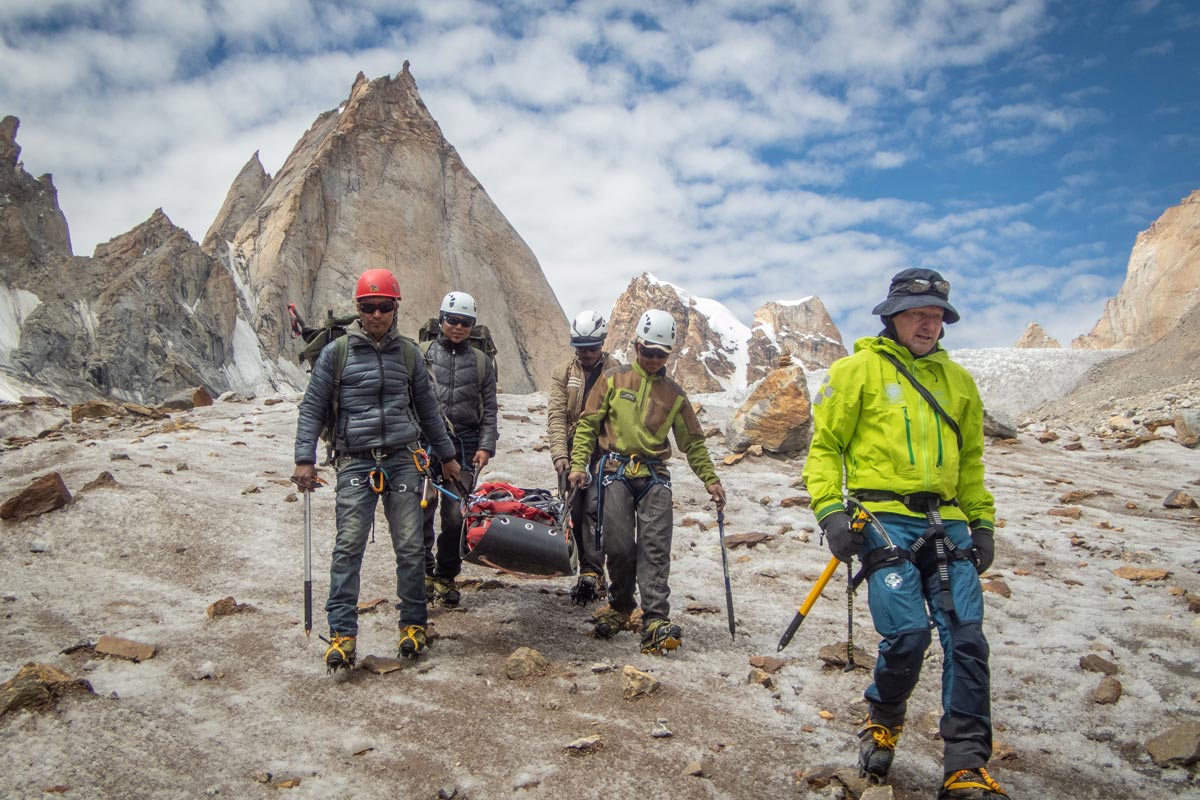
Main Image: High point for the UIAA Assessors workshop in the Langtang Valley of Nepal (Photo: Steve Long for UIAA)