Author: Communication

The UIAA and Climbers Against Cancer commemorate long-term partnership

The UIAA – International Climbing and Mountaineering Federation – and Climbers Against Cancer (CAC), a not-for-profit charity that raises awareness and funds for cancer research through the worldwide climbing community, have commemorated their long-term partnership through the creation of a collaborative t-shirt.

The t-shirt (options in white and grey) is now available to buy worldwide from the CAC online shop (Europe, UK/Rest of the World) . All proceeds will go directly to supporting CAC.

CAC was created by the late John Ellison, a British climber, who after being diagnosed with terminal cancer established a charity that has since raised nearly £650,000 across 18 countries.

[embedyt] https://www.youtube.com/watch?v=JIHAoflzTY0[/embedyt]

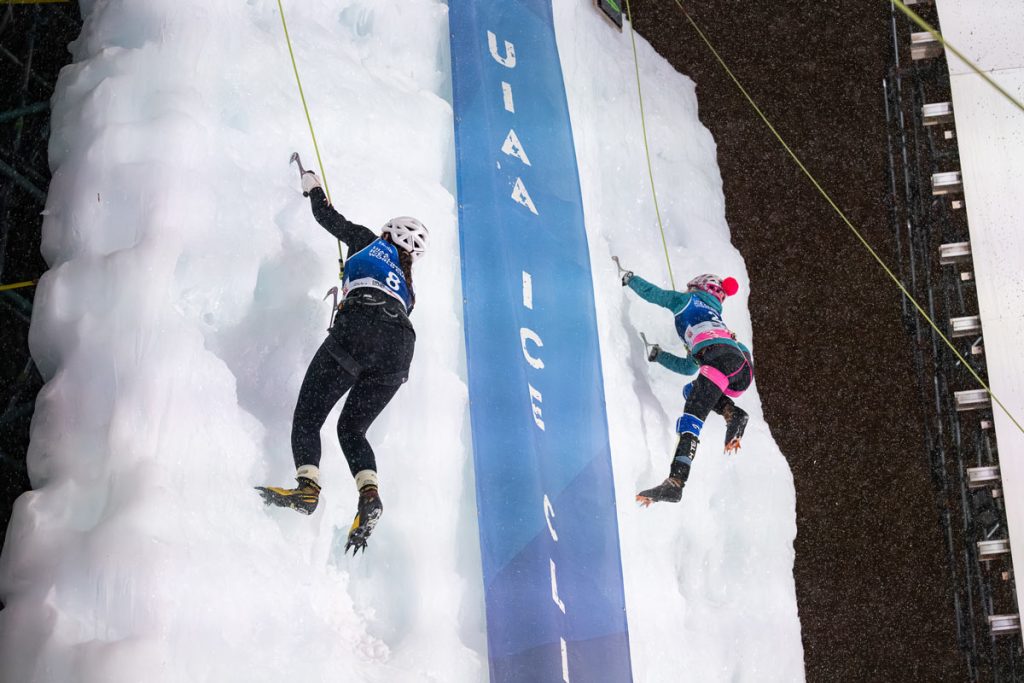
In May 2014, Ellison was honoured by the UIAA at a meeting of the UIAA Management Board in Munich. He was feted for his outstanding efforts to bring together the global family of climbers and mountaineers to raise funds for research to fight and beat cancer. The UIAA has supported CAC ever since. In recent years this has included fundraising efforts during global UIAA ice climbing competitions.

“The UIAA is delighted to work with CAC on creating this visual symbol of our long-term partnership and friendship. This project has also sparked other collaborative ideas for the UIAA and CAC such as potential initiatives during the upcoming UIAA rebolting Workshop in Kalymnos, Greece, and the international UIAA medical meetings in the UK in May. We look forward to discussing more plans with CAC over the coming months.”
André von Rotz, UIAA CEO

“The founding vision for Climbers Against Cancer is to bring together the global climbing community, so our collaboration with the UIAA is hugely important. Together we can reach around the world and join our efforts to fund research and provide support for those living with and beyond this disease that affects so many. Mountaineering and climbing represents a huge extended family and when we work together there’s nothing we can’t achieve!”
Dominic Oughton, Trustee, Climbers Against Cancer

About CAC

Climbers Against Cancer provides an accessible platform for the climbing community to collectively raise money for research into cancer and therapeutic initiatives for those living with or beyond cancer. CAC are committed to funding cancer research facilities and therapeutic projects around the world that provide positive impact to those living with or after cancer.

CAC provide lump sum donations to fund several research centres and projects across the globe every year. To find out more about the grants they have made, follow the links below.

Together, we climb higher – one contribution at a time.’

Further Resources

https://www.climbersagainstcancer.org/
https://climbersagainstcancer.org/shop/
theuiaa.org/donate

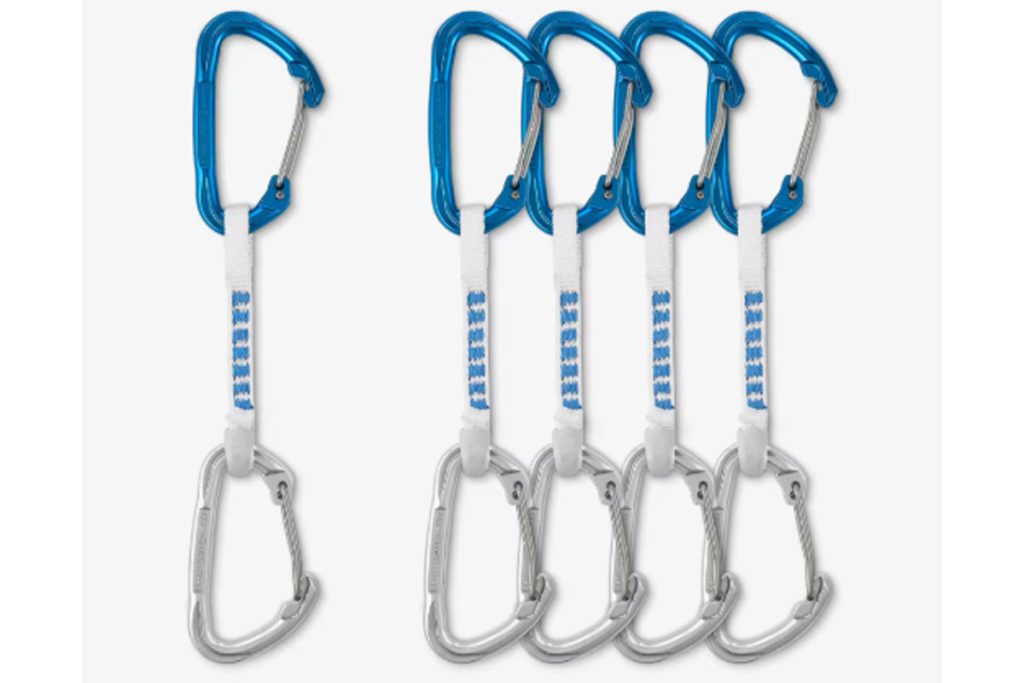
Recall of CONDOR HMS Triple carabiners

OCUN have announced a recall of certain batches of CONDOR HMS Triple (03550) carabiners and related belay sets due to a potential locking mechanism issue. Immediately stop using any affected products and contact us for further instructions regarding return and replacement.

See full details here.

Further Information

For a full list of product recalls please visit the dedicated recalls and warnings database.

AAC explores climbing helmet history and evolution of UIAA Standard

A recent article from the American Alpine Club (AAC) explores the historical development of climbing helmets and the evolution of the related global safety standard led by the UIAA, International Climbing and Mountaineering Federation. The piece, authored by Stephen Gladieux (*), AAC representative on the UIAA Safety Commission, reflects on the progression of helmet design from improvised protection in early alpine climbing to the sophisticated certified equipment used today. The UIAA Standard 106: Helmets was created in 1980.

From a UIAA perspective, the development of standardised testing and certification has been critical in improving climber safety. Helmet technology has evolved alongside international safety protocols established through the UIAA Safety Label. By establishing globally recognised criteria, the UIAA has helped manufacturers design helmets capable of protecting climbers in increasingly varied environments and in the ever changing nature of mountain-related sports. For example, helmets are tested for impact resistance, durability and protection against both falling objects and direct head impacts.

A key focus of the article is the importance of regular revisions to the UIAA helmet standard. More recent ones better address rim impacts – types of accidents that historically caused severe injuries. As the article states: “From 2022 to 2025, the UIAA conducted a large helmet study with nine labs and numerous manufacturers. One of the most difficult issues was standardizing the impact testing in a way that consistently worked, given the different testing apparatus at different labs and manufacturers. Also, helmets have ventilation holes in different places. Any ventilation hole means you might get unlucky with a sharp rock, but the test shouldn’t favor one ventilation hole pattern over another arbitrarily; though, if a ventilation pattern is truly better, the tests should show that. These are the shared challenges for manufacturers and the UIAA Safety Commission. Several years of work resulted in an updated helmet standard that includes testing for impact absorption 10° above the helmet’s rim on the front, back, and sides. Helmets will be coming onto the market in 2026 that will be tested to this new standard.”

The full online article can be viewed here.
It was first published in the AAC’s Guidebook XVII, February 2026, which can be viewed in full here.

(*) with research support from Denis Pivot, Lionel Kiener (UIAA Safety Commission President) and Alain Maurice

Further Information
American Alpine Club
UIAA Safety Standards

Join a UIAA rebolting workshop on Kalymnos

The UIAA is hosting a rebolting workshop an course in Kalymnos, Greece from 2-3 May. The event forms part of the annual meeting of the UIAA Safety Commission.

Over recent years, the UIAA has invested significant resources into the subject of rock anchors and bolts, particularly in the field of corrosion and stress corrosion cracking failures. The results of this work and research are available on a dedicated website page for climbers and bolters.

The workshop in Greece will be led by a number of the UIAA’s international bolting experts and is organised in partnership with the Kalymnos municipality, and UIAA member association for Greece, Hellenic Federation of Mountaineering and Climbing. The programme will include:

  • A practical bolting and rebolting field workshop
  • Theory sessions and field practice
  • Sessions encouraging the exchange of good practices
  • UIAA international expertise and local rebolting experience
  • A focus on safe, durable and sustainable bolting / rebolting practices

The event is primarily aimed at bolters and climbers from Greece or visiting the country and those from nearby countries. However, anyone interested in attending the event is welcome.

To register for the event please complete the following registration form.

Following the bolting workshop, the annual UIAA Safety Commission meetings will take place bringing together representatives from the world’s leading climbing equipment manufacturers, delegates from UIAA accredited laboratories as well as experts from UIAA working groups dedicated to the creation of new and revised UIAA Safety Standards. A number of initiatives related to the UIAA’s work in rock climbing will also take place.


Latest legal case: Slackline accident in a public space

The UIAA mountaineering and climbing accidents case law database now includes reports from 20 different cases. These are drawn from accidents which took place in 14 different countries and on five continents.

The latest featured case study concerns a slackline accident which occurred on a public sports ground in Germany.

Case Study: Karlsruhe – Slackline Accident on Public Sports Ground

In this judgment, the Higher Regional Court of Karlsruhe clarified the scope of the German “traffic safety obligations” (Verkehrssicherungspflichten) applicable when individuals install recreational equipment in public spaces. The case concerned a slackline tensioned at knee height between two trees in a city park, creating a hidden obstacle for other users of the shared path. A cyclist, unable to detect the slackline from a reasonable distance, collided with it and sustained injuries.

The Court held that the person who installed the slackline had created a foreseeable source of danger and therefore bore a duty to ensure that the installation was either clearly visible or appropriately secured. Because no warning measures were taken and the slackline constituted an unexpected hazard for third parties, the installer was found liable for the accident under § 823(1) BGB. (general civil liability).

The decision reinforces the principle that even informal, non-commercial outdoor recreation is subject to traffic safety obligations whenever third parties may encounter unforeseen risks. The ruling underscores that those who introduce obstacles into public environments must prevent avoidable harm regardless of the recreational, voluntary or non-professional context of the activity.

Summary of the Facts

The events took place in a public park in Karlsruhe, where the defendant had installed a slackline between two trees at approximately knee height. The slackline was positioned across a grassy area adjacent to a path routinely used by pedestrians and cyclists. Due to the angle of approach and the color and height of the line, it was not visible to users of the path until they were very close to it.

A cyclist entered the park and followed the shared path in normal daylight conditions. As she approached the grassy area, she did not perceive the slackline and collided with it, being thrown from her bicycle and sustaining injuries. Emergency services were called, and she later sought compensation for medical expenses, pain and suffering, and material losses.

The injured cyclist (claimant) brought a civil action against the person who had installed the slackline (defendandt), alleging that it constituted a hidden and unexpected obstacle in an area open to public use. The defendant argued that slacklining was a common recreational activity in parks and that the cyclist should have been attentive to her surroundings.

In first instance, the court ruled in favor of the cyclist, finding that the slackline installer had breached their traffic safety obligations by creating a foreseeable hazard without implementing any warning measures. The defendant appealed the decision to the Higher Regional Court of Karlsruhe (Oberlandesgericht Karlsruhe), which upheld the lower court’s findings and confirmed liability.

Reasoning Summary

The Higher Regional Court of Karlsruhe based its judgment on the German doctrine of traffic safety obligations (Verkehrssicherungspflichten). The Court held that anyone who introduces a potential hazard into a public space must take reasonable precautions to prevent foreseeable harm. This duty applies irrespective of whether the activity is recreational or non-commercial.

Relying on expert evidence, the Court found that the slackline, set at knee height and difficult to detect from a distance, constituted a hidden and unexpected obstacle for users of the park’s shared path. Because the installer failed to take basic precautionary measures—such as ensuring sufficient visibility or providing warnings—the Court concluded that he breached his duty of care under § 823(1) BGB.

The Court rejected the defendant’s arguments that slacklining is a common practice not requiring safety measures and that the cyclist should have been more attentive. It held that the cyclist could not reasonably anticipate such an obstacle and that no contributory negligence applied. The appellate court therefore confirmed the first-instance judgment and upheld the defendant’s liability.


In addition to the synopsis above, the UIAA Legal Affairs Commission – responsible for managing the database – highlight the following areas as part of its complete case report – the legal framework/analysis; summary of the facts; summary of the arguments of the parties; a reasoning summary; as well as the LAC’s own reflections on the judgement which is as follows:

This judgment clearly illustrates how general traffic safety rules apply when recreational activities take place in public spaces. The Court confirmed that a slackline stretched across a shared-use path constitutes a traffic obstruction and that users must ensure their equipment does not create hidden hazards for others.

A significant aspect of the decision is the emphasis on visibility and avoidability. Expert reconstruction showed that the slackline was practically undetectable until very close, which led the Court to reject any contributory negligence. The case highlights the value of technical evidence when assessing the foreseeability of an obstacle.

From a practical standpoint, the ruling clarifies that leaving a slackline unmarked and unattended in a public area can amount to gross negligence, even if the activity itself is low-risk. It reinforces that outdoor users must consider their impact on all other users of a shared environment.

LAC notes that the reasoning aligns with other cases in the database involving unexpected obstacles or unsafe setups in shared spaces, underscoring the importance of adequate marking, supervision, and hazard awareness in recreational settings.

To access the database please click here.

The database also provides the opportunity for users to submit cases for inclusion.

Main photo: Slackline, for illustrative purposes only. Credit: Shutterstock

Why do over 1,000 people get lost every year in Japan?

[vc_row width=”custom” width_custom=”1000px” height=”auto”][vc_column][vc_column_text el_class=”different-text”]A study led by Japanese Professor Emeritus Chiaki Aoyama has investigated why an alarming number of people are getting lost on Japan’s mountain trails every year. As detailed below, this investigation has revealed three major causes.

The number of mountain accidents in Japan increased sharply in 1994, following the “Mountain hiking boom” that began in response to the television broadcast of Japan’s 100 most famous mountains, and tripled from 962 in 1994 to 3,043 in 2015. Since then, the number has continued to increase slightly, reaching 3,357 as of 2024.[/vc_column_text][us_separator size=”small”][vc_column_text]The cause of this sudden increase in the number of accidents is “accidents due to getting lost .” The proportion of accidents due to getting lost among all causes of accidents has always exceeded 30%, reaching as high as 45% in some years. The number of accidents due to getting lost has consistently exceeded 1,000 since 2013, and remains at the present level. It has become a serious social problem in Japan.[/vc_column_text][/vc_column][/vc_row][vc_row width=”custom” width_custom=”1400px”][vc_column width=”1/2″][us_image image=”96480″ size=”full”][us_separator size=”small”][vc_column_text css=”%7B%22default%22%3A%7B%22color%22%3A%22%23999999%22%2C%22font-size%22%3A%220.8rem%22%2C%22line-height%22%3A%221%22%7D%7D”]

Photo credit: Chiaki Aoyama

[/vc_column_text][/vc_column][vc_column width=”1/2″][us_image image=”96481″ size=”full”][us_separator size=”small”][vc_column_text css=”%7B%22default%22%3A%7B%22color%22%3A%22%23999999%22%2C%22font-size%22%3A%220.8rem%22%2C%22line-height%22%3A%221%22%7D%7D”]

Photo credit: Chiaki Aoyama

[/vc_column_text][/vc_column][/vc_row][vc_row width=”custom” width_custom=”1400px”][vc_column width=”1/2″][us_image image=”96455″ size=”full”][us_separator size=”small”][vc_column_text css=”%7B%22default%22%3A%7B%22color%22%3A%22%23999999%22%2C%22font-size%22%3A%220.8rem%22%2C%22line-height%22%3A%221%22%7D%7D”]

Photo credit: Chiaki Aoyama

[/vc_column_text][/vc_column][vc_column width=”1/2″][us_image image=”96456″ size=”full”][us_separator size=”small”][vc_column_text css=”%7B%22default%22%3A%7B%22color%22%3A%22%23999999%22%2C%22font-size%22%3A%220.8rem%22%2C%22line-height%22%3A%221%22%7D%7D”]

Figure 1: The actual route taken by the lost person (red) compared with the one he imagined himself to be on (blue).

[/vc_column_text][/vc_column][/vc_row][vc_row width=”custom” width_custom=”1000px” height=”auto”][vc_column][vc_column_text el_class=”normal-text”]

Navigation versus imagination

The causes of these accidents are a combination of human factors, environmental factors, and information factors that interact with each other. Among the human factors, navigation ability proved to be the most critical. So, what kind of navigation ability do people who get lost have? Interviews with 76 persons who had lost their way proved it very difficult to get detailed information, simply because the majority of people who have been rescued after being lost are still confused about where they have been.

To get more information, Professor Aoyama developed a five category checklist for the interviews with the lost persons. After five days of interviews with one person, he obtained the results shown in figure 1 (see above). The route that the hiker had imagined himself taking was completely different from the route he actually walked.

This result was similar to those from previous experiments where subjects imagined being on different trails while walking a real trail. The experiments were conducted between 1997 and 2016, with 612 participants. The question is: What kind of trail do lost people imagine that they are on while walking?[/vc_column_text][/vc_column][/vc_row][vc_row width=”custom” width_custom=”1400px”][vc_column][us_image image=”96457″ size=”full”][us_separator size=”small”][vc_column_text css=”%7B%22default%22%3A%7B%22color%22%3A%22%23999999%22%2C%22font-size%22%3A%220.8rem%22%2C%22line-height%22%3A%221%22%7D%7D”]Figure 2: Junctions between official hiking trails and “back trails”[/vc_column_text][/vc_column][/vc_row][vc_row height=”small”][vc_column][vc_column_text]

Why do 1,000 people get lost every year in Japan?

Researchers could not find the reason why so many persons were getting lost until a new software company developed a big database of hiker’s GPS-based logging of their walking tracks. The data showed a large number of “back trails” in all of the mountains in Japan (figure 2). “Back trails” are defined as “a trail that is not shown on maps, even if there is a real trail.”

What particularly interested Professor Aoyama was that many getting cases occur on back trails (figure 3). Responding to this result, the police, local governments and mountaineering organisations have launched a campaign to prevent hikers from using back trails. However, their efforts have been hindered by landownership issues.[/vc_column_text][/vc_column][/vc_row][vc_row width=”custom” width_custom=”1400px”][vc_column width=”1/2″][us_image image=”96458″ size=”us_600_400″][us_separator size=”small”][vc_column_text css=”%7B%22default%22%3A%7B%22color%22%3A%22%23999999%22%2C%22font-size%22%3A%220.8rem%22%2C%22line-height%22%3A%221%22%7D%7D”]Figure 3: The influence of back trails on accidents[/vc_column_text][/vc_column][vc_column width=”1/2″][us_image image=”91069″ size=”full”][us_separator size=”small”][vc_column_text css=”%7B%22default%22%3A%7B%22color%22%3A%22%23999999%22%2C%22font-size%22%3A%220.8rem%22%2C%22line-height%22%3A%221%22%7D%7D”]

Hiking in Japan, Fuji foothills

[/vc_column_text][/vc_column][/vc_row][vc_row width=”custom” width_custom=”1400px”][vc_column][us_separator size=”small”][/vc_column][/vc_row][vc_row width=”custom” width_custom=”1400px”][vc_column][us_image image=”96483″ size=”full”][us_separator size=”small”][vc_column_text css=”%7B%22default%22%3A%7B%22color%22%3A%22%23999999%22%2C%22font-size%22%3A%220.8rem%22%2C%22line-height%22%3A%221%22%7D%7D”]

Photo credit: Chiaki Aoyama

[/vc_column_text][/vc_column][/vc_row][vc_row height=”small”][vc_column width=”1/2″][vc_column_text]

The Review Paper

The full results of the investigations are presented in detail in the full research paper titled: “Current state of getting lost accidents and their mechanism in Japan: The impact of getting lost, especially on back roads”. The paper can be downloaded here.

This paper describes:

  1. The current state of getting lost accidents in Japan’s mountains
  2. The three major causes of getting lost and how they occur
  3. Interview surveys with getting lost accident victims
  4. Getting lost experiments
  5. The problem of back trails that can cause getting lost
  6. The difficulty of implementing measures to reduce getting lost accidents.

[/vc_column_text][/vc_column][vc_column width=”1/2″][vc_column_text]

Statistics

Select statistics from the report:

Total mountain accidents:
962 accidents in 1994
3,043 accidents in 2015
3,357 accidents in 2024

Proportion of accidents due to getting lost
Consistently over 30%
Peaked at 45% in some years

Annual getting lost incidents
Over 1,000 per year since 2013

Wild vegetable picking accidents
Accounted for over 20% of mountain activity before 2010
Declined from 20% (2013) to 8.8% (2024)

Interview research
76 lost individuals interviewed

Navigation experiment
Conducted 1997–2016
612 participants

Back trails
In parts of Mt. Rokko, nearly 30% of trails were unofficial back trails[/vc_column_text][/vc_column][/vc_row][vc_row width=”custom” width_custom=”1550px”][vc_column width=”1/4″][vc_column_text css=”%7B%22default%22%3A%7B%22color%22%3A%22%2305498b%22%2C%22font-size%22%3A%223rem%22%2C%22line-height%22%3A%223.75rem%22%2C%22font-family%22%3A%22Switzer%20Semibold%22%7D%7D”]Accident Reporting[/vc_column_text][us_separator size=”small”][vc_column_text css=”%7B%22default%22%3A%7B%22font-size%22%3A%221.5rem%22%2C%22line-height%22%3A%222.25rem%22%2C%22font-family%22%3A%22h1%22%7D%7D”]Download
Report[/vc_column_text][just_icon icon_type=”custom” icon_img=”id^106|url^https://theuiaa.org/wp-content/uploads/2023/02/diagonal-arrow.png|caption^null|alt^null|title^diagonal-arrow|description^null” img_width=”20″ icon_link=”url:https%3A%2F%2Fwww.theuiaa.org%2Fdocuments%2Fsafety%2F2026_Japan_AccidentReporting_Lost.pdf|title:Legal%20Projects|target:_blank” icon_align=”left”][/vc_column][vc_column width=”3/4″][vc_column_text css=”%7B%22default%22%3A%7B%22font-size%22%3A%221.5rem%22%2C%22line-height%22%3A%222.5rem%22%2C%22font-family%22%3A%22Switzer%20Regular%22%7D%7D”]This article forms part of a series of case studies derived from reports submitted to national accident and near miss reporting databases which are included in the UIAA’s international directory of accident data reporting systems. For more information on the different databases, and to view, additional case studies, click here.

Professor Aoyama is a member of the UIAA Accident Report Working Group, the Japan Mountaineering & Sport Climbing Association as well the Institute for Mountain Search and Rescue – Japan.[/vc_column_text][/vc_column][/vc_row]

Avalanches: Petzl Foundation offers video tutorials

As reported by the Petzl Foundation, by 24 February, 28 people had already lost their lives in avalanches in France during the year 2026. This series of accidents is not inevitable.

Switzerland and Austria have succeeded in reducing the number of accidents by more than 30% thanks to new risk-reduction methods. For the past ten years, the Petzl Foundation has been involved in developing new free applications that incorporate these methods and help users choose their ski touring routes more wisely, reducing the risk of being caught in an avalanche. These applications are called Yéti and Skitourenguru. Already 4,600 routes have been digitised in the French Alps, 13,000 in the entire Alps and 500 to come in the Pyrenees in 2026. Further information on these applications is available here.

To support avalanche awareness, the Petzl Foundation has also launched a series of tutorials to help mountain goers prepare for their activities by choosing routes adapted to current snow conditions. The videos are in French with subtitles in English as well as other languages.

Video 1 : Avalanches : Game Changer

Video 2 : Skitourenguru : Starter Kit

Video 3 : Skitourenguru : Expert Mode

Arabic version of digital UIAA Alpine Handbook now available to buy

The digital version of the UIAA Alpine Handbook: Summer Skills is now available to purchase in Arabic.

The Alpine Handbook (Arabic edition) is a comprehensive reference guide for mountaineers, climbers, and outdoor enthusiasts who want reliable, practical, safety-focused guidance for their time in the mountains.

Developed with the expertise of the UIAA and the Petzl Foundation, with contributions from experienced professionals, this Arabic edition was translated by Fujairah Adventures Centre (the United Arab Emirates representative federation), to help make this educational resource accessible to Arabic-speaking mountain communities.

Designed for both beginners and seasoned alpinists, the handbook supports stronger decision-making in the field and a safer mountain culture—before, during, and after your adventures.

يُعد الدليل الألبي (النسخة العربية) مرجعًا شاملًا لممارسي تسلق الجبال والتسلق والأنشطة الخارجية، لمن يبحثون عن معلومات موثوقة وعملية تركّز على السلامة أثناء المغامرات في البيئات الجبلية.

تم إعداد هذا الدليل بالاستفادة من خبرات UIAA ومؤسسة Petzl، وبمساهمات من محترفين ذوي تجربة ميدانية واسعة. وقد قام مركز مغامرات الفجيرة (Fujairah Adventures Centre) — بوصفه الجهة الممثلة لدولة الإمارات — بترجمة هذه النسخة إلى العربية، بهدف إتاحة هذا المورد التعليمي لمجتمعات الجبال الناطقة بالعربية.

سواء كنت تُطوّر مهاراتك الأساسية أو ترغب في مراجعة أفضل الممارسات، يساعدك الدليل على اتخاذ قرارات أكثر وعيًا في الميدان، ويعزز ثقافة السلامة قبل المغامرة وأثناءها وبعدها.

Further Information

Purchase the Alpine Handbook: Summer Skills: EnglishArabic

Recall of Petzl Nomic and Ergonomic Ice Axes

Petzl has announced a recall of certain batches of NOMIC (U021AA00) and ERGONOMIC (U022AA00) ice axes due to a risk of breakage at the handle that could cause the climber to fall. The Petzl warning advises climbers to stop using the affected ice axes immediately and contact its customer service department for a handle replacement.

Please refer to the English version official recall information for full details. Includes: technical details, products impacted, how to submit a recall and FAQs.
Version française.

Further Information

For a full list of recalls and warnings reported to the UIAA please visit the dedicated database.

Inside the Syrian Association for Mountain Activities

Across the global climbing and mountaineering community, new federations continue to emerge, some of whom are driven by passionate young outdoor enthusiasts seeking safe, responsible ways to explore their natural landscapes. One such organisation is the Syrian Association for Mountain Activities (SAMA), a young but ambitious federation working to build a structured climbing and outdoor culture in Syria while connecting with the international mountaineering community. SAMA became a full UIAA member association at the General Assembly held in Peja, Kosovo in October 2025.

Founded in 2022 and headquartered in Jablah in the Latakia region, SAMA represents a new generation of climbers, hikers, and adventurers who see mountains not only as places of challenge and exploration, but also as spaces for education, environmental awareness, and community building.

Information for this article was supplied by Rahaf Jdeed, Secretary and Communication Manager for SAMA.

A desire to be part of the Global Mountain Network
A central question for any emerging national federation is why international affiliation matters. For SAMA, the motivation to apply for UIAA membership was clear from the outset of their application process: alignment with international standards in safety, training, and mountain protection. The organisation also hopes to connect with climbers worldwide, exchange expertise, and present a more positive image of Syria’s landscapes and culture to the international outdoor community.

As Rahaf Jdeed details: “We hope to benefit from internationally recognised expertise in safety, training, and mountain protection. Being part of the global mountaineering community will allow us to learn from diverse experiences, connect with climbers from different cultures, and exchange best practices. We also aim to strengthen the skills of our instructors and volunteers through exposure to proper techniques and modern standards, helping us build a stronger climbing culture in Syria. At the same time, we look forward to sharing our country’s mountains, landscapes, and cultural heritage with the international community.”


Providing a pathway for young climbers
SAMA’s membership profile reflects a broader trend seen in many countries: young people increasingly turning toward outdoor activities as a source of adventure, community, and personal development. Currently, the federation has around 50 individual members, most under the age of 30, supported by a growing network of approximately 70 volunteers operating across several provinces. Although there is not yet a club-based structure, the organisation plans to develop a federated system in the future that will allow local clubs to form under the national

Hiking and trekking remain the core activities for most members, with camping widely popular among young outdoor enthusiasts across the country. Basic rock climbing, rappelling, canyoning, and cave exploration are growing steadily, supported by training programmes and field activities organised by the federation.

A notable recent milestone is the opening of the first dedicated climbing gym in Damascus, signalling increasing interest in climbing as both a recreational and competitive sport.

Syria’s mountain environment
Although Syria is not widely known internationally as a climbing destination, its terrain is surprisingly varied. Limestone and sandstone formations dominate the coastal ranges, while river valleys, karst systems, and high plateaus create ideal conditions for trekking, canyoning, and cave exploration.

Mount Hermon (2814m), the country’s highest peak, holds particular geographical and cultural significance. While access to the summit is currently restricted due to territorial circumstances, the mountain remains symbolic of the country’s alpine potential. Climbers working within accessible areas have already established routes and exploratory ascents that demonstrate the region’s opportunities for mountaineering development.

For outdoor enthusiasts, the broader Syrian landscape offers extensive ridgelines suitable for long-distance trails, canyon systems carved by seasonal waters, and cliffs appropriate for introductory climbing. With proper infrastructure, training, and safety standards, the country could eventually become a compelling destination for adventure tourism.

SAMA’s first steps
SAMA’s approach to development has emphasised ambitious but carefully planned objectives designed to motivate participants and build confidence. Among its achievements are the first documented ascent of the highest accessible point of Syria’s tallest mountain – the aforementioned Hermon – the creation of a 100-kilometre multi-day mountain trail, the country’s first underground aquatic cave descent, and the highest technical rappel descent recorded domestically.

Such initiatives are not only sporting milestones; they are tools for fostering teamwork, resilience, and leadership among young participants. By encouraging responsible adventure, the federation aims to cultivate both technical competence and a deeper appreciation for the natural environment.

Training, Safety, and Environmental Responsibility
Safety and education already form a central pillar of SAMA’s activities. The federation runs training programmes covering hiking skills, navigation, camping techniques, and rappelling, while also organising rescue workshops and awareness sessions focused on mountain medicine and first aid. A long-term objective is the establishment of a certified mountain rescue capability within the country.

Environmental protection is equally important. Regular clean-up campaigns, tree-planting initiatives, and wildlife awareness programmes aim to promote responsible outdoor practices. Educational publications such as guidebooks on local wildlife such as snakes and scorpions and a series of nature guides help reinforce a culture of environmental stewardship among participants.

Who can travel to Syria
Tourism to Syria has gradually begun to recover in recent years, with increasing numbers of travellers expressing interest in wilderness exploration and climbing. SAMA has already hosted international visitors and provides full logistical and safety support for foreign climbers wishing to explore the country’s mountains.

As Rahaf Jdeed explains: In recent years, Syria has begun to see a gradual recovery in the tourism sector, with the Ministry of Tourism reporting an increase of nearly 80% in visitor numbers. This growth has included a noticeable rise in travellers interested in wilderness exploration, camping, and climbing—many of whom SAMA has already hosted.”

Visitors can join organised group activities, experience local outdoor culture, and explore both natural and historical sites under guided supervision. This approach allows international climbers to discover new terrain while ensuring that exploration takes place safely and responsibly.

Anyone planning on visiting Syria should first seek travel guidance and advice from the competent authorities in their respective countries.

Plans for the coming years
Although still in its early stages, SAMA has outlined an ambitious vision for the future. Plans include developing sport climbing structures aligned with international standards, expanding training programmes, and transitioning toward a federated model that will support the formation of local clubs across the country.

Equally important is the federation’s social mission: offering young people constructive opportunities to engage with nature, develop leadership skills, and build a healthier lifestyle through outdoor activities. In a country that has experienced years of instability, the mountains provide a powerful setting for renewal, cooperation, and shared purpose.

The UIAA welcomes SAMA as part of its Global Mountain Network.

Further Resources
UIAA member associations
SAMA website
SAMA Facebook
SAMA Instagram