Category: Mountaineering

Members invited to support improvement of mountain worker welfare

In February 2021, the UIAA launched the Mountain Worker Initiative (MWI), guided by its Mountaineering Commission, to promote ethical trekking and mountaineering practices worldwide with a focus on the lives of mountain workers. The idea to form this initiative is inspired by the agency behind The Porter: The Untold Story at Everest. In March 2021, a dedicated webinar was held to kick-off this new project. Details on the background of the initiative and its mission are provided below. In December 2021, the UIAA reported on the progress of the project. The UIAA is now inviting member associations to directly support the initiative.

After months of work, the UIAA has published the world’s first ever question-format guidelines for ethically operating trekking and mountaineering companies. With these and other resources in hand, the MWI hopes to collaborate with as many countries as possible to establish national-specific guidelines around the world; its hope being to publicise and spread the proper treatment of mountain workers.

Member Association Involvement
If any UIAA member association  would like to aid the creation of national-specific guidelines in its country/region, the MWI would welcome collaboration. All finalised guidelines will be published by the MWI and shared internationally.

If you would like to follow up or learn more about the initiative, please contact Nathaniel Menninger.

To support the project with a donation with all funds received going to mountain worker projects supported by the MWI, please use the option on the following website page.

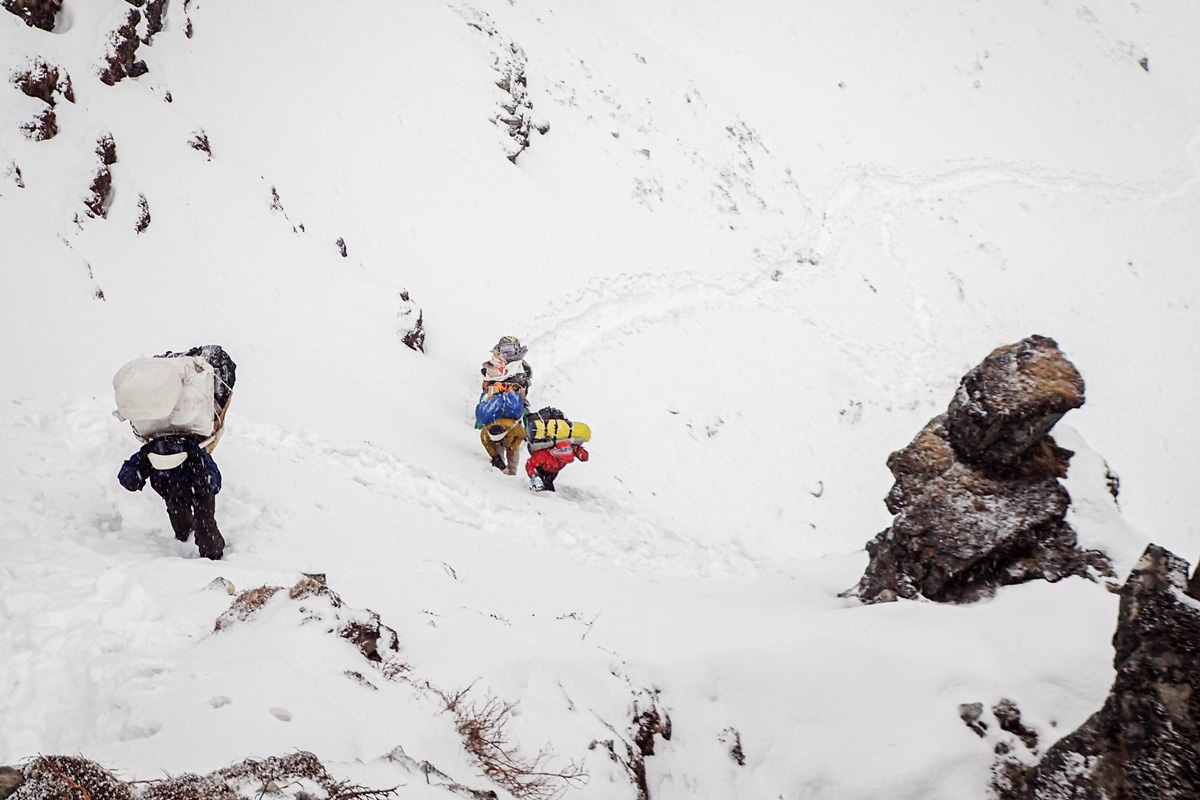
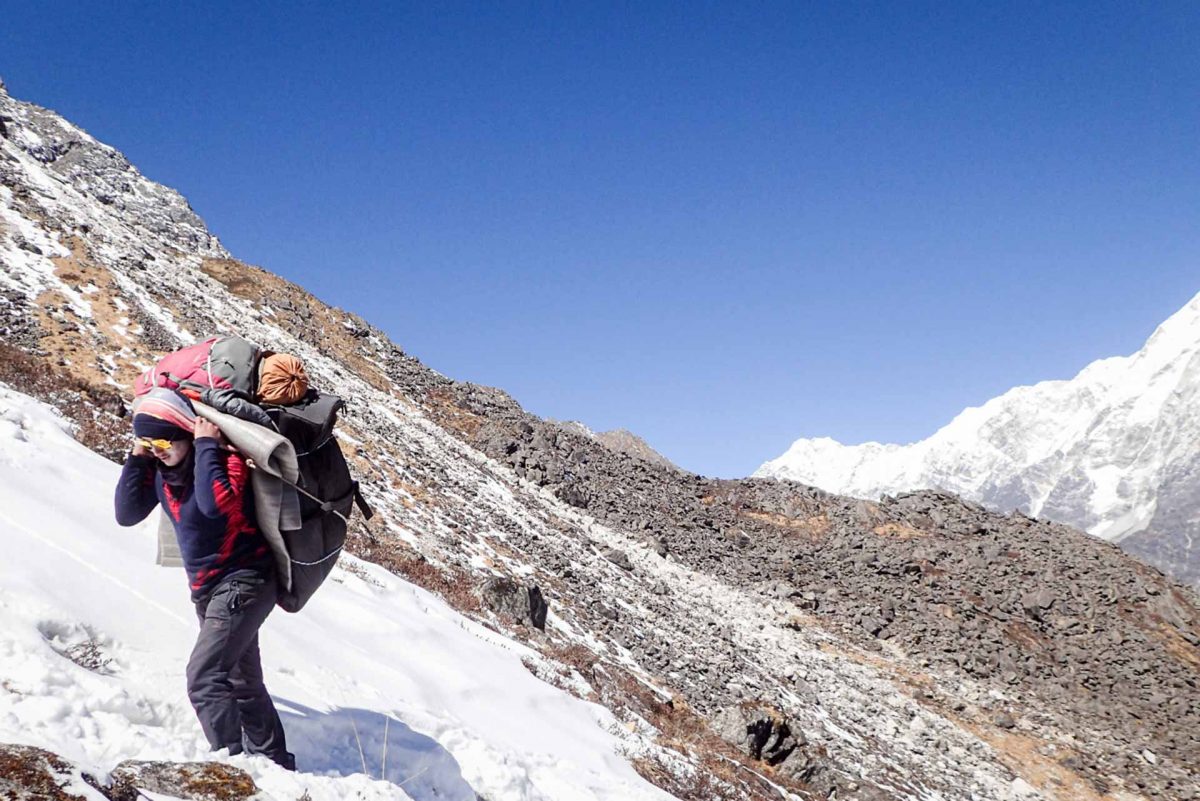
Main photo: Mountain workers, credit: Steve Long

RESOURCES

Mountain Worker Initiative website page
General outline of principle questions and checklists

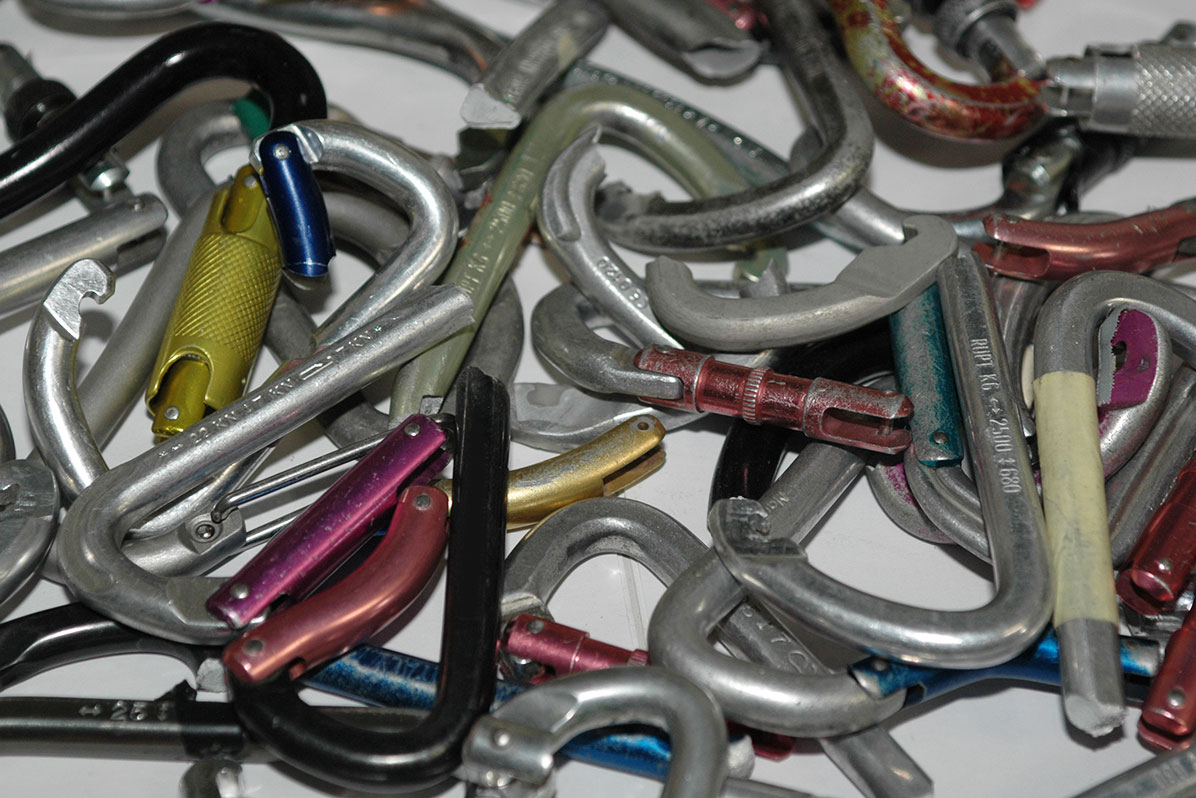
UIAA SafeCom Q&A: Retiring Carabiners

The UIAA – International Climbing and Mountaineering Federation – regularly receives questions related to safety topics. The UIAA Safety Commission, with support of other UIAA Commissions and experts, has published a series of articles answering common questions with the objective of making them available to the wider climbing community.

The latest question is:

I have read with great interest your safety advice article about when to retire equipment. But one question I did not see addressed is about dropped carabiners. For example, if a connector is dropped from 10m onto a rock and has no visible signs of damage, should it be retired? Is there a rule around when to retire?

UIAA Safety Commission:

This question raises some additional related questions that should be considered before coming to a conclusion:

1. Should how big a drop be an indicator for retiring an item?

For example, if I drop a carabiner to the ground when clipping it to my harness, that is a 1-meter fall. Surely not an issue? What if my bag falls to the ground from a car roof rack?

2. We need to reiterate that buying second hand climbing gear is extremely risky, because you do not know its full history. Where has it been stored? How many times has it been dropped?

3. Also the importance of the safety standards need to be stressed, so at least you know that when you purchase an item the chance of manufacturing flaws has been minimised, and batch recalls can also be made in the rare cases of a flaw becoming apparent.

The issue of microscopic damage is frustrating. However it is a worthwhile discussion to consider and benefits from a response. There has been discussion among climbers about this for a long time and unfortunately many opinions out there are not based on science.

The material used in carabiners is a complicated. It is strain rate sensitive – so while it could handle a fair amount of strain (distortion) at low speed without cracking, a high-speed impact is much more likely to result in fracture. In other words, an impact from falling a great height onto rock is likely worse than catching a climber’s fall where the rope and other mechanisms spread out the load over time. Aluminium is difficult to inspect with the naked eye for cracks, whether caused by impact or Stress Corrosion Cracking (SCC). Furthermore, aluminium is susceptible to SCC from chlorides. From results analysed by the UIAA, it was shocking how little needed to be present. Read more about the UIAA’s work on corrosion here.

One of the key concepts that we can convey here is that nothing can be guaranteed. It is perhaps better to talk about the risks and the redundancy. A carabiner can very well could get a microfracture from falling. At waist level there are really low odds of it happening, however for example, dropping it from 30m onto granite would have a much higher chance of developing fractures.

Things to consider:

· There is NO guarantee the carabiner is undamaged no matter the dropped height

· Damage is often invisible without dye penetrant, conductivity, or ultrasonic inspection

· Accumulation of suspect carabiners and of potential damage to individual carabiners from multiple drops erodes confidence in redundancy

· Some pieces of gear are more or less redundant than others, and thus tolerate less uncertainty in their strength

· Be wary of buying second hand (used) equipment because you do not know the usage history and not all damage is visible

· The safest choice is always to replace suspect gear

So the rule as to whether to retire a dropped carabiner. The UIAA Safety Commission can only advise on what might be involved in that decision, and remind that the safest choice is to replace suspect gear. Ultimately, climbers need to make their own risk decisions. Read more about the UIAA’s guidance on buying climbing gear.

Ask UIAA SafeCom

To submit a question to be addressed by the UIAA Safety Commission please click here.

Previous questions

Suncream and climbing gear
Rope testing
Half ropes
Bolts near edges
Figure-eight knots
Disinfecting climbing equipment
Static and semi-static ropes

Main photo: Courtesy of Lionel Kiener

UIAA COVID-19 COMMITTEE GUIDELINES

Following its online meeting held on 7 December, the UIAA Covid-19 Committee is recommending the following guidelines.

While the Covid-19 situation continues to be complex and different from region to region, the UIAA – International Climbing and Mountaineering Federation – recommends that its members continue to encourage climbers and mountaineers to:

Benefit from national Covid-19 vaccination and booster programmes.

  • Adhere to all prevailing national and regional Covid-19 rules and regulations.
  • Comply with all preventive measures – whether in the mountains or in dedicated facilities (social distancing, downloading Covid passports or apps, not mixing with other people or groups unless in full compliance with the rules in place).
  • Keep climbing and mountaineering responsibly.
  • Furthermore, the UIAA recommends that its members continue to promote national vaccination programmes, Covid-19 resources, and related access information.

The UIAA Covid-19 website page can be found here.

Mountain Worker Initiative: An Update

In February, the UIAA launched the Mountain Worker Initiative (MWI), guided by its Mountaineering Commission, to promote ethical trekking and mountaineering practices worldwide with a focus on the lives of mountain workers. The idea to form this initiative is inspired by the agency behind The Porter: The Untold Story at Everest. In March, a dedicated webinar was held to kick-off this new project. Details on the background of the initiative and its mission are provided below.

Throughout the past seven months, meetings have taken place between the founders of the MWI project, the UIAA, national UIAA member associations and stakeholders. The Initiative will seek to answer the following three main questions:

  • Are mountain workers getting a fair day’s pay for a fair day’s work?
  • Are adequate working and living conditions in place?
  • Do organisers provide insurance or are adequate compensation arrangements for mountain workers?

A general outline of principle questions and checklists has been produced in the document UIAA Mountain Worker Initiative. The Initiative aims to begin efforts in Nepal in collaboration with the Nepal Mountaineering Association and others. The idea being that a set of national-specific guidelines for Nepal can be created using this framework as a guide.  Efforts in Nepal are intended to begin in January and regular updates will follow.

The UIAA offers a set of relevant questions to all UIAA members as the Initiative’s goal is to improve mountain worker welfare worldwide. The UIAA is committed to working with national governments and stakeholders to develop the project further.

If you are interested in aiding the process in your country, please contact the MWI group. At a UIAA Office level the project is being led by Nathaniel Menninger.

Further details about the project can be found here. This page also offers the option to support mountain workers through a fundraising link. All funds will directly support the MWI’s efforts to help create a system that will improve the lives of mountain workers. Complete transparency is offered and regular updates will follow.

Background

The UIAA has always acknowledged that the inhabitants of mountain areas all over the world have made a decisive contribution to the development of mountaineering and mountain tourism. This has been the case from the initial development of mountain sports in Europe and North America right through to the current situation in Asia, Oceania, Africa and Central and South America. On the other hand, adventurers, climbers, mountaineers and travellers have generated income and have contributed to improved living conditions in mountain areas ever since.

Unfortunately, and too often, mountain workers are not treated fairly when it comes to remuneration, safety and living/hygiene standards, although their role is an essential part of climbing, mountaineering and mountain tourism. Furthermore, they have enormous responsibility towards their clients, the environment, their own and their client’s safety.

Consequently, the UIAA has initiated a process in an effort to improve fair treatment of mountain workers on a global level. With this in mind, the UIAA is proposing and promoting a set of principles, questions and checklists for climbers, mountaineers, member associations and the mountain tourism industry.

The basic idea is to encourage self-responsibility at all levels and to help national and regional authorities and stakeholders develop a set of norms to ensure and improve ethical and fair treatment of mountain workers globally.

Mission
    • To create awareness for authorities, travellers, climbers and mountaineers, clubs, member federations and the mountain tourism industry of problems related to local support workers’ fair treatment, compensation and workplace health and safety.
    • To offer guidance through a general framework of principles, questions and checklists around which individuals, organisers and authorities can assure themselves that good ethical principles are applied for local support workers. That they are treated fairly and equitably and are able to make a decent living for themselves and their families.
    • To motivate all parties to continuously monitor and improve the mountain workers’ situation in all parts of the world.
    • To regularly communicate on best practice and progress on UIAA communication platforms, through UIAA’s member federations and through international media.
Resources

Mountain Worker Initiative website page
General outline of principle questions and checklists

Webinar

THE UIAA ALIGNS WITH OTHER SECTOR LEADERS TO SIGN THE GLASGOW DECLARATION ON CLIMATE ACTION IN TOURISM

The UIAA – International Climbing and Mountaineering Federation  – announced today that it has become a signatory and launch partner of the Glasgow Declaration on Climate Action in Tourism.

The Glasgow Declaration on Climate Action in Tourism unites travel and tourism behind a common set of pathways for climate action, aligning the sector with global commitments and catalysing collaborative solutions to the many challenges facing businesses and destinations globally. The Glasgow Declaration encourages the acceleration of climate action in tourism by securing commitments to reduce emissions in tourism by at least 50% over the next decade and achieve Net Zero as soon as possible before 2050.

The Declaration was officially launched at the UN Climate Change Conference (COP26) on 4 November 2021. The information about the launch event is available here.

“This is a significant day for the UIAA and its work in sustainability on behalf of the climbing community. We are delighted to have become a signatory and launch partner of this landmark agreement,” reflected UIAA President Peter Muir.

“Many of the UIAA’s activities and that of our member federations centre on recreation and are tourism-related,” explained Dr Carolina Adler, UIAA Mountain Protection Commission President. “We are very pleased to have become a signatory of this agreement. This of course aligns with our own commitments under the UNFCCC’s Sports for Climate Action, and so we see these pledges as being compatible and mutually reinforcing.”
The full list of signatories can be found here.

As a signatory of the Glasgow Declaration on Climate Action in Tourism, the UIAA has committed to aligning its actions with the latest scientific recommendations, so as to ensure its approach remains consistent with a rise of no more than 1.5°C above pre-industrial levels by 2100. It also has agreed to deliver or update climate action plans within 12 months, align plans with the five pathways of the Declaration (Measure, Decarbonise, Regenerate, Collaborate, Finance), report publicly on an annual basis, and work in a collaborative spirit, sharing good practices and solutions, and disseminating information.

The Glasgow Declaration on Climate Action in Tourism brings together the latest research and global expertise to galvanise climate action. It will be hosted within the One Planet Sustainable Tourism Programme’s website, supported by Recommended Actions for tourism stakeholders across the world to consider as part of their action planning, alongside other resources.

As the declaration states: “A just transition to Net Zero before 2050 will only be possible if tourism’s recovery accelerates the adoption of sustainable consumption and production, and redefines our future success to consider not only economic value but rather the regeneration of ecosystems, biodiversity and communities.”


The need for a globally consistent approach for climate action in tourism has been made clear, notably through research into CO2 emissions carried out by UNWTO/ITF and released at the UNFCCC COP25 in December 2019. This showed that transport-related emissions from tourism were forecast to increase by 25% by 2030 from 2016 levels, against the current ambition scenario.

In 2020, the One Planet Vision for a responsible recovery of the tourism sector was adopted with the aim of emerging from the COVID-19 crisis both stronger and more sustainable. Climate action is a central element of the Vision, which calls for monitoring and reporting CO2 emissions from tourism, promoting the introduction of science-based targets, accelerating the decarbonisation of tourism operations, and engaging the tourism sector in carbon removal.

About the One Planet network Sustainable Tourism Programme

The One Planet Sustainable Tourism Programme has the overall objective to enhance the sustainable development impacts of the tourism sector by 2030, by developing, promoting and scaling up sustainable consumption and production practices that boost the efficient use of natural resources while producing less waste and addressing the challenges of climate change, loss of biodiversity and pollution. The Sustainable Tourism Programme is part of the One Planet network, a multi-stakeholder partnership to implement SDG 12 on Sustainable Consumption and Production.

https://www.oneplanetnetwork.org/programmes/sustainable-tourism

For further details about the UIAA’s activities at COP26 please click here.

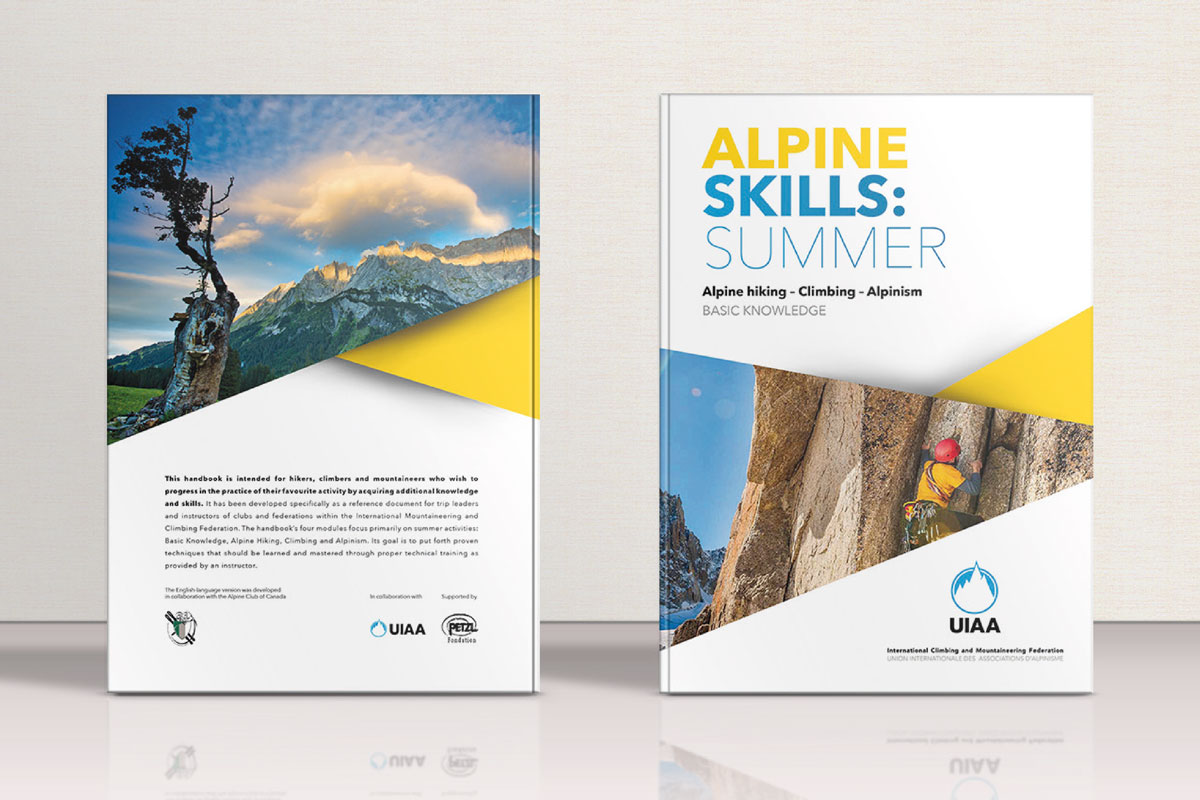
MEMBERS INVITE TO REGISTER INTEREST FOR SECOND EDITION OF ALPINE HANDBOOK

Under the guidance of Steve Long, President of the UIAA Training Panel, and Stéphane Lozac’hmeur, Petzl Foundation, the UIAA Office is currently working on publishing the second edition of the Alpine Skills: Summer Handbook in English.

A complete rework both regarding content and graphic design can be expected. The UIAA Office has produced an online form where member federations can register interest. Based on this non-binding feedback, the UIAA will have a clearer idea about how many books should be produced. In a next step, the graphic design and the print production will take place. In parallel, the member federations will be asked to place their orders.

Delivery of the new Alpine Handbook is scheduled for spring 2022.

For further questions please contact the UIAA Office.
Members interested in ordering print copies can do so here. Any members who express an interest will be contacted by the UIAA Office closer to the publication date to confirm orders.

A recent article also provided an overview of the current progress made on translations produced by UIAA member associations and The Petzl Foundation of the Handbook.

The visual displayed is a draft mock-up of the new Handbook.

Review: UIAA General Assembly 2021

The UIAA – International Climbing and Mountaineering Federation – held its annual General Assembly from 22-23 October. For the second year running the event was held online. A total of 128 delegates from over 71 member associations representing 56 countries attended.

The 2021 General Assembly marked a year since Peter Muir (Alpine Club of Canada) became the federation’s 14th President. Muir, head of a seven-strong Executive Board (EB), assessed the progress made over the past twelve months:

“As I wrote in my annual President’s message, I believe that the UIAA is based on sound principles and a common passion. Over the last year, the Executive Board has been assessing where we are at and what issues we have in order to establish a baseline to measure our progress over the next three years. These assessments are always work in progress. During the General Assembly we will address some common themes. These are – communication, our aim is to be smoother across our various levels and structures and introduce new ways of approaching meetings; an increased focus on the Strategic Plan in particular its goals. It is a very ambitious Plan, so the focus is on narrowing down key goals, and focusing on two-three priority tasks per Commission; assigning responsibilities and clearly defining who is carrying out tasks and ensuring a good pace in our activities while guided by our Articles of Association to take the time required when needed.”


Elections

The main election activity was confined to representatives of the Management Committee:

Management Committee newly-elected

Juan Jesús Ibáñez Martín, FEDME (Spain), Largest Continental Representative
Paul Carstensen, MCSA (South Africa), Continental Representative – Africa
Willy Montenegro, FEACH (Chile), Continental Representative – Central & South America

Paul Carstensen succeeds Greg Moseley whose term with the Management Committee came to an end. Greg Moseley’s work with the UIAA is the focus of a recent volunteer series article. The UIAA congratulates all new MC members on their elections and thanks Greg Moseley for his support.

Management Committee re-elected

Stuart Gray, NZAC (New Zealand), Continental Representative – Oceania

Pierre Humblet re-elected as Court President. All existing Court members re-elected – Franz Stämpfli, Marco del Zotto and Denis Poncelin.

In terms of membership, the UIAA continues to represent 90 member associations in 67 countries.

Guests at the GA included representatives from the UIAA’s international observer members – the International Slackline Association, the International Skyrunning Federation and the International Federation of Mountain Guides Associations – The Petzl Foundation and former UIAA President Frits Vrijlandt.

Executive Board Working Groups

One of the first accomplishments of the current EB was the creation of a number of Working Groups (WGs) to guide the UIAA in the following areas: Commissions, External Relations, Internal Relations, Governance, Finance & Audit and Communication. Below is a brief overview of their findings to date:

Commissions WG: This Working Group has met with all Commission Presidents and attended several Commission meetings. On the basis of these meetings, it has produced a report making a number of recommendations to the Management Committee.

These include:

  • The need to improve communication and strengthen the two-way relationship between the Executive Board, Management Committee and Commissions
  • Consider granting independent Commission status to the Access WG
  • Consider granting independent Commission status to the Training WG
  • Proposing that the Legal Experts WG has an independent status outside of the Mountaineering Commission in order to support the UIAA as a whole more closely

Its next steps include consultation with Commissions, developing a menu of activities, defining specific task list descriptions for each Commission and presenting findings for MC approval.

External Relations WG: This WG has identified and evaluated the UIAA’s 50+ external relationships and is in the process of determining which ones are a priority and further developing partnerships in adventure tourism/travel, sustainability and other multinational federations.

Internal Relations WG: Work is underway with Continental Representatives (CRs) to create a task description for CRs and to work at CR level to strengthen relationships with existing and future members on each continent, with the goal of further developing the UIAA’s continental structures.

Governance WG: Is in a process of assessment. Its role is to be a watchguard for governance and ensure that the UIAA is properly equipped to deal with any issues and implement any changes where required.

Finance WG: Activities have focused on closing out the 2020 accounting year, the implementation of a new accounting software as well as developing the forecast for 2021 and budget for 2022. This active group has also set budget planning guidelines to standardise the budgeting process of Commissions as well as developing more defined Standard Operating Procedures.

Communication WG: Is primarily focused on the distribution of information to members and the wider climbing community. Plans include the further development of communication channels, upgrades to the UIAA website, enhancements to the UIAA Annual Report, supporting Commissions in developing their own publications and scoping potential new information products to offer UIAA members.

Strategic Plan

The 2021-2024 UIAA Strategic Plan (SP) was approved at last year’s GA. UIAA General Secretary Lode Beckers presented an update twelve months on.

The overarching focus of the SP is the question of providing the right benefits to members and ensuring the UIAA is clear on identifying what those benefits are.

This will be guided by the SP’s three key objectives:

A recent survey was conducted among EB/MC members to help define priorities and eliminate any confusion on objectives.

From the survey’s findings, the areas of consensus was:

  • The SP’s objectives are adequately defined
  • There is a need for the EB/MC provide clearer guidance to Commissions
  • Mountain safety is a core responsibility of the UIAA
  • Offering guidance on global access is a key task of the UIAA
  • The UIAA has a role in advocating on behalf of its members
  • Unit member status should be considered for competition sports

Lowest consensus:

  • Definition of SP values could be improved
  • The role of the UIAA in organising competition sports

The UIAA SP remains an ongoing process and further updates will be communicated over the coming months.

Panel Discussions

On the first day of the GA, a number of panel discussions were held to tackle subjects close to the UIAA’s Strategic Plan and membership.

These included:

Panel 1: Sustainability, Sport & Safety Panel on Climate Change discussing:

  • The role of UIAA advocacy on the international stage
  • UIAA Strategic Plan synergy with the UN framework on climate change
  • Annual UIAA Carbon Footprint Reports: method, results, tools and recommendations
  • Examples from member federations: how to tackle climate change, how to measure, limit, offset impact?
  • Impact of climate change on climbing and mountaineering practices, notably in the fields of access, safety, equipment, routes and mountain medicine

Panel 2: Safety & Sport Panel on Commission Projects and Covid-19 Committee Activities:

Panel 3: Sustainability & Sport Panel on Commission Projects:

  • 2020-2021 UIAA Mountain Protection Award: A reveal of the 24 candidates, an explanation of the Award evaluation process and presentation of the Award ceremony to be held as a webinar, in conjunction with the project’s main partner Bally, on Friday 3 December, 1400 – 1530.
  • UIAA Mountain Worker Initiative: A project launched by the UIAA this year to support mountain workers, an update on its progress and the release of dedicated guidelines. Further details will be published on the UIAA website shortly.
  • UIAA Alpine Handbook new editions: An overview of the work underway on a new English edition, how members can order copies and on the continued translations.
  • Youth Innovation Panel: An overview of the UIAA’s future projects in the field of youth development .
  • UIAA Access Database: Details on the progress of the launch of a UIAA Access Database. This initiative follows the successful launch of the new UIAA Training database earlier this year. Members are invited to register for accreditations and create their own accounts.

The panel discussions can be viewed as part of a YouTube replay GA of the here.


Day 1: 2021 UIAA General Assembly

Day 2: 2021 UIAA General Assembly

A more in-depth review of each panel discussion will be produced in the coming weeks and feature as part of the 2021 UIAA Annual Report.

Upcoming General Assemblies

The 2022 UIAA General Assembly is scheduled to be held on Saturday 29 October in Banff, Canada and hosted by the Alpine Club of Canada. Trabzon, Turkey (Turkish Mountaineering Federation) is set to host the GA in 2023 and Malta (Malta Climbing Club) in 2024.

Upcoming Mountain Network Series events

The UIAA will host its third Mountain Network Series event of 2021 on Wednesday 17 November. The topic will be ‘Mountain Women’ and the webinar built around content from Herstory, a series of short films about the lives of different female climbers. Full details here.

The fourth and final UIAA Mountain Network Series event of 2021 will take place on Friday 3 December (1400-1530 CET) in the form of the UIAA Mountain Protection Award prizegiving.

Video Content

During the General Assembly, a number of videos were played. Members can access embed codes from the links below.

Bally Peak Outlook Series

UIAA & Mountain Water

UIAA Mountain Protection Award Promo (2021)

Sustainable Summits Promo 2021

International Skyrunning Federation: World Championships

Herstory


SAVE THE DATE: MOUNTAIN WOMEN WEBINAR

The UIAA will host its third Mountain Network Series event of 2021 on Wednesday 17 November. The topic will be ‘Mountain Women’ and the webinar built around content from Herstory, a series of short films about the lives of different female climbers.

The 90-minute webinar will be held at 19:00 CET (find your time link) and includes panel discussions covering the following topics:

The making of Herstory – inspiration behind the films, choosing the profiled climbers, breaking stereotypes
Women Mountain Guides – Focus on women climbing, mountaineering training, and becoming mountain guides
Women’s Health in the Mountains – what needs to be considered? what does research say? Details on upcoming UIAA Medical Commission releases
Global Sports Mentoring programme – what is it? how can one find more info?

Panellists:

Marija Andjelkovic, Serbia, UIAA Anti-Doping Commission President and co-author of upcoming revised UIAA recommendation on women’s health in the mountains.
Ilina Arsova, North Macedonia, mountaineer, environmental activist and artist, creator of Herstory and feature of one of the movies.
Juliana Garcia, Ecuador, First female IFMGA guide in Latin America, and former President of IFMGA commission of Ecuador.
Lenka Horakova, Czech Republic, UIAA MedCom member and co-author of upcoming revised UIAA recommendation on women’s health in the mountains.
Dr Sarah Hyllier, USA, Director of the Center of Sport Peace and Society, University of Tennessee and initiator of the Global Sports Mentoring Program.
Uta Ibrahimi, Kosovo, first person from Kosovo to Climb Mount Everest, only woman from the Balkans to climb 6x8000m, aiming to complete 14 x 8000m peaks – featured in Herstory movie.
Samar Khan, Pakistan, Seven Summits aspirant.
Tashi and Nungshi Malik, India, First twins and siblings to scale the Seven Summits and complete the Explorers Grand Slam and the three pole challenge.
Argyro Paphatanasiou, Greece, First Greek woman to climb 8a-8b+, featured in Herstory movie.

The webinar, streamed live on Zoom and YouTube, will be hosted by Tarquin Cooper and chaired by UIAA Executive Board member Françoise Jaquet.

The fourth and final UIAA Mountain Network Series event of 2021 will take place on Friday 3 December (1400 CET) in the form of the UIAA Mountain Protection Award prizegiving.

Register & Follow

To register for the event on Zoom please click here.

The event will also be available live, and as a replay, on YouTube:

Mountain Network Series Archive

The second one was on the late Ueli Steck: UIAA Mountain Network Series – Ueli Steck: Memories of an Exceptional Mountaineer – YouTube

Main photo credit: Vanessa Beucher

UIAA RELEASES STANDARD 157:
AVALANCHE RESCUE PROBES

Years of extensive research and development by the UIAA Safety Commission continue to come to fruition.

In July, the UIAA released Standard 130 Load Sharing Devices and has recently published a Standard dedicated to Avalanche Rescue Probes, Standard 157, the first of its kind worldwide.

Following six years of hard work, the Standard was officially approved at the UIAA Safety Commission Plenary Session in June 2021. Since the 1960s the UIAA Safety Commission has developed standards for 25 types of safety equipment, including helmets, harnesses and crampons. These Standards are regularly updated and checked to ensure they conform to changes in environment, equipment, technology and more.

During the development of the Standard, several potentially representative mechanical laboratory tests were evaluated. For the final version of the Standard, the most significant ones were selected. Credit: Manuel Genswein collection

Standard 157 specifies safety requirements and test methods for avalanche rescue probes used in rescue and snow safety work. Probes are mainly used for the following tasks:

  • pinpointing of buried subjects following a search with electronic search devices which allow to find an approximate point of shortest distance on the snow surface;
  • surface probing techniques usually applied in probe lines to find buried subjects who are not searchable by any other means;
  • in case of avalanche rescue, once a probe hit has been achieved, the probe stays in the debris and acts as an important visual guide for the rescuers during the excavation effort; and
  • in snow safety work to measure snow depth and as a tool to facilitate snowpack stability measurements.

The newly released Standard 157 on avalanche rescue probes, together with the Standard 156 on Avalanche Rescue Shovels, ensure that users can rely on their gear when every minute counts.

Field test participants applied rescue relevant probing techniques. During the testing, great attention has been paid to capture findings concerning ergonomic and safety aspects of each probe. Credit: Manuel Genswein collection

The six-year development of the Standard was led by the Italian Alpine Club (CAI), under a collaboration agreement with UIAA SafeCom.

The following members of the UIAA Safety Commission and manufacturers participated in the consensus meetings for the development of Standard 157:

Manufactures: ARVA NIC-IMPEX, Backcountry Access, Black Diamond, Camp, Kong, Mammut, Oberalp / Salewa, Ortovox
UIAA Safety Commission delegates from the following UIAA member associations: International Commission for Alpine Rescue – International (ICAR)
UIAA Accredited Labs: TÜV SÜD Laboratory, Germany
Support: UIAA Office

The final consensus was reached in a general UIAA SafeCom meeting, in collaboration with all participating UIAA member federations and manufacturers.

Further Information:
UIAA Safety Standards
Standard 157

Main photo: Participants of different user groups, from multiple countries, exposed the probes to a strict field-testing protocol with the aim of identifying rescue-relevant thresholds for the requirements of the Standard. Credit: Manuel Genswein collection


Compagnie des Guides de Chamonix celebrates 200 years

On 15 August 2021, the Compagnie des Guides de Chamonix celebrated its 200th anniversary. The first recognised mountain guides association was found by the town council of Chamonix on 24 July 1821.

The history of the Compagnie des Guides de Chamonix is a founding chapter in the history of both Alpinism and mountain guide profession. The celebrations provided an occasion to evoke the great stages of its existence and to shed light on the future of the whole profession and to better defend its prerogatives. But also to affirm an identity, a culture that shares the values of mountaineering as it was recognised as an Intangible Cultural Heritage by UNESCO in 2019.

Details on the programme of festivities can be found here. The Compagnie des Guides de Chamonix also released a commemorative book and launched a number of environmental initiatives to mark the occasion, including a study into how global warming has impacted the guiding profession.

In recognition of the celebrations, Olivier Greber, President of the Compagnie des Guides de Chamonix wrote: “We would like, with all mountaineers, to make this historic event a strong platform to perpetuate the future of this unique profession.”

The UIAA was represented at the celebrations by Françoise Jaquet, Executive Board member.