Category: Norway

Reversing autobelay accidents in Norway

How Norway dealt with an alarming wave of autobelay accidents.

Autobelays are a fairly recent addition to Norwegian climbing gyms. Their introduction was followed by a surge of accidents, many of them very serious. Fortunately, the latest accident data indicate that countermeasures are effective. The following report comes courtesy of the Safety Committee of the Norwegian Climbing Federation (NCF).

The first incident of this type in Norway was registered back in 2015, where a climber fell off a route after forgetting to clip in. He fell seven meters to the floor, sustaining complex fractures in both legs and a spinal fracture. Since then we have seen a steadily increasing number of accidents like this, with severe and complex fractures in the legs, pelvis and back. In January 2024, the most serious accident to date happened when a climber forgot to clip in and fell to the floor from 12 metres. He survived the accident but is permanently bound to a wheelchair.

In each case it is easy to point fingers at the individual climber who has forgotten the only thing that must be remembered – to clip in. Climbers are also quick to blame themselves for forgetting something so fundamental. But if we take a broader perspective, the figures indicate that we have developed and are using a system that invites us to make life-threatening mistakes. If we, every time an accident occurs, place the blame on the individual climber who has made a mistake, how can we build a healthy safety culture? If so, we would ignore our responsibility to deal with the inherent risk, and would not progress with the safety work. No climbers come to the climbing gym expecting to fall and hurt themselves. If we accept this as our starting point, we must treat mistakes made by the climbers as symptoms of a deeper problem and act accordingly. The total numbers of accident-inducing personal mistakes indicate that we are facing a system failure. Thus, we must change our approach and attitude to the problem of autobelay climbing.

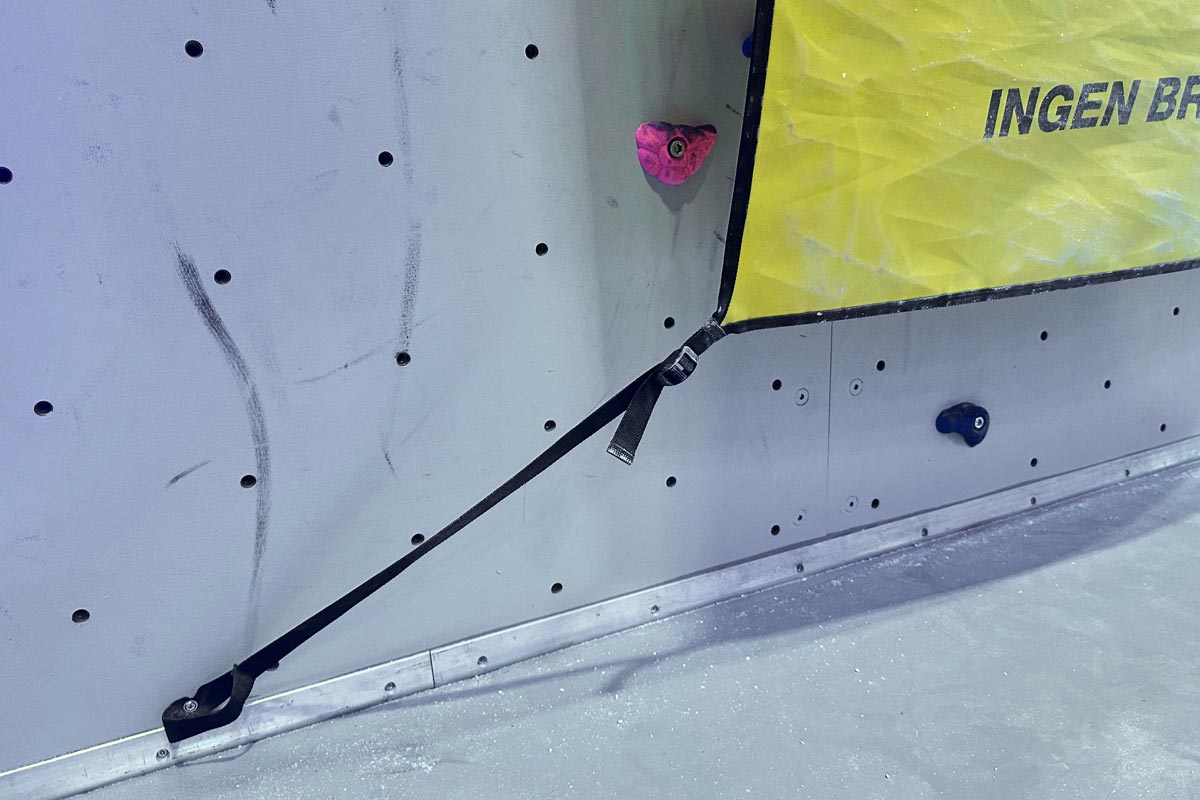
All square belay gates on a separate, dedicated section of the walls and nowhere to start climbing without connecting the autobelay carabiner. Credit: NCF

The alarming increase in accident numbers led the Safety Committee of the Norwegian Climbing Federation (NCF) to discuss what could be done to prevent climbers from forgetting to clip in. A thorough examination of relevant incident reports in our database identified some common factors in the autobelay setups in climbing gyms. The data indicated that a removal of those factors could have prevented the accidents from happening. Thus, we saw the need to shift the focus from personal mistakes to the parts of the autobelay setup that provoke such mistakes.

Following the examination, the NCF published new “National Guidelines for Autobelay Climbing” on 1 March 2024. The recommendations include measures such as using rectangular belay gates instead of triangular ones, removing all possibilities of attaching the autobelay carabiner any other place than in the belay gate, setting aside completely separate wall sections for autobelay climbing, plus many more.

Many gyms, themselves highly concerned about the accident numbers, were quick to implement the guidelines and our 2024 statistics show a striking decrease in the number of climbers forgetting to clip in. Only seven such incidents were registered throughout the year, and three of those happened before the new guidelines were published. Thus, we are confident that the guidelines have had a positive effect and have contributed to reducing the number of autobelay accidents.

Diagram: Total number of registered autobelay incidents in Norway where the climber forgot to clip in. The numbers have been steadily increasing from the first one was registered in 2015 until 2023 when 20 such incidents were registered. In 2024 the trend was broken by a sharp drop in incident numbers.

The NCF guidelines for autobelay climbing are translated in English and can be downloaded here. The Norwegian version can be viewed here.

About this Series

This article forms part of a series of case studies derived from reports submitted to national accident and near miss reporting databases which are included in the UIAA’s international directory of accident data reporting systems. For more information on the different databases, and to view, additional case studies, click here.

Special Report: Sharp edges and rope cuts

A document on Sharp Edges and Rope Cuts, produced in collaboration between the safety commissions of the NKF/NCF and the UIAA has been published.

This is an English language translation of the original ‘Skarpe kanter og taukutt”, produced in Norwegian by the Norges klatreforbund (NKF) / Norwegian Climbing Federation (NCF), a UIAA full member.

Background

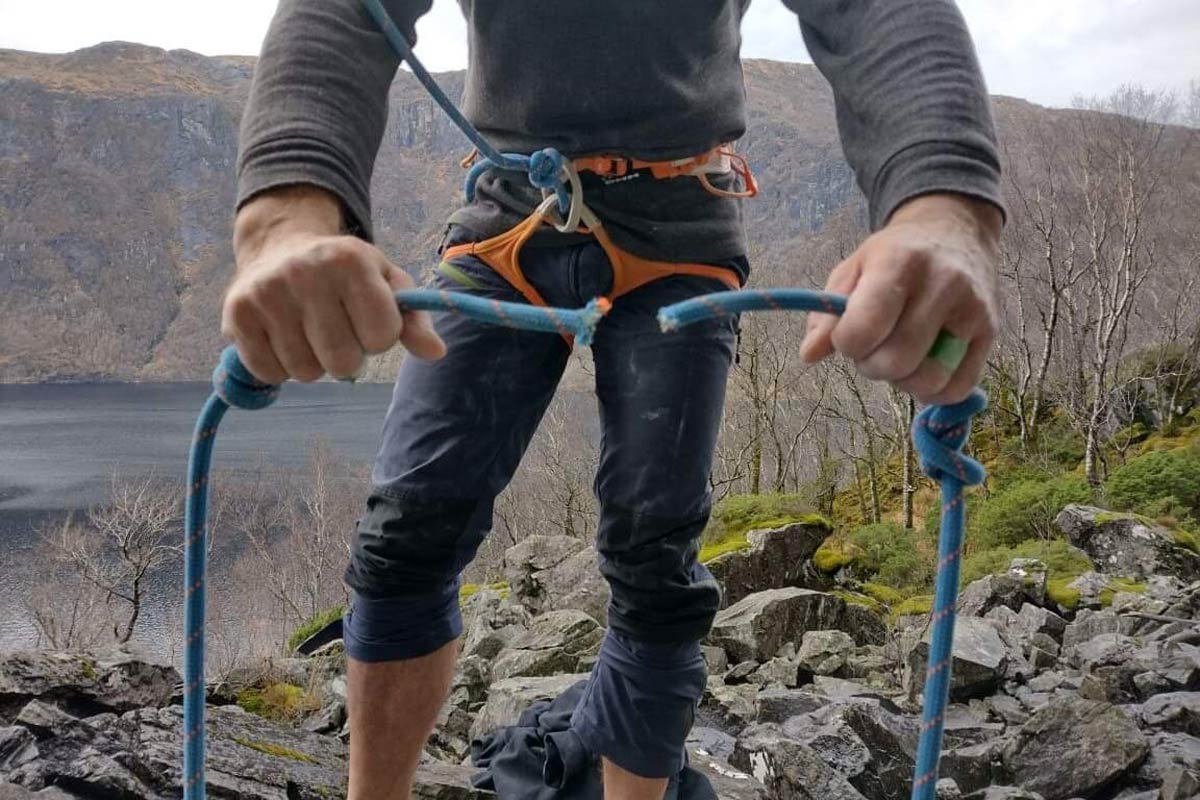
The climbing rope is the backbone of the protection system in sport climbing, mountaineering and ice climbing. If the backbone breaks, climbers find themselves at the mercy of gravity. A fall during roped climbing will very likely cause serious injury or death to the climber.

The paper explores the risks associated with climbing ropes breaking due to contact with sharp edges. It outlines the factors contributing to rope cuts, historical data on accidents, and recommendations for climbers and route developers to mitigate these risks.

This document charts:

  • Requirements for climbing ropes
  • What are sharp edges?
  • What happens when ropes break and cause of rope breaks
  • The impact of sharp edges
  • Rope breaks due to rockfall
  • Non-rock fall rope cuts

The paper also provides a series of real-life rope cut cases studies.

Though rope failures due to sharp edges are rare, they pose serious risks. The study emphasises the importance of awareness, careful route planning, and proper climbing techniques to prevent accidents.

While the UIAA Safety Commission, other related bodies, and climbing equipment and gear manufacturers will continue to explore ways to improve rope resistance to sharp edges, climbers are called to proactively assess and mitigate risks during their climbs.

Download the paper here.
Please note: A minor revision was made to the English version in June 2025.

Translations

French
Spanish

Further Reading

For further details on the UIAA’s work in documenting accident reporting systems, and related recommendations and case studies, please click here.

For information on the UIAA’s resources in climber safety click here.


UIAA launches database of accident reporting systems

A number of UIAA member federations and rescue organisations have established systems to collect data about accidents. Their approaches vary, from gathering of individuals stories for publication, through data collection by online reporting forms to general statistics compiled by the rescue services. Some efforts are community-driven, some organised by climbing federations, and some by public services. Altogether a substantial amount of data is being collected and often put to good use for the benefit of climbing safety, but until now there has been no uniform approach. The UIAA, led by a dedicated working group, has brought together data and knowledge from the national systems that exist, and created an international database.

Version 1 of the database is now online providing information on 18 systems from 15 countries. For each reporting system, information detailed in the database includes scope of the platform, its purpose, a summary from the UIAA about the areas of climbing and mountaineering represented as well as links to reporting results. The database will be subject to frequent updates.

“This is something of a soft launch but after over a year of research, analysis and collaboration with owners of the reporting systems we are delighted that the database is now a live tool,” explains Working Group Chair Stein Tronstad (Norwegian Climbing Federation, UIAA Management Board). “Consolidating information on the international reporting systems known to the UIAA is great progress – and part of the federation’s commitment to establishing a Safety Centre of Excellence. However, it is only the first step in the ambitions of the working group.”

These next steps include:

  • Having collected reporting forms from 12 accident reporting systems, an analysis with respect to types of data collected, reporting protocols, and data usage is now being conducted.
  • Developing a UIAA position paper on accident reporting to argue the need for accident data and address certain concerns regarding liabilities, responsibilities and ethics.
  • Work in progress on a comparative analysis of data from USA, Japan, and Norway with respect to factors such as spatial and temporal distribution of accidents, sex and age of the victims, types of accident, and injuries sustained.

Furthermore, the UIAA will publish a series of articles highlighting case studies from the database. This will include a deeper dive into research and stories already provided by bodies such as the Petzl Foundation (Understanding Mountain Sports Accidents) and the American Alpine Club’s highly informative Prescription («Your monthly dose of accidents in North American Climbing»).

Anyone wishing to provide information about a system not currently listed on the UIAA database can do so by contacting the Accidents Working Group.

UIAA Accident Reporting System

Latest UIAA global members newsletter released

The UIAA has released the latest edition of its global members newsletter.

Produced in collaboration with the UIAA Management Board Continental Representatives, this newsletter provides updates from the UIAA’s 94 member organisations in 72 countries on six continents. Please note that some articles linked are in their original language but in most cases Google offers a translation of the page.

Highlights this quarter include: mountain protection initiatives in Canada, Germany, Nepal and the United Kingdom; collaborative schemes between federations in South America and Europe; rock climbing articles from Hungary and the United States; support for women climbers in Peru and Norway; articles on Kilimanjaro, Everest and a special report on visiting the mountains of Slovenia.

The newsletter can be viewed here. A full archive of newsletters can be found on the following page.

To submit stories from your federation please email news@theuiaa.org.

The next edition will be released in December 2024.