Category: Mountaineering

Cyprus Federation Organises First International Mountain Youth Camp

The first International Mountain Youth Camp of Cyprus Mountaineering, Climbing and Orienteering Federation, C.M.C.O.F took place between 18-23 July 2022, at the Federation’s Mountain Hut, near the village Spilia, at Troodos Mountains. The coordination and implementation of the activity programme was managed by the NGO Active Zone Outdoor, member of C.M.C.O.F., in cooperation with the Federation. The Mountain Youth Camp was also supported by UIAA. Importantly, participants of the youth camp had the opportunity to receive certificate of participation in a Mountain camp, issued by the UIAA.

The camp hosted 29 children and young people with different nationalities and coming from different cities of Cyprus. Children aged between 8-14, participated in a six-day activity programme, that included activities and games aiming to develop team building skills, provide opportunities to get to know the sport of rock climbing, practice hiking in nature trails at the Troodo’s National Park, get to know the sport of Orienteering and the sport of archery. Additionally, the camp programme included art and crafts activities, outdoor activities such as zipline, slackline, bouldering, orienteering activities, problem-solving games, night games, educational activities in order for the participants to become aware of the mountain culture and lots of enjoyable activities. Conclusively, the activity program mainly focused to achieve young people’s interaction with the mountainous natural environment and to develop good practices for mountain protection and respect.

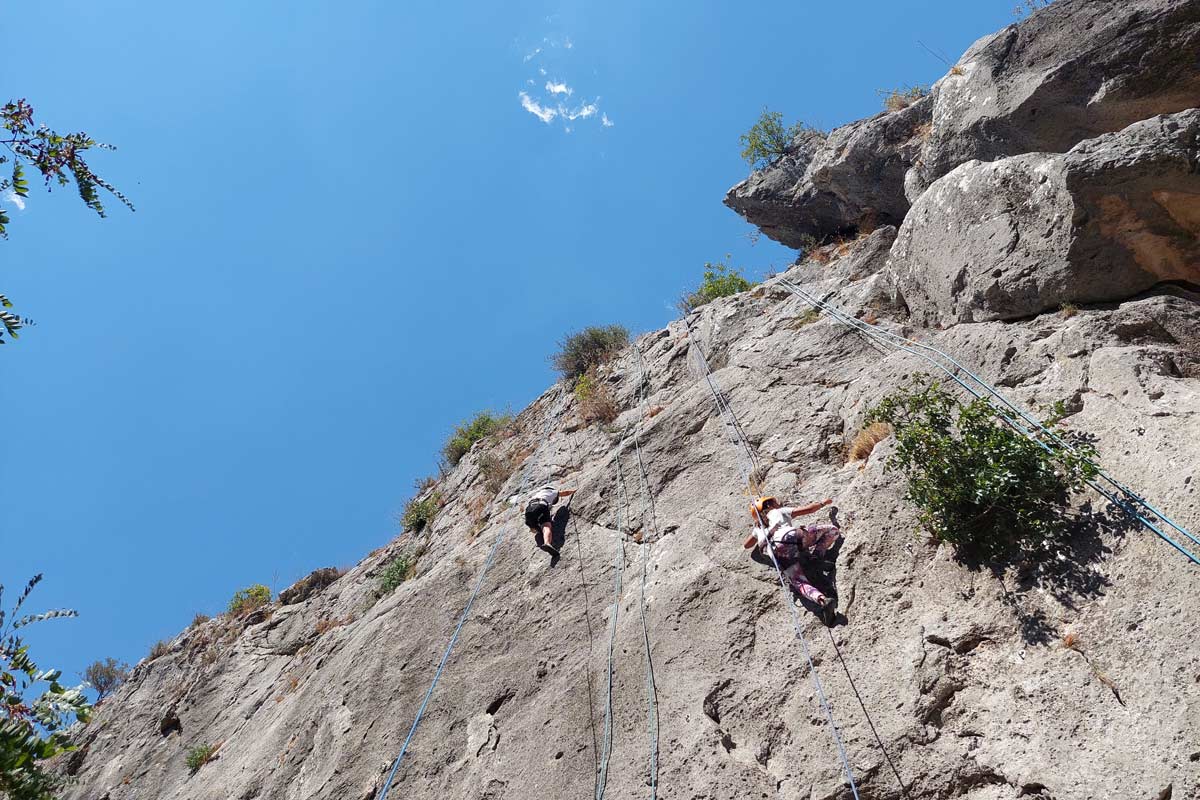
The most unforgettable experience for the participants was getting to know the sport of rock climbing at Kourtelorotsos rock, as well as the workshops and games next to Diarizos river. The interaction with the rocks contributed to the development of participants’ bravery while at the same time, it taught them how to overcome the fears that constitutes an important life skill and an integral part of success. Moreover, rock climbing is considered as the ideal way to impart the basic principles of discipline since discipline and concentration are required from the climbers to complete their goals. To sum up, children and young people leant to focus on their goals, coordinate their arms and legs and remain concentrated in order to complete their goal which was to reach the summit!

Another unforgettable experience for the campers was hiking at the Artemis circular path, as they had the chance to reach the top of Troodos at 1952 metres high, which is one of the most important areas not only in Cyprus but also for biodiversity conservation. The campers had the chance to admire the amazing panoramic view, the enormous over 500 years old black pine tree and rare species of flora and rocks of the area. Campers also discussed with the hiking leaders about the risks of hiking as well as the main climbing principles of mountain hiking practices.

Through personal experience children and young people came to understand the value of mountains and forests and how much humanity depend on them. At the same time, they had the chance to exercise and develop their health and their motor and mental skills. The activities in nature and the interaction with the mountainous natural environment contributed to improve campers’ mental health and wellness and kept them away from screen time. The adventurous character of the activities and team spirit created an atmosphere of widespread enthusiasm, pleasant co-existence, socialising and mutual respect where everyone old and young became a family.

Thanks

It is worth mentioning that during the camping an educational seminar took place under the title ”Practical application in trainers’ pedagogical behaviour in mountainous areas”, by the educator Niki Karoulla.

Special thanks to George Andreou, C.M.C.O.F Technical Advisor of Mountaineering and Climbing Instructor certified by the UIAA, to Andreas Andreou C.M.C.O.F. Technical Advisor of Climbing, to Stephanos Antoniou hiking leader, to Michalis Savvides, secretary of C.M.C.O.F. and president of Orientaction and to Maria Dikomiti, Archery coach of the Federation, for the support and cooperation during the implementation of the 1st International Mountain Camp.

Also, many thanks to the president of C.M.C.O.F. and president of UIAA Youth Commission Pavlos Georgiades for the excellent work regarding the preparation of the Mountain Hut and the valuable support during the camping.

C.M.C.O.F will soon announce thematic events for children and young people at the C.M.C.O.F. Mountain hut and other mountain areas in Cyprus aiming to provide amazing experiences on the mountains. It is worthwhile mentioning, that campers of the 1st camping can’t wait to meet again for new adventures and new experiences.

For more information on the UIAA Youth Commission please click here.

Photo credits: Niki Karoulla


One hundred proud years of FEDME

On 1 August 2022, UIAA founding member FEDME (Federación Española de Deportes de Montaña y Escalada) celebrated its centenary. The celebration was followed by thousands of mountaineers and clubs all around Spain. The UIAA congratulates FEDME on this momentous achievement.

The message below is courtesy of Alberto Ayora, current FEDME President

In FEDME we commemorate in 2022 our centenary under the idea “a year to share”, which identifies our philosophy of opening the federative world to society and sharing with all people who practice mountain sports our values, our objectives and our commitments.


Celebrating one hundred years is a historic milestone for any entity. It is a moment to look back and see how mountaineering sits in Spanish society, how sports challenges have been multiplying, how the facilities have been developed (huts, marked trails, equipped canyons, climbing routes, etc.) for a safer practice, how all the structures and clubs have been integrating greater environmental sensitivity, how it has contributed to the socio-economic development of the rural environment. Today mountain sports and climbing are extremely popular.

The athletes who compete in the mountain specialties are on the podiums, with a presence in both Olympic Games and international championships. The network of trails approved by the regional mountaineering federations, is the largest sports facility in Spain, with a presence throughout the national territory. But the most important thing is the people who make up our federation: regional federations, clubs, technicians and referees, organisers, …


One hundred years are also a time and place to project and build the federation we want and need. We must address the current and future challenges that society poses to mountaineering. This means reflecting, formulating, and developing actions in relation to equality, with the protection of the environment and in defense of the mountains, with inclusive sport, with health, healthy habits, and with the sustainable development of the rural environment in the face of depopulation. But fundamentally to transmit to society the values of mountaineering.

To this end, in collaboration with the regional federations, a series of activities and events to be developed throughout the territory throughout the year have been programmed, which seek to involve the entire federative network and bring the FEDME value to the whole society.


To mark the occasion, many FEDME members climbed a peak and read a common text about the federation’s relationship with mountaineering remembering the many inspirational people behind the federation’s rise and climbing in Spain. There was a special mention for Pedro Pidal, the Spanish climber who made the first ascent of  “Picu Urriellu” in the National Parc of Picos de Europa and was the visionary, defender and promoter of the Spanish National Parcs Law (1916) and first National Parcs declared in Spain, National Parc of Mountain of Covadonga (actual National Parc of Picos de Europa) and National Parc of Ordesa (1918).

Video Message from Alberto Ayora, FEDME President

UIAA STATEMENT ON GLACIER COLLAPSE ON MARMOLADA

The UIAA – International Climbing and Mountaineering Federation – is saddened to hear about the loss of lives and severe injuries sustained following the collapse of a glacier on Marmolada, in the Italian Dolomites on 3 July.

While the cause of the accident is being investigated, the region recently experienced a heatwave and a significant rise in temperatures. The impact of climate change on mountain regions and on the safety of climbers, mountaineers and mountain communities is a core concern for the UIAA.

The UIAA recently created a dedicated Climate Change Taskforce to monitor the UIAA’s own carbon footprint and more widely to:

  • Develop a resource of existing climate plans and environmental guidelines issued by UIAA member federations as foundation for the UIAA’s own use in development and for the information and use of UIAA members,
  • Develop a plan of UIAA participation and advocacy strategy in the world climate change dialogue to define when, where, who and how the UIAA will effectively advocate its positions on climate change

The UIAA is committed to playing a leading role in ensuring both that the impact of climate change on mountain regions is widely documented and to help create the appropriate measures to ensure the safety of all concerned in the face of the increased risk of avalanches, icefalls and melting glaciers.

The UIAA will harness the expertise of UIAA Commissions (notably Medical, Mountaineering, Mountain Protection, Safety and Training) to monitor and re-evaluate certain climbing and mountaineering practices and routes. Findings will be shared with member associations and the wider climbing and mountaineering community.

UIAA releases 2021 Annual Report

The UIAA – International Climbing and Mountaineering Federation – has published its 2021 Annual Report.

Anybody interested in receiving a printed copy can do so by filling in the following form. Please note that there is a limited print run and first priority will be given to UIAA member associations and delegates.


The digital report offers quick access to UIAA news articles, video content and multimedia assets.

Contents of the 2021 Annual Report include:

  • Annual message from UIAA President Peter Muir
  • Executive Review of 2021
  • Review of UIAA General Assembly 2021
  • Special Reports: Focus on UIAA & Covid-19 Taskforce, UIAA & Climate Change and UIAA & Mountain Worker Initiative
  • UIAA Strategy Process 2021-2024
  • UIAA Financial Report
  • UIAA Office, Communication, Sponsorship, Court and Legal Experts Working Group reports
  • Reports from every UIAA Commission (Anti-Doping, Ice Climbing, MedCom, Mountaineering + Access and Training, Mountain Protection, Safety, Youth) as well as Unit Member, International Skyrunning Federation.
  • Reports from the UIAA Continental bodies


An archive of UIAA Annual Reports (dating back to 2009) can be found here.

Download the 2021 Annual Report

MOUNTAINEERING WORLD UNITES IN SKOPJE

Skopje, North Macedonia, became the centre of European climbing and mountaineering when hosting the UIAA Spring meetings from 29 April – 3 May. The event was the first major UIAA in-person gathering since the Covid-19 pandemic began.

In addition to UIAA Executive Board and Management Committee meetings, the General Assemblies of the European Mountaineering Associations (EUMA) and the Balkan Mountaineering Union (BMU) were also held. Collaboration was positive between all three organisations with a number of networking opportunities provided. The event was hosted by the Mountaineering Federation of North Macedonia (FPSM).

Delegates from a number of climbing organisations came together for the official meal organised by the hosts. Credit: FPSM
Special Focus: Climate Change

Collaboration between the three organisations included a special break-out session on Climate Change. All three organisations, and a number of their members, provided updates about their own commitment to tackling climate change and the challenges involved. The topic was also afforded significant time during the UIAA Management Committee meeting as the UIAA considered its immediate priorities. Earlier this year, the UIAA set-up a dedicated Climate Change Taskforce, whose initial brief centres around the following four goals: 

  • Conduct a review of the UIAA’s current carbon footprint including recommendations of defining the included elements and recommending steps to the MC for reducing the footprint to meet the UIAA’s undertakings and reflect its own responsibilities. Based on this analysis, confirm the UIAA’s position in signing the UNFCCC pledge;
  • Develop a resource of existing climate plans and environmental guidelines issued by UIAA member federations as foundation for the UIAA’s own use in development and for the information and use of UIAA members;
  • Develop a plan of UIAA participation and advocacy strategy in the world climate change dialogue to define when, where, who and how the UIAA will effectively advocate its positions on climate change, and;
  • Formulate ideas on how to motivate and assist all UIAA members and commissions to develop action-oriented climate change and sustainability plans.

During the break-out session, a number of themes were addressed.

Peter Muir, UIAA President, admitted that for all international sports organisations the challenges are significant and need to make up for lost time is paramount. One of the considerations for the UIAA will be how to act as an environmentally responsible organisation without impacting on its own ability to operate and serve its members. Muir pointed to the set-up of the Climate Change Taskforce as a fundamental moment for the UIAA and pledged regular updates on its findings and progress.

Josef Klenner, President of the German Alpine Club (DAV)/UIAA Management Committee, addressed the work the DAV has undertaken as one of the leading federations in committing resources to monitor and tackle climate change. Klenner reflected on the DAV’s findings that mobility was clearly the biggest cause of carbon emissions and how the federation was establishing solutions and measures to reduce its carbon footprint in this area. This extends to programmes to encourage its own members to consider how the travel to mountain areas. The DAV’s work will become a standard bearer for many other federations.

UIAA Youth Commission member Mrika Nikçi discusses the role of youth and climate change

Mrika Nikçi, UIAA Youth Commission, raised the subject of how to empower youth to lead action on climate change. Nikçi, 21, became the youngest women to complete the ‘Seven Summits’ in 2019. She witnessed first-hand the devastating retreat of many glaciers. Her views were supported by Jean Miczka, the youngest member of the UIAA Management Committee. Miczka identified the need for federations to run more educational programmes in the mountains akin to the project undertaken by the Swiss Alpine Club which won the UIAA Mountain Protection Award in 2019. Miczka also addressed the need to promote sustainable mountain tourism and to tackle the issue of falling populations in mountain villages.

UIAA Management Committee (in-person & online) during its meeting in Skopje. Photo credit: UIAA

Ingrid Hayek, representing EUMA as Vice-President and the Austrian Alpine Club, provided a passionate speech identifying the challenges for all people to understand the impact they are making and how better to understand our climate offset in tangible terms. Hayek presented information about the goclimate.com website which offers all people the opportunity to measure their impact on the environment. Hayek also detailed the work the Austrian Alpine Club has undertaken in measuring the impact of climate change on glaciers in Europe. This was recently promoted in the UIAA Global newsletter.

Juan Jesús Ibañez Martin, representing both the UIAA Management Committee and EUMA as Vice-President, identified how it is possible to host competition sports while respecting mountain protection. His case study was skyrunning events in Spain where collaboration between national parks and competition organisers has worked effectively and can be a model for other parts of the world.

COMMISSIONS

One of the other fundamental aspects of Spring Meetings, was updated progress from the UIAA Commission Presidents.

Anti-Doping / Marija Andjelkovic

The Anti-Doping Commission continues to fulfil its mandate, ensuring full WADA compliance and providing significant support to the UIAA Ice Climbing Commission and Anti-Doping Commission. Due to the abridged nature of the recent UIAA Ice Climbing World Tour, certain challenges will be addressed in terms of doping controls particularly out of competition testing. The Commission recently held its internal meeting in Belgrade.

Ice Climbing / Carlos Teixeira

A report from the recent UIAA Ice Climbing World Tour was provided highlighting primarily the success of the UIAA Ice Climbing World Championships in Saas-Fee, Switzerland. Another triumph was the European Cup series which allow a significant number of athletes an eventual pathway into World Cup competitions. This model will be replicated more widely on other continents.

Due to Covid-19 the season the programme for the recent season was reduced and further impacted by the cancelling of the World Cup in Cheongsong. The final events of the season in Russia were immediately cancelled by the UIAA following the outbreak of the war in Ukraine.

The Commission is working on delivering the provisional schedule of events for the 2022-23 season and is working closely with the Mountain Protection Commission on the further implementation of sustainability measures in competition.

Medical / Urs Hefti

MedCom recently published details of a women in mountaineering conference it is organising in Pontresina, Switzerland from 10-11 September. Spaces are limited – programme and registration details can be found here.

Following the success of its water safety video, MedCom will shortly release a video on how to prevent altitude sickness. The Commission has two working groups working hard to deliver revised papers on women in mountaineering and advice for travelling with children.

Mountaineering / Peter Farkas

MountCom has invested significant time in the continued progress of the Mountain Worker Initiative (MWI). The latest update can be found here.

A group of MountCom members have worked on an updated to the Tyrol Declaration, notably the areas concerning ‘style’. This is subject to approval from the original authors before being presented for UIAA approval.

Following an MC meeting vote, the Legal Experts Working Group and Training Panel, formerly part of the MountCom, were afforded Commission status (Legal Commission and Training Commission).

Members of MountCom, the Access Working Group and the Training Commission, also spent significant time discussing collaboration on an accident/near miss reporting database.

Mountain Protection / Dr Carolina Adler

The application process for the 2022 UIAA Mountain Protection Award is now open and closes on 31 May. A total of 15,000 euros of prize money is available. The Commission has integrated changes to the distribution of prize money allocation for this year’s Award and criteria for how projects will be assessed. UIAA member associations are encouraged to submit applications.

The Commission continues to work on a significant update to the UIAA’s Environmental Guidelines and remains in close communication with the organisers of the biennial Sustainable Summits conference regarding continued collaboration.

The UIAA Safety Commission held its annual plenary session in Skopje. Photo credit: UIAA

Safety / Lionel Kiener

SafeCom was one of a number of Commissions to host its own internal meeting as well as its plenary session with accredited Safety Label holding manufacturers in Skopje. A separate report will be published shortly.

The Commission will shortly release an animated video showcasing the importance of using equipment bearing the UIAA Safety Label to climbers and mountaineers.

The new UIAA 123 Corrosion categories, a supplement to the UIAA 123 Rock Anchor Standard has been recently put to the test by manufacturers wanting to certify their bolts to SCC / GC or /LC corrosion compliant.  The first bolts have been examined and most passed the test, however there are some that failed, showing that the standard is working. Additional research will be headed by SafeCom after finding issues with the welding in top anchor testings.

Having been impacted by Covid-19, on-site UIAA training programmes are running again. Photo credit: Steve Long

Training / Steve Long

Coming out of the pandemic, a number of training programmes are beginning to flourish again notably the delivery of skills qualifications to the Saudi Climbing & Hiking Federation.

Together with the Petzl Foundation, the Training Commission is also working hard on finalising the revised print edition of the UIAA Alpine Summer Skills Handbook and on delivering its new online database to support the management of members’ skills qualifications.

Youth / Pavlos Georgiades

As travel begins to open up in many parts of the world, the Youth Commission is hopeful it will soon be able to implement its longstanding plans for the restructuring of UIAA events.

One of the Commission’s significant updates was the creation of a Youth Innovation Panel. This working group will closely support UIAA youth camp programmes.

The Commission’s Strategy from 2022-2025 sets targets for national and international camps, describes a training pathway and signposts the development of a communication platform. This group will ensure that the camps take place, oversee their implementation, drive work on the syllabus for the development of UIAA Best Practice Camps, work with the training commission to develop UIAA certification and to collaborate with other UIAA Commissions in support of this strategy.

Skopje, a perfect setting for a productive series of meetings. Photo credit: UIAA

Thanks

Collaboration between Commissions, between the attending organisations and with the hosts the Mountaineering Federation of North Macedonia (FPSM) proved fruitful. The UIAA thanks for organisers for the hosting a successful spring meeting and for the many cultural and climbing opportunities provided.

Following elections held during the MC meeting, Commission membership lists will be updated on the UIAA website.

Main photo: UIAA President Peter Muir discusses the subject of climate change in Skopje. Photo credit: UIAA

Plastics on the Peak Report released

The 2021 Global Mountain Waste Survey was created with the objective to try to fill a knowledge gap of the types and quantity of waste present in remote mountain areas globally. The UIAA and the UIAA Mountain Protection Commission contributed to this study and in the compilation and dissemination of the survey among UIAA members, to collect the data that was eventually analysed and reported below.

The following communication is courtesy of GRID-Arendal, a Centre collaborating with UN Environment, with whom the UIAA is also a partner.

2021 Mountain Waste Survey reveals staggering extent of plastic pollution across the world’s peaks

– Plastic is the most commonly seen waste in mountains around the world

– Waste reaches all mountain ranges and can be found from the bottom all the way to the top

– Improving individual responsibility is key to reduce waste by requiring the application of the “Leave no trace” principle

– Mountain dwellers and visitors urge for more education around the impacts of litter and more sustainable and reusable alternatives


Based on 1,753 responses originating from 74 different nationalities (initial results, 4 June 2021), the survey gives a chance for mountain dwellers and visitors, who are familiar with the environment, a chance to speak up and share their insights on waste. This publication now features improved analysis with a perspective on waste at the continental level, quotes and photos from respondents, and updated infographics.

Plastics are the most frequently observed type of waste, widely used in liquid or food packaging. Other types of waste, such as organic waste, can be a threat to human health if it contaminates water sources. One example of this is found in mountaineering base camps where, despite being unsightly, it is very often accompanied with toilet paper and other sanitary waste.


Electronics and hazardous waste are also especially prevalent in the mountains of Asia, Africa and South America, according to respondents. This type of waste can be associated with general household waste, and its presence in such environment is likely related to larger waste management issues. Open dumpsites and landfills are often less expensive ways to manage waste, but these are exposed to the elements, such as rainwater, that can transport some of it downstream where it then accumulates.

Quantities estimated by survey respondents differ from one continent to another. Within European, North and South American mountains, waste seem to be present in smaller quantities but mostly related to individuals littering. In contrast, Asian and African mountains have more waste, and its presence seem to be related to lagging waste management systems.


There is a strong agreement amongst respondents that the waste issue in mountain areas can be improved by application of simple principles such as “Leave no trace” or “Take in, Take out”. This involves the responsibility of every mountain dweller and visitor to bring back litter and dispose of it in an appropriate manner. Improving education about the consequences of littering is thought to contribute positively to the general issue in mountains, but it is also important to make more sustainable and reusable alternatives available to reduce the amount of waste.

With respect to local situations around the world, there is no unique solution to solve the issue. Reducing the total amount of waste should still be the overall objective, and a combination of these solutions could contribute to improve the situation.

Additional information

The survey was prepared by Björn Alfthan and Laurent Fouinat from GRID-Arendal, a non-profit environmental communications centre based in Norway, which transforms environmental data into innovative, science-based information products.

The survey was prepared and launched together with the United Nations Environment Programme (UNEP), the Secretariat of the Basel, Rotterdam and Stockholm Conventions (BRS Secretariat), the Mountain Research Initiative (MRI), international mountain sports and guiding federations including the International Federation of Mountain Guides Associations (IFMGA), the International Climbing and Mountaineering Federation (UIAA), the Union of International Mountain Leader Associations (UIMLA), and the Kilian Jornet Foundation.


2022 was designated as International Year of Sustainable Mountain Development by the 76th session of the United Nations General Assembly. The objective is to increase awareness of the importance of sustainable mountain development and the conservation and sustainable use of mountain ecosystems. This publication is supporting the observance of the international year.

For further information and press contacts for each of the participating organisations, please contact:

UIAA: Carolina Adler, carolina.adler@theuiaa.org
GRID-Arendal: Björn Alfthan, bjorn.alfthan@grida.no
BRS Secretariat: Jost Dittkrist, jost.dittkrist@un.org
MRI: Carolina Adler, mri@mountainresearchinitiative.org
IFMGA: Leif Inge Magnussen, Leif.Magnussen@usn.no
UNEP: Ansgar Fellendorf, ansgar.fellendorf@un.org
Killian Jornet Foundation: Judit Pelegrina, judit@kilianjornetfoundation.org
UIMLA: Ian Spare, ian.spare@uimla.org

Voices from the mountaineering community who participated in the survey

“As time goes by, there’s more waste found on the mountains that I visit, I think it’s a big issue because it stays there and creates a bad environment and affects the flora and fauna of the region.” Respondent from Quito, Ecuador.

“Tajikistan is a mountainous country and many tourists come here and they leave plastic waste in mountainous areas.” Respondent from Dushanbe, Tajikistan.

“Waste spoils surrounding nature (landscapes, vegetation and fauna) that can affect the overall ecosystem of the mountains.” Respondent from Nairobi, Kenya.

“It’s just inexcusable not to take with you all you bring to the mountains.” Respondent from Cuenca, Spain.

“There are a lot of so called trekkers that loves nature but don’t apply the leave no trace policy. Nowadays, people are loving the outdoor activities, hence, trash is the main issue that needs to be resolved or addressed.” Respondent from Philippines.

The full Plastics on the Peak can be downloaded here.

Main photo: Face mask on a trail in Austria. Credit, Hangya Roland

UIAA STATEMENT ON CLIMBING RESTRICTIONS AND THE ONGOING SITUATION IN UKRAINE

31 March – On 3 March and taking into account the latest recommendations from the International Olympic Committee (IOC), the UIAA – International Climbing and Mountaineering Federation – Executive Board (EB) agreed to suspend all UIAA officials from Russia. Delegates from the Russian Mountaineering Federation (RMF) and Russian officials and athletes are excluded from all UIAA-sanctioned activities and events.

With regard to specific questions about the Everest climbing season, the general granting of permits for expeditions and organised mountain competition sports (excluding competition ice climbing), these fall under the responsibility of other organisations whether national governments, regional authorities or individual federations. The UIAA does not sanction these events. The UIAA can only recommend that the responsible authorities take into careful consideration the ongoing situation in Ukraine and that such opportunities and events do not provide a platform to promote Russia or the feats of Russian climbers.

Peter Muir, UIAA President

UIAA Statements on Ukraine
3 March
25 February

Main image: Stock library

Reminder: UIAA members access to mountain huts

As Covid-19 restrictions in many parts of the world are relaxed, and travel between different countries becomes easier, an increasing number of mountain-based facilities and services are fully operational. These includes mountain huts, many of which were closed for most of the past two years or running a reduced services.

LOCATION OF THE HUTS

Members of UIAA member associations (see directory here) are entitled to use approximately 1,200 mountain huts offering accommodation for up to 70,000 people in the entire alpine region – from Slovenia to Spain.

EUMA, the European Union of Mountaineering Associations, offers an excellent resource detailing a huge number of mountain huts across Europe. To date huts in Austria, France, Germany, Italy, North Macedonia, Slovenia, Spain and Switzerland have been plotted.

Please note not that only the huts of  DAV (Germany), OeAV (Austria), FFCAM (France), CAI (Italy), FEDME (Spain), SAC (Switzerland), AVS (Italy), PZS (Slovenia), LAV (Liechtenstein), Academic Alpine Clubs in Switzerland (Basel, Bern, Zurich, Geneva) and FAT (Switzerland) are covered by the agreement.

Those eligible to benefit from reciprocity are offered the same overnight rates as members of the hut-owning associations. In some huts, these special conditions are up to 50 per cent of the regular rate.

Use of the huts is government by the International Reciprocity Agreement on Mountain Huts (also available in FrenchGermanItalian and Spanish).

The agreement is based on all members of the associations applying the same discounted rates for use of the huts, according to each national rule. 

HOW TO ACCESS HUTS WITH YOUR RECIPROCITY STAMPS

Common questions for individuals wanting to receive member benefit discounts:

Who can benefit from these discounts?

Individual mountaineers of a federation belonging to the UIAA benefit from this agreement and should contact their national federation in order to purchase Reciprocity Stamps. These stamps are valid during one calendar year and offer discounts when staying in huts around Europe and Canada. Click here for more information about International Reciprocity Agreement on Mountain Huts

Where can I buy Reciprocity Stamps?

Your local member federations. UIAA member federations can buy stamps from the Reciprocal Agreement Secretariat, currently managed by the Swiss Alpine Club. The stamps are delivered to the associations upon receipt of payment.

My federation has no stamps, how do they purchase them?

Member federations of the UIAA may purchase Reciprocity Stamps from the SAC. The stamps cost 50 euros each and are valid for one year.

My federation still has stamps from the past year, are these still valid?

No, however, unused stamps may be exchanged for stamps valid the following year. Your federation needs to contact the SAC to validate the exchange.

What are the proceeds of stamp sales spent on?

Stamp sales are refunded to the founding and hut-owning clubs for maintaining or renovating the huts. This ensures that they continue to meet the needs of the guests and the requirements authorities. In essence, your contribution goes directly back into the huts and improving the experience of all future hut visitors.

Credit: ACC/Leigh McClurg, Pebbleshoo.ca

May I also get discounts when visiting Canadian huts?

Yes, discount benefits also apply to the largest network of back country huts in North America thanks to the support of the Alpine Club of Canada. UIAA members are able to use the huts at ACC member rates without a supplemental annual upgrade hut fee. Please click here for more information on how to book a backcountry hut managed by the Alpine Club of Canada. A full catalogue of the mountain huts operated by The Alpine Club of Canada can be found here.

MEMBER ASSOCIATIONS

The founding associations, other hut-owning associations and non-hut-owning associations participate in the International Reciprocal Agreement on Mountain Huts.

The founding associations: DAV (Germany), OeAV (Austria), FFCAM (France), CAI (Italy), FEDME (Spain) and SAC (Switzerland)

Hut-owning associations: AVS (Italy), PZS (Slovenia), LAV (Liechtenstein), Academic Alpine Clubs in Switzerland (Basel, Bern, Zurich, Geneva), FAT (Switzerland)

Non hut-owning associations: CAB (Belgium) GAL (Luxemburg), NKBV (Netherlands).

North America: ACC (Canada)

For further details please visit the Mountain Hut Exchange area of the UIAA website.

Main photo credit: SAC/Franziska Gwerder

UIAA endorses climber safety videos

Through its regular Q&A series answering climber questions, its certified equipment and recall databases and array of climber safety articles, the UIAA Safety Commission is committed to providing climbers with accurate and timely content to help make informed decisions.

One of the priorities for SafeCom is to make more video content available. In the past, SafeCom has endorsed safety videos produced by the German Alpine Club (DAV) and British Mountaineering Council (BMC).

Over recent years, the Austrian Alpine Club (ÖAV) has produced its own safety videos. In partnership with SafeCom, a project is underway to provide English-language subtitles to these videos. A first video dedicated to via Ferrata lanyards is now available and has been endorsed by both SafeCom and the UIAA Training Panel.

ÖAV has made a number of other safety videos available on its YouTube channel focusing primarily on belaying techniques and via Ferrata.

UIAA members wishing to share videos for international distribution through the UIAA or to discuss translation of videos not produced in English, are invited to contact safeylabel@theuiaa.org


UIAA Commissions set scene for 2022

The UIAA Management Committee (MC) and Commission Presidents met for the first time in 2022 on Saturday 12 February with the primary focus of discussions being the delivery of projects for the coming twelve months.

In addition to updates from UIAA Commissions, one of the most significant developments was confirmation that the UIAA is to create a Climate Change Taskforce.

Climate Change Taskforce

The subject was introduced by UIAA President Peter Muir:

“Thanks to the initiative and expressed interest of many members and the fruitful and broad based discussions held on the topic at the last Management Committee meeting and the 2021 General Assembly, it is the right time to take steps on the well overdue review of the UIAA’s position and operational actions for climate change as advocated for some time by the Mountain Protection Commission. As a result the Executive Board has resolved to create a Climate Change Taskforce and created a terms of reference for said taskforce.”

Muir continued: “Climate change, and its related effects on the human and natural environment, are existential threats and the UIAA must define its role and actions in response, with clarity and as a priority.”

In addition to the UIAA’s own acceptance of its responsibility to take constructive steps, the UIAA, through the Mountain Protection Commission:

  • is a signatory to The Glasgow Declaration on Climate Action in Tourism, signed in November 2021;
  • is a signatory to the “Sports for Climate Action Initiative” of the United framework Convention on Climate Change (UNFCCC), signed in January 2020; and
  • is expected to confirm by May 2022 its pledge to the UNFCCC “Sports for Climate Action Initiative” to reach Net Zero by 2040 and reducing greenhouse gas emissions by 50 per cent by 2030.

The Climate Change Taskforce’s initial brief is to:

  • Conduct a review of the UIAA’s current carbon footprint including recommendations of defining the included elements and recommending steps to the MC for reducing the footprint to meet the UIAA’s undertakings and reflect its own responsibilities. Based on this analysis, confirm the UIAA’s position in signing the UNFCCC pledge,
  • Develop a resource of existing climate plans and environmental guidelines issued by UIAA member federations as foundation for the UIAA’s own use in development and for the information and use of UIAA members,
  • Develop a plan of UIAA participation and advocacy strategy in the world climate change dialogue to define when, where, who and how the UIAA will effectively advocate its positions on climate change, and;
  • Formulate ideas on how to motivate and assist all UIAA members and commissions to develop action-oriented climate change and sustainability plans.

Further information will be published shortly.

Commission Projects

Mountain Protection (MPC)
Carolina Adler (NZAC, New Zealand)
Launch of 2022 Mountain Protection Award

The application process for the annual UIAA Mountain Protection Award partnered by Bally Peak Outlook Foundation will open in March. The related application guidelines and online entry form will be published shortly. The Mountain Protection Commission will also introduce some modifications to the Award incentives including a redistribution of prizemoney. Full details will be communicated in the first week of March.

The MPC continues to work on a complete update to the UIAA sustainability guidelines to coincide with 2022 being the International Year of Sustainable Mountain Development. Following on from the publication of these guidelines, the MPC intends on producing a toolkit to assist in their implementation, including a ‘peer to peer’ component to facilitate exchange and collaboration with member federations from 2023.

Safety (SafeCom)
Lionel Kiener (SAC, Switzerland)
Working to make climbing safer

Over the past six months, SafeCom has published two new Standards: UIAA 130 Load Sharing Devices and UIAA 157 Avalanche Probes plus the update to Standard 123 defining Stress Corrosion Cracking (SCC).

The reach of the UIAA Safety Label continues to grow with an increase in requests for labels from manufacturers in Asia and North America. SafeCom is currently working on a video to promote the value and importance of the UIAA Safety Label. Its release is expected in the spring.

Working group progress across the Commission remains impressive despite the reduced opportunity to meet in-person. A few headlines:

Corrosion:

  • Stress Cracking Corrosion (SCC): the goal is to have the first certified rock anchors in early 2022
  • Top anchor corrosion: research and analyses are ongoing, the aim is to draw conclusions from findings later this year. Please continue to submit details related to climbing anchor corrosion here.

Canyoning harnesses: a new test method is being developed to verify the behaviour of textile equipment when exposed to repeated cycles of UV, then humidity, then drying​.

Headlights, portable flashlights: decision made to issue a new safety standard​.

Helmet rim impact: research is ongoing, the goal is to release a standard to improve safety whether impact occurs in front, back or laterally.​

Sharp edge testing on ropes: development of a complementary method to measure cutting resistance of ropes​.

Static ropes: creation of a new standard for ropes with almost no elongation​.

Medical​ (MedCom)
Urs Hefti (SAC, Switzerland)
Women and children papers in progress

MedCom continues to work at an impressive pace. In terms of its high-altitude recommendations, an update on two significant deliverables was provided:

  • Women going to altitude: This paper, spearheaded by an all-female working group, will be finalised later in the year. Contact has been made with an editor about publishing it.
  • Children at altitude: An update this paper is planned with a kick-off meeting taking place in March 2022.

Following the popularity of its video released last year on drinking clean water, MedCom is working on a project titled ‘Altitude Illness Presentation & Therapy’. It is due to be published in the spring.

MedCom is also planning on hosting a joint meeting with the Swiss Alpine Club and the ISMM International Society of Mountain Medicine in September 2022, to take place in Engadin, Switzerland. MedCom’s annual meeting will take place in Hathersage, England on 9 June and hosted by the British Mountaineering Council.

Mountaineering (MountCom)
Peter Farkas (MHSSz, Hungary)
Spearheading Mountain Worker Initiative

The recently reported progress of the Mountain Worker Initiative (MWI) falls under the umbrella of MountCom. The MWI hopes to collaborate with as many countries as possible to establish national-specific guidelines around the world; its hope being to publicise and spread the proper treatment of mountain workers. If any UIAA member association would like to aid the creation of national-specific guidelines in its country/region, the MWI would welcome collaboration. All finalised guidelines will be published by the MWI and shared internationally. Details can be found here.

MountCom also continues to work on an update to a number of UIAA declarations, including the Mountain Ethnic Declaration, itself an update of the renowned Tyrol Declaration.

Training Panel (TP)
Steve Long (BMC, UK)
Revamping the Alpine Handbook: Summer Skills

Throughout the pandemic, there has been significant challenges in hosting in-person training courses. The TP has increasingly adapted to online work and continues to grant qualifications to courses held on behalf of members worldwide. As of the middle of 2021, the new training database is live and members are encouraged to submit requests for qualifications and courses through the software. The Training Panel is also working closely on a significant revamp of the English language version of the Alpine Summer Skills Handbook. If you like to be contacted when the book is ready for release or pre-order the handbook please click here.

In-person training start again at the beginning of 2022 with a training course in Saudi Arabia. The TP looks forward to hearing from any other member federations desiring training courses or needing to update their certificates. Please contact training@theuiaa.org for more information.

Legal Experts Working Group (LEWG)
Klara Dvorakova (CMLA, Czech Republic)
Expanding to support UIAA Commissions

The LEWG has recently welcomed members from Argentina, Iran, North Macedonia and South Africa. This has helped bolster its ranks as the UIAA’s legal arm dedicates more resources to supporting UIAA Commissions. Significant time has been spent in providing legal guidance to the MWI and over the coming months, the LEWG will continue to support the UIAA more closely in the area of sustainability and is working on rebooting a MountCom project related to a database of case-law climbing accidents with the aim of making this available to the entire climbing community.

Ice Climbing
Carlos Teixeira (FCMP, Portugal)
Report from the UIAA Ice Climbing World Tour

The 2021-22 UIAA Ice Climbing World Tour is underway with the completion of five European Cup events, a highly successful World Championships and World Youth Championships in Saas-Fee as well as the recent North American Championships in Ouray, Colorado.

Unfortunately owing to the prevailing Covid-19 situation, the World Cup rescheduled for Cheongsong, South Korea in early March is postponed. World Cup events in Tyumen and Kirov, both in Russia, are still on schedule.

Looking longer-term UIAA Executive Board, Management Committee and Ice Climbing Commission is currently developing a strategic roadmap for the coming years.

Anti-Doping (ADC)/Clean Climbing
Marija Andjelkovic (PSS, Serbia)
Full WADA compliance continues

The ADC continues to fully comply with the new WADA code introduced in 2021.

The Commission’s online educational test, set up a few years ago, has been recently declared by WADA as mandatory as part of the roll-out of the International Standard for Education 2021​.

The UIAA fulfilled all actions required in the implementation of decision rendered by the Court of Arbitration for Sport: CAS 2020/O/6689 World Anti-Doping Agency (WADA) versus Russian Anti-Doping Agency (RUSADA).

The main challenges that the ADC faces are twofold – organising out of competition controls from the registered testing pool of athletes and testing at competitions in the current Covid-19 climate.

​Covid-19 Committee
Lode Beckers (CMBEL, Belgium)
Shaping the post-Omicron reality

The Covid-19 Committee continues to provide support to the UIAA with the next meeting taking place in the coming weeks to focus on the decision of many European authorities to curb restrictions, the impact on climbing tourism and a focus on the situation in all continents. The Committee will also discuss the staging of in-person UIAA meetings.

Next Meeting

The next MC meeting is scheduled for 29-30 April in Skopje, North Macedonia. The UIAA will continue to monitor the situation regarding international travel and Covid restrictions. However the current aim is to organise the first in-person UIAA Management Committee meeting since the Covid pandemic began.

Main photo: Swiss Alps, near Saas-Fee
Credit: UIAA/Kaspar Kellerhals